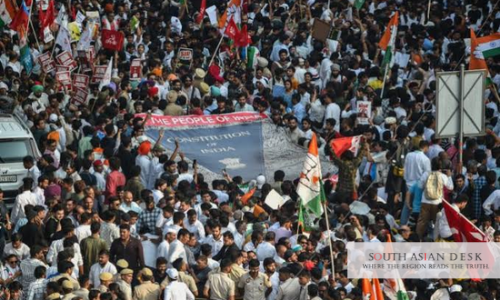
Gen Z protests in India have delivered one of the most unusual tests of Prime Minister Narendra Modi’s authority since he took office in 2014. Over several weeks, tens of thousands of young people filled the streets of New Delhi, driven by anger over a leaked entrance examination paper and by a wider frustration with the state of the country’s institutions. For a leader long regarded as politically unassailable, the episode has exposed the limits of a governing playbook that has served him well for more than a decade.
How the Cockroach Janta Party Began
The movement calls itself the Cockroach Janta Party. According to reporting by Foreign Policy, it adopted the name as a satirical response to a derogatory remark by India’s chief justice. What began as an online joke grew quickly. Analysts cited in Reuters coverage described it as the largest online expression of dissent against Modi’s 12-year rule, and it also drew death threats against its founder and criticism from ruling party politicians.
The group’s followers skew young. Dipke, a public relations strategist who spoke to Reuters, said more than two-thirds of its online audience belongs to Gen Z, defined as people born between 1997 and 2007. The demographic carries real weight, as Gen Z accounts for roughly one-quarter of India’s population, according to Foreign Policy.
An Exam Paper Leak Sparks Youth Dissent
The immediate trigger for the street demonstrations was an exam paper leak. Protesters said the breach of a medical school entrance examination undermined the prospects of millions of students who had prepared for years. They demanded accountability, and tens of thousands marched toward Parliament in the capital.
The scale of this youth dissent surprised many observers. The Bharatiya Janata Party (BJP) has weathered several civil society protest movements since coming to power, and it has typically dominated public debate through disciplined messaging and control of the media environment. This time the government appeared to be on the back foot. Organizers eventually called off the protests, and the Jantar Mantar protest site in Delhi stood largely empty by late July. The government’s retreat, as Reuters coverage framed it, was a rare one for the BJP and a blow to the personal aura of a leader who has cultivated the image of a strongman.
Why the Gen Z Protests in India Unsettled the Government
The Modi government and the BJP have used social media skillfully for years to shape the prime minister’s public image and steer the national conversation. Foreign Policy reported that the protests, led largely by young people, appeared to catch the government off guard in that arena. During the demonstrations, Modi posted his first selfie video on Instagram, a move that drew mocking responses from young users who questioned whether the party’s advisers understood the generation they were trying to reach.
Authorities have also relied on technical and legal pressure. Foreign Policy noted that the government has frequently ordered major technology platforms, including X, Facebook and YouTube, to remove speech it dislikes, particularly during protests. Apar Gupta, director of the Internet Freedom Foundation in New Delhi, said the rise of web blocking shows that dissent and satire are being treated as administrative threats rather than as democratic expression. Reuters reported that the government did not respond to requests for comment on the matter.
The Challenge of Moving From Online to Offline
The movement’s future remains uncertain. Analysts quoted by Reuters said it must organize and press its online grievances on the streets if it wants lasting influence, otherwise it risks fading away. Some commentators have compared its rise to the Gen Z-led uprisings that toppled governments in Bangladesh and Nepal, but Dipke cautioned against drawing such parallels.
The risks of escalation are real. Reuters noted that authorities under Modi have previously cracked down hard on large demonstrations, sometimes with deadly consequences for protesters. At the same time, India remains one of the world’s fastest-growing major economies, and Modi has invested heavily in infrastructure, technology and manufacturing during his three terms. Frustration over unemployment and quality of life, however, continues to shape the mood among younger Indians.
What Comes Next
Whether the Gen Z protests in India become a lasting political force or a passing episode will depend on organization, endurance and the government’s response. For now, the demonstrations have shown that a satirical online campaign can mobilize a generation, and that even a dominant government can be pushed into retreat when young voters feel shut out of the formal channels for redress.
Follow SouthAsianDesk on X, Instagram and Facebook for insights on business and current affairs from across South Asia.