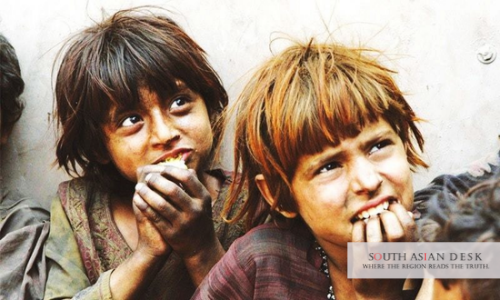
The Global Hunger Index 2026 has placed Pakistan second-worst in South Asia, behind only Afghanistan, underscoring the scale of the country’s food insecurity and malnutrition challenges. The findings, reported by Geo News and The News International, show Pakistan with a score of 25.5, which the index classifies as serious hunger. The country ranks 106th among 122 countries with sufficient data to calculate scores this year.
How Pakistan Compares Across South Asia
Afghanistan is the only South Asian country with a higher score than Pakistan, at 28.6, placing it 108th in the global ranking. India follows at 24.1 and 100th, according to regional coverage of the report. Bangladesh ranks 84th with a score of 19.2, while Nepal stands at 72nd with 14.5 and Sri Lanka at 53rd with 10.2. Nepal, Bangladesh and Sri Lanka all fall in the moderate category.
The regional score for South Asia is 23.5, which remains in the serious range, while the global score is 18.1. Pakistan therefore sits above both the regional and global averages, meaning its hunger burden is heavier than the typical level in either group. The index defines scores from 20 to 34.9 as serious, and scores from 10 to 19.9 as moderate. A lower score indicates less hunger.
What the Global Hunger Index 2026 Measures
The index is published annually by Concern Worldwide and Welthungerhilfe to track hunger and undernutrition around the world. It combines four indicators into a single score: undernourishment, child stunting, child wasting and child mortality. Undernourishment refers to the share of the population whose calorie intake is insufficient. Child stunting measures the share of children under five with low height for their age, a sign of chronic malnutrition. Child wasting measures the share with low weight for their height, which reflects acute malnutrition. Child mortality counts deaths before the age of five.
Pakistan’s Indicators in Detail
According to the report, 16.1 percent of Pakistan’s population is undernourished and 33.6 percent of children under five are stunted. About 9.8 percent of children are wasted, and 5.6 percent die before their fifth birthday. The high rate of child stunting is particularly notable, as it suggests that a large share of the country’s children are not receiving adequate nutrition during critical early years of development.
For comparison, Bangladesh recorded a stunting rate of 24 percent, a wasting rate of 12.9 percent and under-five mortality of 3 percent, according to Bangladeshi media coverage of the same index. Those figures show that the countries face different combinations of nutritional problems, even where their overall scores are closer.
A Long-Term Improvement With Clear Limits
The report does contain some positive news for Pakistan. Its score has fallen from 36.2 in 2000 to 25.5 in 2026, which the index describes as a substantial long-term improvement. Historical comparisons in the index rely on recalculated data rather than scores published in earlier annual editions, so the figures should be read as a trend rather than as a record of past rankings.
Even so, the improvement has not been enough to lift Pakistan out of the serious category. The 2026 edition also warns that global hunger is rising again, with conflicts, climate shocks and economic crises threatening food security, according to coverage of the report by Dhaka Tribune. The index draws on data collected across different periods between 2021 and 2025, rather than on figures from 2026 alone, so it may not capture the most recent changes in conditions on the ground.
Economic Pressures Add to the Concern
The findings arrive as Pakistan faces renewed price pressures. The International Monetary Fund projected in its World Economic Outlook, released on Tuesday, that the country’s inflation rate will rise to 9.9 percent in the fiscal year 2026-27, up from 7.1 percent in 2025-26. Higher food and fuel costs typically weigh most heavily on low-income households, which spend a large share of their budgets on basic necessities. Analysts often link persistent inflation to poorer diets, although the index itself does not measure the effect of current price trends.
What Comes Next
The Global Hunger Index 2026 offers a sobering reading for policymakers in Islamabad. Reducing child stunting and undernourishment will require sustained investment in nutrition programmes, health services and household incomes, areas that remain under strain. Until those efforts gain pace, Pakistan is likely to remain among the countries in South Asia where hunger poses the greatest challenge.
Follow SouthAsianDesk on X, Instagram and Facebook for insights on business and current affairs from across South Asia.