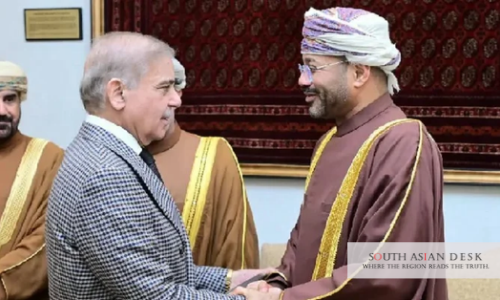
Pakistan and Oman sign six agreements and memoranda of understanding in Islamabad, committing both countries to wider cooperation across several sectors. The documents were exchanged on Wednesday during the eighth session of the Pakistan-Oman Joint Ministerial Commission, in the presence of Prime Minister Shehbaz Sharif, according to separate releases from the Prime Minister’s Office and the Ministry of Foreign Affairs, as reported by The News International.
What the Six Agreements Cover
The exchange took place as Prime Minister Shehbaz Sharif received Omani Foreign Minister Sayyid Badr Albusaidi, who travelled to Pakistan on a two-day visit on October 13 and 14 to co-chair the session. Deputy Prime Minister and Foreign Minister Ishaq Dar and Sayyid Badr signed three documents: the protocol recording the minutes of the eighth session, an agreement on mutual visa exemption for holders of diplomatic, special, official and service passports, and a memorandum of understanding on records and archives.
The three remaining memoranda of understanding were signed by the relevant federal ministers. They cover information and broadcasting, information technology and telecommunications, and news exchange and media cooperation. The agreements are intended to broaden collaboration in these fields and open further avenues for bilateral engagement.
Pakistan and Oman Sign Six Agreements: Shehbaz Sharif Highlights Shared Ties
During his meeting with the Omani foreign minister, Shehbaz Sharif pointed to the shared faith, geographical proximity, history and culture, as well as the centuries-old people-to-people exchanges that underpin relations. He described Oman as a brotherly country, an important maritime neighbour and a valuable partner in a strategically significant region.
The prime minister said the successful convening of the commission would provide a strong foundation for mutually beneficial cooperation. He also noted the convergence of views between the two countries on regional and global issues and appreciated Muscat’s emphasis on dialogue and diplomacy to resolve disputes.
Sayyid Badr thanked the Pakistani government for its hospitality and agreed that the session would pave the way for enhanced cooperation in diverse sectors. He also appreciated Pakistan’s sustained diplomatic efforts to ease regional tensions and promote peaceful solutions.
An Agenda Beyond Paperwork
The Joint Ministerial Commission is the main institutional forum for reviewing relations between the two countries. According to Oman’s Ministry of Foreign Affairs, the committee discussed expanding cooperation in trade, investment, industry, agriculture, finance, energy, oil and gas, logistics, ports, food security, technology and tourism. It also covered labour and consular affairs, security, defence, climate change, civil aviation, education, media and culture.
At a joint press conference after the session, Ishaq Dar said the two sides agreed to strengthen their institutional framework through joint working groups on trade and investment, agriculture, oil and gas, and labour and human resource development, according to Siasat Daily. Pakistani media reported that Dar also said the two countries planned to organise a business-to-business investment forum in Pakistan to encourage private-sector engagement. He said a proposed free trade agreement between Pakistan and the Gulf Cooperation Council could help increase trade and investment as well.
Sayyid Badr Albusaidi, for his part, highlighted potential partnerships in trade, logistics, port connectivity, energy and food security, as reported by the Daily Times. He also praised Islamabad’s efforts to encourage dialogue between Iran and the United States.
Regional Context and Next Steps
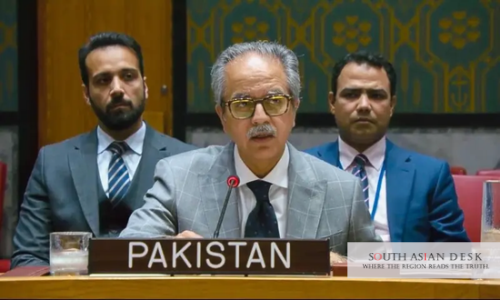
The talks took place against a tense regional backdrop. Both ministers called for restraint, de-escalation and diplomacy amid tensions in the Gulf, according to Siasat Daily, a reference that follows a series of Houthi attacks on Saudi Arabia in recent days. Pakistan has separately condemned those attacks at the United Nations Security Council.
Dar confirmed that the next session of the commission is expected to be held in Oman in 2027, and that he intends to travel there for it. That timetable gives the working groups roughly a year to produce concrete results, whether in trade volumes, investment proposals or labour cooperation.
Why It Matters
The visa exemption for diplomatic and official passport holders is a practical measure that should ease official travel, while the media, information technology and archives memoranda extend bilateral cooperation into areas that are often overlooked in diplomacy. Their value will depend on follow-through. Neither government has released financial figures or implementation timelines for the new accords, so their practical impact remains to be seen.
When Pakistan and Oman sign six agreements in a single session, the move signals a shared intention to turn longstanding goodwill into structured collaboration. The test will come in the months ahead, as the joint working groups and the planned investment forum show whether the political warmth displayed in Islamabad translates into measurable economic and institutional gains.
Follow SouthAsianDesk on X, Instagram and Facebook for insights on business and current affairs from across South Asia.
More on Pakistan: