Kolkata stampede left at least 17 people dead and 25 others injured during a Durga Puja gathering in north Kolkata on October 17, 2026, after heavy rain and overcrowding contributed to a deadly crush near a festival pavilion. The incident occurred at the Chorbagan Sarbojanin Puja pandal in the Girish Park police station area, prompting an emergency response and renewed scrutiny of crowd management at large religious events in India.
According to Kolkata Police, the stampede occurred at approximately 7:40 p.m. near the pavilion’s exit gate as large numbers of visitors gathered during rainy conditions. The injured were rescued and transported to Medical College and Hospital in Kolkata, while police, fire service personnel, disaster management teams and medical staff were deployed to assist victims.
West Bengal Chief Minister Suvendu Adhikari confirmed the casualties and visited the hospital to assess the situation. The state administration said it would investigate the circumstances surrounding the incident and determine whether organisers, security personnel or other parties had failed to manage the crowd appropriately.
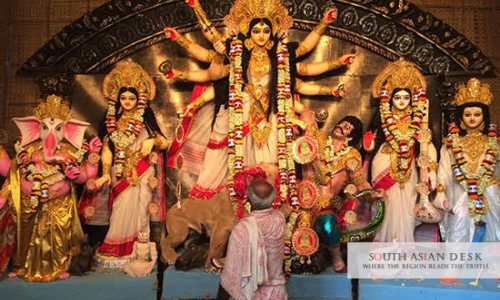
The tragedy occurred during Durga Puja, one of the most significant Hindu festivals in West Bengal, when large numbers of devotees visit decorated temporary structures known as pandals to worship the goddess Durga.
Kolkata Stampede Occurred Amid Heavy Rain and Crowded Exit Gates
The Kolkata Durga Puja stampede unfolded as visitors gathered outside the Chorbagan Sarbojanin Puja pandal. Heavy rain disrupted the gathering, and the crowd waiting to enter or move through the site reportedly began pushing forward.
Police attributed the incident to heavy crowds of pandal visitors amid rainfall. A senior police official told AFP that an announcement triggered commotion after the rain began, prompting people waiting outside the pavilion to push, pull and rush forward before some fell to the ground.
Witness accounts also raised concerns about the narrow entry and exit gates. One visitor told Indian media that access points were too narrow and lighting in the area was inadequate. These accounts have highlighted potential problems with the layout of the venue, although investigators must establish the precise sequence of events.
Crowd-related disasters can occur when large numbers of people move simultaneously through restricted spaces. Rain, sudden changes in movement, confusion and inadequate crowd control can increase pressure on those near gates and barriers.
However, the precise contribution of each factor in this incident remains subject to investigation. Authorities have indicated that they will review the circumstances and examine whether the crowd was managed appropriately.
Durga Puja Festival Tragedy Claims Lives and Injures Dozens
The deaths have cast a shadow over Durga Puja celebrations in Kolkata, where thousands of people visit community pandals during the festival period.
The victims included women and a child, according to Indian media reports. Chief Minister Suvendu Adhikari said 17 people had been brought dead to hospital, while 25 others were injured. Some of the injured were reported to be in critical condition in subsequent coverage.
Emergency teams transported victims to Medical College and Hospital, where medical staff provided treatment. Police said all injured people had been rescued and taken to hospital, while the festival pavilion was closed to visitors following the incident.
Families gathered at medical facilities seeking information about relatives caught in the crush. The loss of life has raised questions about how an event intended to provide a place for religious observance could turn into a mass-casualty emergency.
Durga Puja is a major cultural and religious occasion in West Bengal, bringing together families, local communities and visitors. The scale of participation makes crowd planning especially important, particularly at temporary venues where entry routes, exits and emergency access may be limited.
West Bengal Government Orders Scrutiny of Crowd Management
The West Bengal government has indicated that responsibility for the Kolkata stampede will be examined. Chief Minister Suvendu Adhikari said authorities would review CCTV footage and determine whether the crowd had been properly controlled.
The inquiry is expected to consider the roles of the organising committee, police, private security personnel and other parties responsible for the event. The chief minister said those found responsible would not be spared, signalling that the administration intends to examine possible failures.
Such investigations are important in determining whether organisers followed the relevant safety arrangements and whether authorities had adequate information about the expected crowd size.
Key questions include whether the entry and exit routes were sufficient, whether crowd numbers were monitored, how announcements were communicated and whether emergency personnel could reach the affected area quickly.
Investigators will also need to establish whether the weather contributed to a sudden change in crowd movement and whether contingency plans were in place for such circumstances.
The findings could inform changes to the management of future religious gatherings in Kolkata and other parts of West Bengal. Any conclusions about negligence or responsibility should be based on the investigation rather than preliminary accounts alone.
Narendra Modi Announces Compensation for Victims
Indian Prime Minister Narendra Modi expressed grief over the loss of life and announced financial assistance for the families of those killed and injured.
According to a statement issued by the Prime Minister’s Office, the next of kin of each deceased person will receive 200,000 rupees from the Prime Minister’s National Relief Fund. Injured people will receive 50,000 rupees each.
Modi said the incident was deeply distressing and extended condolences to families who had lost loved ones. He also wished those injured a speedy recovery and said local authorities were providing assistance.
Union Home Minister Amit Shah also expressed condolences and postponed scheduled political events in West Bengal so he could visit injured people in hospital.
The announcements followed the emergency response by state authorities and medical teams. Financial assistance can help families meet immediate expenses, but the broader response will also require medical care for survivors and a transparent investigation into the causes of the tragedy.
Crowd Safety at Religious Festivals Under Renewed Scrutiny
The Kolkata stampede has renewed attention to crowd safety at religious festivals across India. Large gatherings can place significant pressure on temporary venues, especially when many people converge on narrow entry points or attempt to leave at the same time.
Durga Puja draws thousands of visitors to pandals across West Bengal. Organisers must therefore consider expected attendance, safe movement through the site, emergency exits, lighting, crowd monitoring and arrangements for people who may need assistance.
Effective crowd management also requires coordination between event organisers, police, fire services, medical teams and local authorities. Clear communication can help prevent confusion, while carefully managed entry and exit routes can reduce the risk of dangerous crowd compression.
Weather conditions require additional planning. Rain can cause people to seek shelter, alter their movement or rush towards covered areas. Organisers need contingency procedures that allow visitors to move safely when conditions change.
The incident does not establish that all such events face the same level of risk. However, it demonstrates why safety arrangements must be adapted to the specific venue, expected attendance and potential emergencies.
A review of crowd-control procedures following the Kolkata tragedy could help identify practical improvements before future large gatherings take place.
Lessons for India on Preventing Festival Stampedes
The fatal incident in north Kolkata highlights the importance of preventing crowd surges before they become emergencies. Once a dense crowd begins moving unpredictably through a restricted space, individuals may have little ability to control their movement or protect themselves.
Authorities and organisers can reduce risks by monitoring attendance, preventing dangerous congestion near gates, keeping emergency routes accessible and ensuring that announcements are clear. Trained staff should be positioned where they can observe crowd movement and respond quickly to developing problems.
Temporary religious structures also require careful assessment of their layout. Adequate lighting, clearly marked exits and unobstructed access routes are essential, particularly when large numbers of visitors are expected after dark.
Emergency medical teams must be able to reach the site without delay. Coordination between police, fire services, hospitals and disaster management personnel can improve the speed of rescue and treatment when an incident occurs.
The investigation into the Kolkata Durga Puja stampede will be important in identifying which measures were in place and where improvements may be necessary. Its findings should guide future safety planning rather than simply assign blame after the loss of life.
Kolkata Stampede Casts a Shadow Over Durga Puja Celebrations
The stampede at the Chorbagan Sarbojanin Puja pandal has turned a major religious celebration into a scene of mourning. At least 17 people were killed and 25 injured after heavy rain and crowd congestion contributed to a deadly incident in north Kolkata.
The state government has pledged to investigate the circumstances, while the central government has announced compensation for victims’ families and injured survivors. Police, fire service personnel and medical teams responded to the emergency, but questions remain about the venue’s layout, crowd-control arrangements and the role of the weather.
The final findings will be essential to establishing how the tragedy unfolded and whether preventable safety failures contributed to the casualties.
For Kolkata and the wider festival community, the incident is a stark reminder that public safety must remain central to large religious gatherings. Effective planning, accessible exits, clear communication and coordinated emergency response are necessary to protect visitors.
As the investigation proceeds, authorities will face pressure to ensure that lessons from the tragedy translate into practical measures that reduce the risk of another deadly crowd incident.
Follow SouthAsianDesk on X, Instagram and Facebook for insights on business and current affairs from across South Asia.