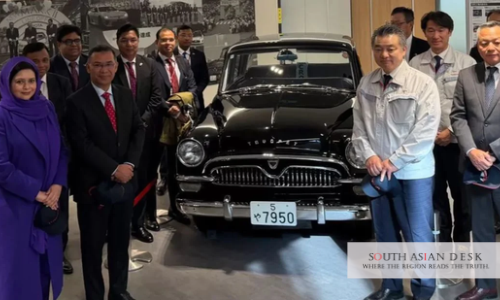
Prime Minister Tarique Rahman visited the Toyota Motomachi plant in the Nagoya region on Thursday, observing vehicle assembly operations on the last day of a four-day official visit to Japan. The tour, reported by UNB and carried by several Bangladeshi outlets, capped a trip that has centred on attracting investment, expanding trade and creating jobs.
A Tour of the Assembly Lines
The prime minister was accompanied by his wife, Dr Zubaida Rahman, as he toured the factory and watched the vehicle assembly process, according to Deputy Press Secretary Shahadat Hossain Shadhin. Senior Toyota officials received the delegation, including Masahiko Moeda, chief executive officer for South Asia at Toyota Motor Corporation. Also present were Shigeru Harada, chief executive officer of the Mobility Division at Toyota Tsusho Corporation, and Shinichiro Otsuka, the company’s chief operating officer.
The Bangladeshi delegation included Civil Aviation and Tourism Minister M Rashiduzzaman Millat, State Minister for Power, Energy and Mineral Resources Aninda Islam Amit, and the prime minister’s adviser on posts, telecommunications, information technology and science and technology, Rehan Asif Asad. The prime minister’s special assistant for overseas employment in the Asia-Pacific region, Dr Md Shakirul Islam Khan, was also present.
Part of a Wider Investment Drive
The visit to the Toyota Motomachi plant formed part of a programme laid out before the prime minister left Dhaka. Dhaka Tribune reported that the schedule for the final day included a journey by Shinkansen bullet train from Tokyo to Nagoya, a luncheon hosted by Toshimitsu Imai, president and chief executive officer of Toyota Tsusho Corporation, and a visit to the Toyota Commemorative Museum of Industry and Technology. The reports reviewed for this article confirmed the plant tour but did not describe the luncheon or the museum visit.
The prime minister travelled to Tokyo at the invitation of Japanese Prime Minister Sanae Takaichi. Earlier in the trip he held talks with Takaichi, in which, according to Bangladesh’s Prime Minister’s Office, he invited Japanese firms to invest in sectors including energy, technology and infrastructure, and discussed a 50 billion yen Japanese assistance package for energy security. He also delivered the keynote address at the Bangladesh-Japan Economic Forum.
Japanese Investment in Bangladesh Under Discussion
The prospects for Japanese investment in Bangladesh were a central theme before and during the trip. Bangladesh Post reported that Japan was considering facilitating 1 trillion yen, or about $6.35 billion, in private investment in Bangladesh over the next five years, with potential focus areas including automobile manufacturing, other industries and energy infrastructure. Daily Sun reported that some initiatives fall under Japan’s Bay of Bengal Industrial Growth Belt initiative, known as BIG-B.
Dhaka Tribune, citing sources, reported that Toyota was planning to invest around $500 million in a vehicle assembly plant in Bangladesh, a project that could create opportunities for local manufacturers of automobile components and cables. That figure has not been confirmed in the official accounts of the plant visit reviewed here, and neither Toyota nor the Bangladesh government was quoted in those accounts as announcing such a project. The sourcing is therefore important when considering the claim.
Why Vehicle Assembly Matters
For Bangladesh, vehicle assembly offers a route into more complex manufacturing than the garment sector that dominates its exports. A local assembly plant can anchor a supplier network, from wiring and cables to seats and metal components, and create skilled employment for engineers and technicians. It can also reduce reliance on fully imported vehicles, which weigh heavily on foreign exchange reserves.
The visit also gave the prime minister a direct view of a production system that is widely studied by manufacturers around the world. Observing how Toyota organises assembly, quality control and logistics may help inform discussions about the standards Bangladeshi suppliers would need to meet if they were to join a Toyota-linked supply chain.
Skills and Employment Beyond the Factory
Employment has been a recurring thread of the trip. Dhaka Tribune reported that the four-day visit was aimed partly at increasing exports of skilled workers to Japan, alongside investment and trade. Bangladesh has signed memorandums of understanding with Japan on education and human resource development, and the prime minister attended an event at the Bangladesh Embassy in Tokyo for signatories to those agreements earlier in the visit.
What Comes Next
The prime minister was scheduled to fly home from Narita International Airport on a Biman Bangladesh Airlines flight, arriving in Dhaka at 10:35 pm on Thursday. With the visit now complete, attention will turn to whether the discussions in Tokyo and Nagoya lead to firm commitments. The tour of the Toyota Motomachi plant demonstrated Bangladesh’s interest in advanced manufacturing, but the real test will be whether it is followed by signed agreements, clear timelines and measurable job creation.
Follow SouthAsianDesk on X, Instagram and Facebook for insights on business and current affairs from across South Asia.