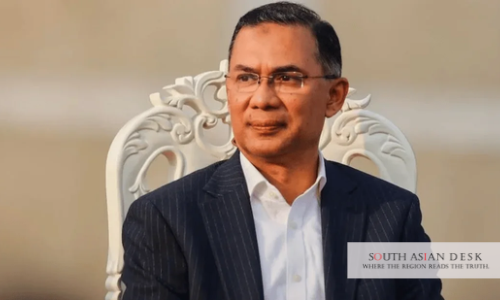
Tarique Rahman’s Japan visit began on Sunday, when the Bangladeshi prime minister left Dhaka for Tokyo on a four-day official trip meant to expand trade and investment, create jobs and increase exports of skilled workers to Japan. Dhaka has prepared a proposed investment and cooperation package worth $13.8 billion for 2026-2031, and officials hope the talks will translate into concrete Japanese commitments.
A Packed Schedule in Tokyo
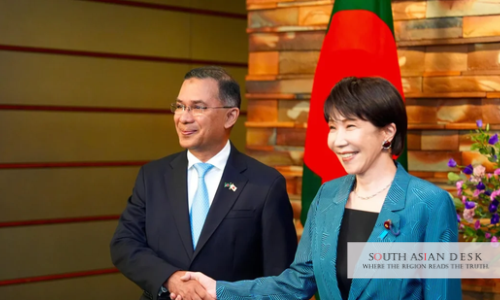
The centrepiece of the trip is a bilateral summit with Japanese Prime Minister Sanae Takaichi, scheduled for Tuesday, 27 October, followed by a joint press conference. The prime minister will also meet business executives and investors and visit automobile and energy facilities. He will deliver the keynote address at the Bangladesh-Japan Economic Forum in Tokyo.
According to the Foreign Ministry, around eight memorandums of understanding are under discussion, and three or four of them could be signed during the visit. Foreign Secretary Asad Alam Siam said the agenda would include agriculture, fisheries, human resource development, skills enhancement, civil aviation, marine environmental protection and local government modernisation.
Inside the $13.8 Billion Proposal
Bangladesh’s package covers 12 priority sectors, including transport, industrialisation, manufacturing, energy, technology, agriculture, pharmaceuticals, information technology, tourism and small and medium-sized enterprises. Dhaka Tribune reported the breakdown as follows: $3.45 billion for transport and urban connectivity, $3.14 billion for integrated industrial, port and commercial hubs, and $1.57 billion for manufacturing and electronics. A further $1.26 billion is earmarked for energy and green transition, and $940 million for climate-resilient infrastructure. The remaining $3.45 billion would cover agriculture, pharmaceuticals, information technology, the blue economy, tourism and small enterprises.
On the Japanese side, the private sector plans to invest roughly 1 trillion yen, or $6.35 billion, in Bangladesh over the next five years, according to Reuters, which cited Nikkei Asia. These are proposals and plans, not signed commitments.
Toyota, Energy and the Matarbari Hub
Automobile manufacturing and energy are among the most prominent areas of potential investment. Diplomatic sources said Toyota is planning to invest about $500 million in a vehicle assembly plant in Bangladesh, which could open opportunities for local component and cable manufacturers and create jobs for engineers and technically skilled workers. The prime minister is due to visit Toyota’s Motomachi Plant in Nagoya on Thursday.
Japanese energy company JERA has proposed an LNG terminal and related infrastructure in the Maheshkhali-Matarbari area to help ease Bangladesh’s industrial gas shortage, diplomatic sources said. Mr Rahman is scheduled to visit JERA’s onshore terminal and power plant in Chiba Prefecture on Tuesday.
Matarbari also sits at the centre of Japan’s Bay of Bengal Industrial Growth Belt (BIG-B) initiative, launched in 2014 under the late former prime minister Shinzo Abe. Diplomatic sources said it is being updated around four pillars: regional connectivity and logistics, alternative maritime routes, public-private partnerships, and regional peace and maritime security. Japan has also handed over five patrol vessels to the Bangladesh Navy, and talks may advance the supply of a 35-metre patrol vessel for the Coast Guard.
Trade Gains Under the Economic Partnership Agreement
Bangladesh and Japan signed an Economic Partnership Agreement in February, which officials say opens new possibilities for trade and investment. Bangladesh’s annual exports to Japan first crossed $1 billion in the 2015-16 fiscal year and reached $2.8 billion in 2021-22, according to the Export Promotion Bureau and Bangladesh Bank. Japan is currently Bangladesh’s ninth-largest export destination and its second-largest market in Asia.
Readymade garments dominate those exports, though Dhaka sees room to grow pharmaceutical and information technology sales. A survey by the Japan External Trade Organization found that 73.2 per cent of 57 Japanese companies identified Bangladesh as a priority destination for expansion.
Jobs for Skilled Workers
Employment is another priority. Under Japan’s Specified Skilled Worker programme, the two countries signed a cooperation memorandum in August 2019 covering 14 sectors, and in May 2025 they agreed to recruit at least 100,000 Bangladeshi workers over five years. On 17 October, they signed another five-year memorandum on employment and skills development, automatically renewable for a further five years, with expanded recruitment planned from 1 April 2027. Technical training, Japanese-language education and professional qualifications will be vital in preparing skilled workers for the Japanese labour market.
Unresolved Issues
Not every item on the agenda is celebratory. The two sides are expected to discuss the costs and loan terms of ongoing Japanese-funded projects, including reducing metro rail construction costs, lowering interest rates on Japanese loans and speeding up implementation. Japan has supported Dhaka’s metro rail, the third terminal of Hazrat Shahjalal International Airport and the Matarbari deep-sea port.
Tarique Rahman’s Japan Visit: Outlook
Success will depend on whether proposals become signed contracts and whether Bangladesh can improve the business environment that investors encounter. The visit will end on Thursday, with the prime minister due back in Dhaka that night. For Dhaka, Tarique Rahman’s Japan visit is a chance to move the relationship beyond traditional development assistance towards trade, manufacturing and skills, and the outcomes announced in Tokyo this week will show how far that shift can go.
Follow SouthAsianDesk on X, Instagram and Facebook for insights on business and current affairs from across South Asia.
Read More: