Cyclone restoration works across Andhra Pradesh are being accelerated after Chief Minister N Chandrababu Naidu directed officials on Thursday to speed up relief operations, restore electricity and complete compensation without delay. Reviewing the situation through a teleconference with district collectors and departmental heads, Naidu said the administrative machinery must continue its efforts until normalcy returns in the areas hit by Cyclone Arnab.
How Cyclone Arnab struck the coast
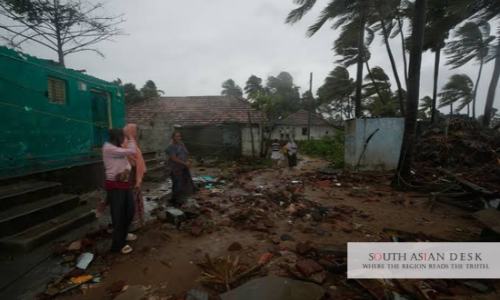
Cyclone Arnab crossed the Andhra Pradesh and Yanam coasts in the early hours of Wednesday as a very severe cyclonic storm, before weakening into a severe cyclonic storm over land, according to the India Meteorological Department. Strong winds and heavy rain affected several coastal districts, uprooting trees and electricity poles and damaging houses. Photographs from Visakhapatnam and Kakinada showed fallen trees blocking roads and damaged homes near the shore.
The National Disaster Response Force confirmed three deaths and damage to 31 houses in Andhra Pradesh, and its Inspector General, Narendra Singh Bundela, said 714 villages in the state had been affected. Flights were disrupted and at least 64 trains were cancelled as the storm made landfall, Scroll reported. Outlook India reported that around 55,000 people were moved to safer locations before landfall.
Priorities for cyclone restoration works
Naidu told officials to remove fallen trees from roads immediately and clear the debris left by the storm. According to a government release quoted by PTI, he asked them to restore the power supply in all affected areas, and IANS reported that he set a deadline of Friday for completing that task. The chief minister also said the administration should keep the public informed about relief measures in order to secure their cooperation.
He asked officials to expedite damage assessments and the payment of compensation to those affected, excluding crop loss, noting that a government order on compensation had already been issued. Officials told the meeting that a preliminary report on the damage would be submitted during the day. Naidu said normalcy had returned to most of the affected areas and praised the administrative machinery for its performance during the cyclone.
Help from Telangana on power
Restoring electricity has proved to be one of the largest tasks, because of the number of poles and lines brought down by the storm. Telangana Today reported that Naidu and Energy Minister Gottipati Ravi spoke by phone with Telangana Deputy Chief Minister and Energy Minister Bhatti Vikramarka, after which Telangana sent restoration teams drawn from its southern power distribution company. Naidu had said additional personnel, equipment and machinery were needed to bring supply back in the affected districts.
Assessing crop loss
Agriculture has been among the sectors hit hardest. Naidu said that in the Godavari districts, the coastal belt and North Andhra, crops had been lost and coconut plantations damaged, while in Rayalaseema conditions were unsuitable for sowing. He directed agriculture officials, scientists and students to study how far waterlogged crops could be saved and what steps could prevent further damage. He also asked them to examine the feasibility of replanting coconut palms and horticultural crops, and said technology should be used to speed up estimates of crop loss.
The Daily Pioneer reported that the chief minister’s letter to the Union Home Minister put crop damage at about 70,900 hectares and sought a central assessment team. The same report noted that the letter stated no human casualties had occurred, which conflicts with the confirmation from the National Disaster Response Force of three deaths. Readers should treat the casualty figures as subject to official reconciliation.
What happens next
The coming days will test how quickly the state can convert its directions into results on the ground. Power restoration is the most immediate benchmark, followed by the disbursal of compensation and the completion of crop surveys that will determine the scale of assistance sought from the Centre. Cyclone restoration works of this kind depend heavily on coordination between departments and neighbouring states, and Naidu’s insistence that officials should not rest until normalcy is restored suggests the government expects the effort to continue beyond the immediate clearance of roads.
For farmers in the Godavari delta and North Andhra, the focus will shift from clearing debris to counting losses, and the speed of those assessments may well determine how soon relief reaches them.
Follow SouthAsianDesk on X, Instagram and Facebook for insights on business and current affairs from across South Asia.