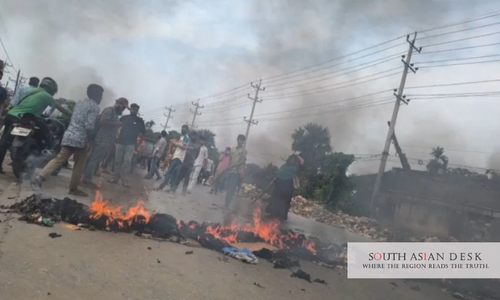
A Dhaka-Tangail highway blockade by garment workers in Gazipur brought traffic to a standstill on Tuesday, as protesters dragged roadside rubbish onto the carriageway and set it alight. The disruption is the latest episode in several days of labour unrest in the industrial district, where workers are pressing for a higher minimum wage.
How the Dhaka-Tangail Highway Blockade Unfolded
According to Dhaka Tribune, garment workers blocked the highway in Gazipur’s Naojor area on Tuesday, piling waste from the roadside onto the road and igniting it. Traffic was halted between the Joydebpur Chourasta and Naojor intersection. Protesters did not allow any vehicles through, including auto-rickshaws and motorcycles, and some were seen playing cricket on the highway while the blockade continued.
Journalists at the scene reported facing resistance from protesters when they tried to speak to workers and collect information, photographs and video footage.
The day had started with an earlier attempt to shut the road. Mohammad Amjad Hossain, superintendent of Gazipur Industrial Police, said a group of workers tried to block the highway in the Mouchak area of Kaliakair shortly before 8am. Law enforcement personnel intervened and persuaded them to clear the road without confrontation, he said, adding that security forces remained on high alert at several points along the route. The Industrial Police also said that 12 factories in Gazipur declared holidays on Tuesday amid the unrest, according to Views Bangladesh.
The Wage Demand Driving the Protests
The workers are demanding a Tk30,000 minimum wage per month. The existing minimum for the garment sector is Tk12,500, a rate fixed in December 2023 after an increase from Tk8,000. Labour unions have argued that this figure no longer allows a dignified standard of living amid high inflation and rising prices of essentials. The government has begun the process of forming a new wage board, bdnews24 reported in late October, though the demand voiced on the streets is considerably higher than the present rate.
Earlier Violence Along the Highway
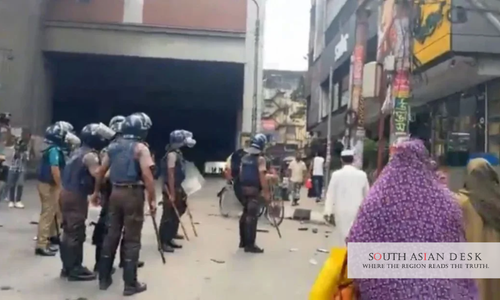
Tuesday’s blockade followed more violent scenes over the preceding days. On Saturday, workers blocked the highway from noon until night near Chandra Palli Bidyut and Gate 3 of the Ansar Academy in Kaliakair. Clashes with police followed, and officers fired tear gas and sound grenades to disperse the crowds.
The situation escalated further on Sunday. Workers began gathering on the highway shortly after 8am and had blocked it by 9:30am at several points in Kaliakair, including Safipur Bazar, Mouchak and Telichala. A police box in Konabari was set on fire, according to Iftekhar Hossain, officer-in-charge of Konabari police station under Gazipur Metropolitan Police. A pickup van was also set ablaze at around 11:30am, shortly before a warehouse belonging to Tropical Garments was set on fire in the same area. Prothom Alo reported that clashes in Gazipur left 30 people injured and 15 vehicles vandalised.
Cases, Arrests and Security Deployment
Police have since filed three cases over the attacks, vandalism and arson, naming around 4,000 people as accused, Dhaka Tribune reported. At least 30 people have been arrested. Police and Border Guard Bangladesh (BGB) personnel have fired tear gas shells and sound grenades to disperse protesters and clear the roads.
Authorities have also strengthened their presence on the ground. Dhaka Tribune reported that BGB deployment in Gazipur has been increased to 11 platoons, while the number of magistrates has been raised to 25. The unrest over recent days has virtually paralysed both the Dhaka-Tangail and Dhaka-Mymensingh highways, leaving passengers stranded and causing widespread travel disruption between Gazipur and Dhaka.
Why the Highway Matters
The Dhaka-Tangail route is among the busiest corridors linking the capital with the north of the country, and it runs through some of Bangladesh’s densest concentrations of garment factories. A prolonged closure therefore affects commuters, freight and factory supply chains alike. Every repeat of a Dhaka-Tangail highway blockade also deepens the pressure on owners and the authorities to reach an agreement before the standoff damages export schedules.
What Comes Next
Gazipur Industrial Police have indicated that they are relying on persuasion where possible, as seen on Tuesday morning in Mouchak. Whether that approach can hold will depend largely on how quickly the wage board process produces a proposal that workers regard as credible. For now, security forces remain on alert along the highway, and the protests, which have continued for several days in different industrial areas of Gazipur, show no clear sign of ending.
Follow SouthAsianDesk on X, Instagram and Facebook for insights on business and current affairs from across South Asia.