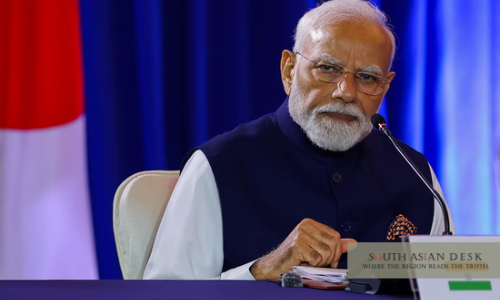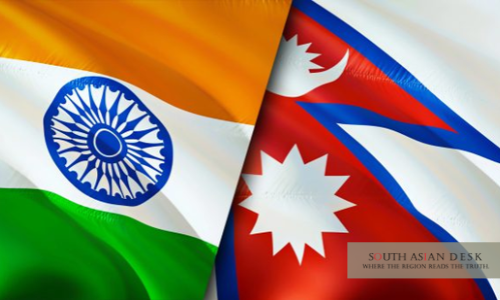
Nepal and India air route talks have resumed after a three-year break, reviving a dispute that has remained entangled in bilateral politics and geopolitical tensions since 2009. Kathmandu is now pressing to turn the L626 route, also known as the Mahendranagar route, into a two-way air corridor, and it hopes to secure an agreement during Prime Minister Balendra Shah’s visit to New Delhi, which is scheduled from 22 November.
The two countries have tried several times to settle the issue, but frequent changes of government, security concerns and strained diplomatic relations have so far prevented a breakthrough.
Why the Mahendranagar Route Matters to Nepal
The L626 route connects Kathmandu to Delhi via Mahendranagar in western Nepal and Pantnagar in India. It began operating on 19 November 2009 as a one-way exit route. Jay Narayan Acharya, spokesperson for Nepal’s Tourism Ministry, who is currently in New Delhi, said Nepal had prioritised securing two-way operation of the corridor, which would allow international aircraft to both enter and leave through the western border.
According to the report, the Mahendranagar route is 20 miles shorter than the existing B345 route running through Bhairahawa, Lucknow and Delhi, which is also a one-way departure route. It would also allow airlines to use 291 nautical miles of Nepali airspace, compared with just 100 nautical miles on the B345. Greater use of Nepali airspace would raise revenue and cut flight distances and operating costs. Officials at the Civil Aviation Authority of Nepal say the country can earn between $250 and $500 per aircraft, depending on size, for use of its airspace.
Nepal and India Air Route Talks: A Long History of Stalled Negotiations
Nepal has pressed India for additional entry routes since 2009, when it decided to build international airports in Pokhara and Bhairahawa. The issue gained political backing during Prime Minister Narendra Modi’s visit to Nepal in August 2014, when Kathmandu proposed three new entry points through Janakpur, Bhairahawa and Nepalgunj. The two prime ministers at the time directed their authorities to resolve the matter within six months, but that commitment was never met.
In 2016, the two countries agreed to make the Mahendranagar route two-way, although India said it needed further internal consultations. New Delhi has long cited security concerns over the Bhairahawa and Nepalgunj entry points because of the strategic Gorakhpur air base. A joint technical team was formed in 2017, and India remained positive until April 2018. Relations then cooled after Kathmandu withdrew from a BIMSTEC joint military exercise in Pune in September 2018, and discussions on safety assessments stalled. Meetings in 2019 and 2023 produced no breakthrough.
The 2023 talks did yield a partial offer. India agreed to let inbound flights use the Mahendranagar route, but only at altitudes between 15,000 and 24,000 feet, which aviation experts consider too low for jet aircraft. That arrangement was never formalised.
Impact on Gautam Buddha International Airport and Pokhara
Nepal argues that almost all inbound international air traffic depends on the Simara entry point, leaving it heavily congested, while departing aircraft can use seven exit points. An aircraft arriving from the west cannot enter directly over Bhairahawa, Nepalgunj or Mahendranagar and must instead make a detour of roughly 300 kilometres through Simara.
The restrictions are widely seen as a drag on Gautam Buddha International Airport in Bhairahawa and Pokhara International Airport, on which Nepal has spent more than Rs60 billion combined. Gautam Buddha International Airport was upgraded to Nepal’s second international airport on 16 May 2022, and Pokhara opened on 1 January 2023. Both struggled to attract scheduled international services for a long time, although flydubai began daily non-stop flights between Dubai and Pokhara on 25 September this year.
Not everyone agrees that air routes alone explain the weak traffic. Former officials of the Civil Aviation Authority of Nepal told the Post that the route issue had been used to explain away poor promotion of the airports. They noted that half of the 28 international airlines serving Nepal already enter through the east.
Near-Border Operation Agreement Returns to the Table
One of the more concrete developments is the revival of a near-border operation agreement, a safety arrangement that lets aircraft enter each other’s airspace in emergencies, such as when bad weather forces a diversion. Nepal sent a draft to India through the Foreign Ministry two months ago and is awaiting a response. Nepal wants the arrangement for Bhairahawa, while India has formally asked Nepal to sign a similar agreement for Bagdogra airport in West Bengal. The Tourism Ministry received that request from the Indian Embassy on Tuesday.
Officials also point to geopolitical sensitivities, noting that both new airports were built with Chinese involvement. They say India has withheld landing permits for Himalaya Airlines since 2015 because it is owned by a Chinese company. Under the Chicago Convention, every state holds exclusive sovereignty over its airspace, which gives India the right to regulate access.
Whether the visit next week turns revived Nepal and India air route talks into a signed agreement remains to be seen.
Follow SouthAsianDesk on X, Instagram and Facebook for insights on business and current affairs from across South Asia.
Read More: