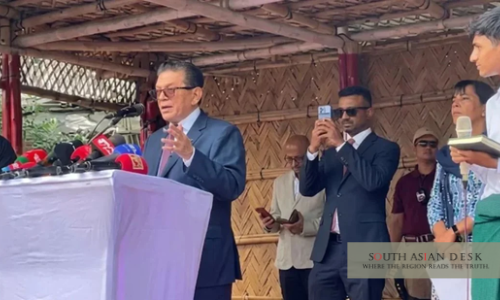
Khalilur Rahman visits Rohingya camps in Ukhiya, Cox’s Bazar, on Friday, a day after the International Court of Justice (ICJ) found Myanmar responsible for genocide against the Rohingya. Dr Rahman, who serves as Bangladesh’s foreign minister and as president of the United Nations General Assembly, arrived at Camp 4 at around 8:45am, where refugees welcomed him. The visit placed the ICJ ruling at the centre of a diplomatic and humanitarian moment for the more than one million Rohingya sheltering in Bangladesh.
Why Khalilur Rahman Visits Rohingya Camps at This Moment
The trip had been announced in advance through a media advisory, which said Dr Rahman would meet refugees to hear directly about their concerns and priorities. He previously served as Bangladesh’s high representative for Rohingya affairs, so the camps are familiar ground for him. The timing, however, gave the visit added weight. The ICJ delivered its judgment in the case brought by The Gambia against Myanmar on Thursday, ending a legal process that began in November 2019.
Speaking at the camp, Dr Rahman described the occasion as a special day and a historic moment. He told the gathering that the court’s ruling on the genocide committed against the Rohingya by Myanmar was a historic event in the history of the court itself.
What the ICJ Ruling Established
In its judgment, delivered at The Hague, the ICJ found that Myanmar committed genocide against the Rohingya group in northern Rakhine State in violation of the Genocide Convention. According to Human Rights Watch, the court ruled by nine votes to six, and the decision is final and cannot be appealed. UN News described it as the first such ruling against a state. The court also found that Myanmar failed to prevent and punish genocide, and it detailed acts of extreme violence by the country’s security forces against Rohingya communities.
The judgment further established that The Gambia is entitled to seek reparations on behalf of Rohingya victims, and it ordered Myanmar to provide them. The court did not find that Myanmar had directly and publicly incited genocide through private actors, a point on which the vote was fourteen to one. Enforcing the ruling is a separate matter, however, as the ICJ has no direct means of compelling a state to comply.
Refugees Voice Hopes for Repatriation
For the refugees, the ruling is seen as an important step towards justice, international recognition and an eventual return to Myanmar. Khin Maung, president of the United Council of Rohingya, thanked the government and people of Bangladesh for saving Rohingya lives by providing shelter. He added that the community does not want to remain in refugee camps forever. He expressed hope that Dr Rahman, in his capacity as president of the UN General Assembly, would raise the plight of the Rohingya and their aspirations for repatriation more forcefully with the international community.
That hope reflects a central challenge for Dhaka. Bangladesh has hosted the refugees since the military operations of 2016 and 2017 drove hundreds of thousands of people across the border, and it has repeatedly called for a safe and dignified return. The ICJ ruling strengthens the legal and moral case for accountability, but the conditions in Rakhine State that would allow refugees to go back have not changed as a result of the judgment alone.
A Dual Role at the United Nations and in Dhaka
Dr Rahman’s position gives the visit a dual character. As foreign minister, he leads Bangladesh’s diplomatic response to the crisis, while as president of the UN General Assembly, he presides over the body that has recently placed the human rights situation in Myanmar on its agenda. Before the visit, The Business Standard reported that he was also due to hold a joint press conference with the UN Resident Coordinator in Bangladesh, Carol Flore-Smereczniak.
As attention turns from the courtroom to the camps, the question for Bangladesh and its partners is how the ruling can be translated into concrete outcomes for refugees. Dr Rahman’s decision to go to Ukhiya the morning after the judgment suggests that the government intends to keep the Rohingya at the centre of that conversation, and that the voices of the refugees themselves will be part of it.
Follow SouthAsianDesk on X, Instagram and Facebook for insights on business and current affairs from across South Asia.
Read More: