The Gen Z commission ordinance, which would allow the government to settle hundreds of protest-related prosecutions through mediation, compensation or pardon, is now awaiting a decision from President Ramchandra Paudel. According to a report by The Kathmandu Post, the Cabinet approved the measure on November 20 and sent it to the Office of the President, where it remains under review. The proposal would set up a body to investigate incidents from the September 2025 protests, compensate victims and close pending cases that do not involve the gravest crimes.
What the Gen Z Commission Ordinance Proposes
Drafted by the Ministry of Home Affairs, the measure is titled the Ordinance on the Investigation, Compensation and Reparation Commission for Incidents in the Gen Z Movement. Senior advocate Baburam Kunwar, who serves as legal adviser to President Paudel, confirmed that it reached Sheetal Niwas on November 24 and requires further examination before a decision is made.
The ordinance seeks to implement the 10-point agreement signed on December 10, 2025, between the government and leaders of the Gen Z movement after the deadly unrest of September 8 and 9. Then prime minister Sushila Karki signed the accord on behalf of the state, while Bhoj Bikram Thapa signed as representative of the families of those killed and of the injured. The preamble of the ordinance states that immediate legal action is needed to honour the spirit of that pact by conducting further probes, facilitating reconciliation, providing compensation or reparation, and swiftly clearing pending litigation.
How Non-Grave Offences Would Be Settled
The central feature of the draft is the authority it gives the commission over non-grave offences. The text provides that the commission shall dispose of such cases by facilitating reconciliation, or by providing compensation or reparation and granting a pardon to the defendant. With the consent of the aggrieved party, a case may be closed even without compensation. For minor offences, cases in which the financial loss is unspecified, and incidents involving damage to government or public property, the commission may close files by pardoning defendants without ordering any payment.
The ordinance defines a grave offence as culpable homicide amounting to murder, or theft committed in a planned manner using arms and ammunition during the movement. Where charges involve both grave and other crimes, the commission would separate them and adjudicate only the non-grave charges. Cases settled in this way could not be tried again in any court, their records would be struck off, and anyone held in custody in connection with them would be released. Grave cases would be returned to the courts through the Attorney General’s office for regular trial.
Structure, Mandate and Compensation
Once issued by the President and published in the Nepal Gazette, the government would form a three-member commission. Its chairperson must be someone who has served as, or is qualified to become, a High Court judge. Both the chairperson and members must be at least 35 years old, hold at least a bachelor’s degree, have experience in fields such as human rights, law, conflict management or sociology, and hold no political party membership at the time of appointment. The ordinance does not specify a minimum number of years of professional experience. The commission would have a three-month mandate, which the government could extend if the work remains incomplete.
The body would collect details of all protest-related cases pending before district courts, High Courts and the Supreme Court, as well as complaints under police investigation, and it could decide whether a disputed incident falls within the scope of the movement. It would also arrange compensation or reparation for those who suffered physical harm or lost property.
Applicants who have already received compensation or insurance payouts for the same incident would not qualify, and relief for a victim who dies before payment would go to family members. A dedicated fund would be financed by the government, domestic contributors and foreign governments or international agencies, with approval from the Ministry of Finance, and none of it could be spent on administrative overheads.
Concerns Over the Ordinance Route
The measure is one of three Cabinet-recommended ordinances reportedly stalled at Sheetal Niwas, amid strained ties and a lack of direct communication between Prime Minister Balendra Shah and the President. President Paudel has promulgated five other ordinances ahead of the winter parliamentary session. An official at the President’s office, speaking on condition of anonymity, said that opening a path to absolve those involved in heinous crimes in the name of reconciliation is a sensitive matter, and that using an ordinance for such an issue appears wrong.
Former law minister Govinda Bandi said the government did not appear to have held adequate consultations, though he noted that detailed comment was difficult because the draft has not been made public. He pointed out that a commission led by Gauri Bahadur Karki and the National Human Rights Commission have already investigated the movement without establishing why shots were fired on September 8 and 9. In his view, any new body must concentrate on uncovering the truth.
Next Steps
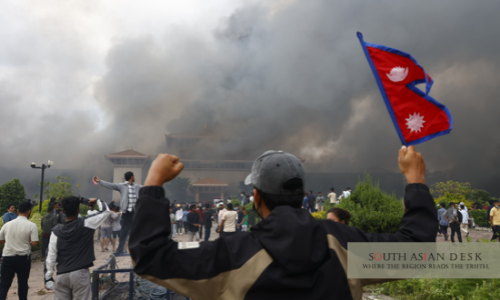
The Gen Z uprising began on September 8, 2025, when youth-led anti-corruption demonstrations, triggered partly by a social media ban and public anger over corruption, turned violent after security forces opened fire outside Parliament, leaving dozens dead over two days. If the Gen Z commission ordinance is promulgated, the government would be able to clear hundreds of protest-related prosecutions while leaving murder and armed robbery trials to the regular judiciary. Whether it is issued, amended or returned now depends on the President’s review.
Follow SouthAsianDesk on X, Instagram and Facebook for insights on business and current affairs from across South Asia.
Read More: