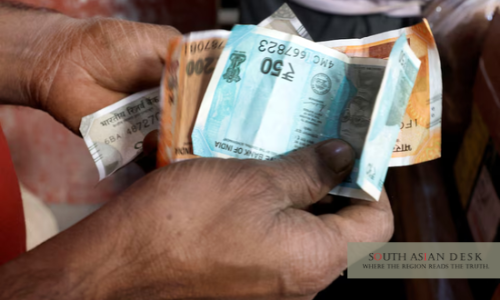
The Indian rupee rally lost momentum on Friday, November 27, as a tentative recovery in demand for artificial intelligence-linked investments and rising crude oil prices placed renewed pressure on the currency. The movement coincided with a decline in Indian equities, raising questions about whether the foreign investment inflows that supported the rupee’s recent recovery can be sustained.
The rupee weakened to 92.7250 against the US dollar by 11:15 a.m. Indian Standard Time, after opening slightly lower at around 92.50. India’s benchmark Nifty 50 index also declined by 0.5%, reflecting a more cautious mood across domestic financial markets.
The latest movement follows a period of improvement for the Indian currency, which had benefited from renewed overseas investment in local equities. However, changing global market preferences and higher energy costs have introduced fresh uncertainty into its outlook.
Indian Rupee Rally Faces Pressure from Changing Global Investment Trends
Foreign investment has been a significant source of support for the rupee in recent weeks. Overseas investors have purchased approximately $16 billion worth of Indian shares during November, reversing a substantial portion of the withdrawals recorded during the first ten months of 2026.
The return of foreign portfolio investors has helped strengthen demand for Indian assets and contributed to the currency’s recent outperformance against several Asian peers. This recovery has been particularly notable because the US dollar index has remained close to a two-year high.
However, the latest developments in global technology markets could affect the direction of these capital flows. South Korea’s AI-heavy stock market led gains across Asian shares on Friday, while Nasdaq futures also advanced. The renewed interest in AI-linked investments could encourage international investors to redirect funds towards markets and companies with greater exposure to the sector.
India’s recent appeal to overseas investors has partly benefited from uncertainty surrounding the sustainability of returns from AI-related investments. If enthusiasm for these assets strengthens again, some of the capital that moved into Indian equities could shift towards technology-focused markets.
The Indian rupee rally has benefited from renewed overseas interest in domestic equities, but this support could weaken if investors increasingly favour technology-heavy markets. A shift in global capital towards AI-linked stocks may moderate the inflows that have helped the currency recover in recent weeks.
Higher Brent Crude Oil Prices Add to the Indian Rupee Rally’s Challenges
Rising crude oil prices have created another challenge for the Indian currency. Brent crude moved towards $96.50 per barrel on Friday, reviving concerns about the cost of India’s energy imports.
India is a major importer of crude oil, making its economy particularly sensitive to changes in international energy prices. When oil becomes more expensive, the country generally needs to spend more foreign currency to meet its import requirements. This can increase demand for US dollars and place downward pressure on the rupee.
Higher oil prices can also contribute to broader economic concerns by increasing production and transportation costs. If these costs are passed on to businesses and consumers, they can add to inflationary pressures and complicate the outlook for monetary policy.
A currency trader at a bank told Reuters that several factors could explain the rupee’s weakness, including higher crude prices and the decline in equities. The trader also suggested that some of the additional optimism surrounding the rupee’s recovery was beginning to fade.
This distinction is important because a currency can weaken even when its longer-term outlook has not fundamentally changed. After a period of strong gains, investors may become less willing to maintain optimistic positions, particularly when external risks begin to increase.
Foreign Portfolio Investors Remain Important to India’s Currency Outlook
The approximately $16 billion in foreign investment recorded during November represents a significant reversal from the selling pressure seen earlier in the year. Foreign investors had withdrawn substantial amounts from Indian equities during the first ten months of 2026, contributing to weaker market sentiment and pressure on the currency.
These inflows have been an important factor behind the Indian rupee rally, strengthening demand for domestic assets and helping the currency outperform several of its regional peers. Their continuation could therefore play a significant role in determining whether the recovery can be sustained.
Their return has provided support to both the stock market and the rupee. Increased demand for Indian shares can encourage the conversion of foreign currencies into rupees, helping improve demand for the domestic currency. The importance of these capital flows was also evident during the Indian rupee’s earlier recovery, when foreign portfolio inflows into local stocks helped the currency reach its strongest level since April.
However, portfolio investment can be sensitive to changes in global financial conditions. Unlike longer-term direct investment, foreign portfolio flows can shift relatively quickly in response to changes in expected returns, risk appetite and market valuations.
The renewed interest in AI-linked stocks could therefore influence whether India continues to attract the same level of overseas capital. If investors increasingly favour technology-heavy markets, the inflows supporting Indian equities may moderate.
The performance of the rupee will consequently depend on several interconnected factors, including international investment sentiment, movements in the US dollar, energy prices and the relative attractiveness of Indian financial assets.
RBI Monetary Policy Decision in Focus as Markets Assess the Rupee’s Direction
Attention is also turning towards the Reserve Bank of India’s next monetary policy decision, scheduled for December 4. The central bank is widely expected by markets to increase its benchmark interest rate by 25 basis points, although some economists believe a larger adjustment remains possible.
An increase in interest rates can support a currency by improving the relative returns available on domestic financial assets. Higher rates may also help contain inflation, although their effect on exchange rates depends on wider economic conditions and investor expectations.
For India, the policy decision comes at a time when the currency is facing pressure from external developments, particularly higher oil prices and changing investment preferences. A stronger-than-expected policy response could provide some support to the rupee, but it would not remove the risks associated with global capital movements.
The central bank will also need to consider the broader implications of monetary tightening for economic activity, borrowing costs and domestic demand. Its decision will therefore be closely monitored by currency and equity market participants.
Outlook for the Indian Rupee Rally Remains Dependent on External Conditions
The Indian rupee rally has been supported by foreign investment inflows and improving sentiment towards domestic assets. However, Friday’s weakness highlights the challenges facing the currency as global investment preferences shift and higher oil prices increase pressure on India’s import bill.
The return of demand for AI-linked investments could alter the distribution of foreign capital across Asian markets, while elevated crude oil prices may increase pressure on India’s import bill. At the same time, the upcoming RBI policy decision introduces another factor that investors will consider when assessing the currency’s direction.
The latest decline does not, by itself, establish that the rupee’s recovery has ended. November’s strong foreign inflows continue to provide an important source of support, although their sustainability remains uncertain.
For now, the Indian rupee rally faces a test from developments beyond the domestic economy. Whether the currency can maintain its recent gains will depend partly on the balance between continued overseas investment, global oil prices and the direction of international financial markets.
Follow SouthAsianDesk on X, Instagram and Facebook for insights on business and current affairs from across South Asia.