The Afghan women’s rights crisis has entered a critical phase, with the United Nations warning donors that further funding cuts could strip away the last remaining support systems available to women and girls living under Taliban rule. Speaking to reporters on Friday, Susan Ferguson, UN Women’s special representative in Afghanistan, said conditions for women in the country are now the worst in the world, five years after the Taliban returned to power.
Understanding the Scale of the Afghan Women’s Rights Crisis
According to Ferguson, the Taliban have issued more than 100 decrees restricting women’s rights since retaking control of Afghanistan in August 2021. These measures touch nearly every part of daily life, including education, employment, freedom of movement, healthcare and access to justice. Girls remain barred from secondary schools and universities, a restriction unique to Afghanistan among all countries in the world.
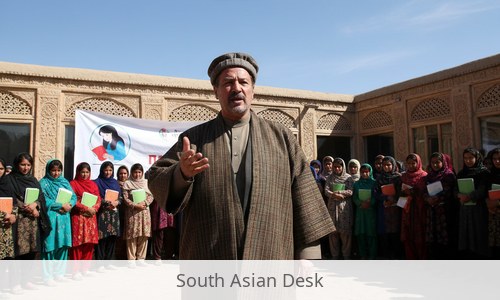
A survey of 3,200 Afghan women conducted by UN Women found that more than half now leave their homes only once or twice a month. Seven in ten described their mental health as bad or very bad, a finding Ferguson pointed to as evidence of the deepening isolation faced by women across the country.
UN Women Afghanistan Calls for Increased Funding
The appeal comes amid a sharp decline in resources for organisations supporting Afghan women. A survey of 74 women’s organisations carried out in April found that more than half are likely to suspend operations or close entirely within the next year unless funding is restored. Nearly three quarters of these organisations reported funding cuts in 2025, and roughly two thirds said they had six months or less of operational funding remaining.
Ferguson described the situation as urgent, noting that the UN’s $1.7 billion humanitarian appeal for Afghanistan is only 25 percent funded. “I urge all governments and other international donors to continue investing in Afghan women and girls, to increase, not cut, their foreign aid,” she said, adding that Afghanistan is facing the most severe women’s rights crisis anywhere in the world. “Five years into this crisis, this is the moment to deepen our commitment to Afghan women, not to retreat from it.”
Taliban Restrictions on Women Widen Across Daily Life
The Taliban maintain that their policies reflect their interpretation of Islamic law and Afghan culture, and that women’s rights are respected within that framework. However, the pattern of decrees issued since 2021 has steadily narrowed the spaces available to women, extending from education bans to restrictions on movement outside the home, employment in the public sector and access to public spaces such as parks and bathhouses.
International Response and Isolation of the Taliban
Ferguson’s remarks followed a joint statement issued at the UN by 56 countries, including Britain, France, Germany, Japan, the United States and the United Arab Emirates, coordinated by Denmark. The statement renewed calls on the Taliban to reverse restrictions on women and girls, describing the group’s “systematic repression of women and girls” as a defining feature of its governance. The signatories accused the Taliban of stripping women and girls of their “rights, dignity and agency” through what they called an “ever-expanding web of discriminatory decrees.”
Notably absent from the list of signatories were Russia, China, Pakistan, Iran and the Central Asian states neighbouring Afghanistan, underscoring the divided international response to the Taliban’s policies even as Western governments intensify pressure.
A Widening Gap Between Need and Resources
As the Afghan women’s rights crisis continues to deteriorate, the gap between the scale of need and the resources available to address it appears to be widening rather than closing. With aid organisations warning of imminent closures and international funding falling short of targets, the coming months are likely to test whether the global community can translate its statements of concern into sustained financial commitment for Afghan women and girls.
Published in SouthAsianDesk, August 16th, 2026
Follow SouthAsianDesk on X, Instagram and Facebook for insights on business and current affairs from across South Asia.