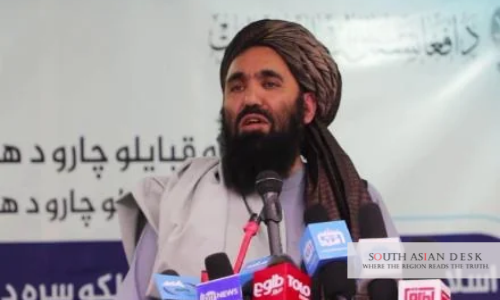
The Badakhshan governor has accused Pakistan of sending Afghan youth who live in the country back to Afghanistan to fight in exchange for money, and then preventing them from returning, a practice he said puts their lives at risk. Rahmatullah Najib made the remarks at a gathering organised by the Ministry of Borders, Tribes and Tribal Affairs in Badakhshan, according to TOLOnews. The claims are those of a Taliban official and could not be independently verified, and the report carried no response from Pakistan.
What the Badakhshan Governor Said
Mr Najib said some young people are sent from Pakistan across the Durand Line, which Kabul refers to as the “hypothetical” line and does not recognise as an international border, and are then prevented from going back. As a result, he said, they are either killed or captured, and the promises of money made to them are never fulfilled. He accused Pakistan of deceiving Afghans with such promises and said Islamabad should instead give money to its own people, who he claimed were suffering so severely that some were dying of hunger.
The governor also urged tribal elders to keep young people away from armed activities. Referring to groups that oppose the Taliban administration, which calls itself the Islamic Emirate, he said they speak of resistance and struggle but should explain what they are fighting for. He added that armed clashes lead to casualties and the loss of innocent lives. Challenging the aim of removing the Taliban from power, he said the movement is part of the country and has emerged from its own society.
Deputy Minister Points to Deaths From Cold
The deputy minister of Borders, Tribes and Tribal Affairs, Enayatullah Shuja, spoke at the same event and referred to clashes between Islamic Emirate forces and opposition groups in Nuristan. He said those involved had been sent to Afghanistan to fight for specific purposes but were later abandoned, and that this was not the time for war and conflict in the country.
Mr Shuja said that some time ago a number of people were sent across the Durand Line, but many lost their lives to the cold. When their route back was blocked, he said, they were left stranded and confused, moving from place to place until they eventually died from the extreme cold. Mr Najib closed his remarks by saying that the Islamic Emirate’s “martyrdom-seeking” forces remain active and that no one has the ability to confront them.
The Nuristan Clashes Behind the Remarks
The comments come after heavy fighting in Nuristan in late September. Amu TV reported that Taliban authorities and the Afghanistan Freedom Front offered conflicting accounts of the clashes in Kamdesh district. Taliban officials said the fighting began when a group of about 400 armed men tried to enter Afghanistan from Pakistan. The Taliban Defence Ministry later said its operation had ended with 41 people killed and 62 detained, according to Afghanistan International. The Afghanistan Freedom Front, an anti-Taliban armed group, disputed the Taliban’s casualty figures and said that 28 of its fighters were killed and 32 detained, while claiming it had captured several checkpoints.
The Taliban Foreign Ministry also summoned Pakistan’s chargé d’affaires in Kabul over the incident and alleged that armed opponents and Islamic State members were operating in Nuristan with the direct guidance and cooperation of the Pakistani military. TOLOnews quoted the Nuristan police chief as saying that more than 300 armed individuals had entered from Chitral after crossing the Durand Line. KabulNow noted that the fighting formed part of a broader pattern of intermittent confrontation between Taliban forces and armed opposition groups, including the National Resistance Front and the Afghanistan Freedom Front, which have claimed attacks in provinces such as Badakhshan, Kunar and Nuristan.
Deepening Tensions Between Kabul and Islamabad
The governor’s statements also fit into the wider dispute between the two neighbours. Pakistan accuses Afghanistan of facilitating attacks by militant groups said to be based on Afghan soil, an allegation Kabul denies. On Saturday, Pakistan’s information ministry said the Taliban government’s persistent refusal to address terrorism remained the principal obstacle to normal relations, Arab News reported. Each side therefore accuses the other of backing armed groups operating against it, and the claims made in Badakhshan add another strand to that exchange.
Mr Najib was appointed governor of Badakhshan in August, when Afghanistan International reported that he replaced Mohammad Ismail Ghaznawi after a decree by Taliban leader Hibatullah Akhundzada. His remarks suggest that provincial officials are now being used to deliver the administration’s message to tribal communities, in which they discourage young men from joining armed opposition groups and portray Pakistan as exploiting them.
Follow SouthAsianDesk on X, Instagram and Facebook for insights on business and current affairs from across South Asia.
Read More: