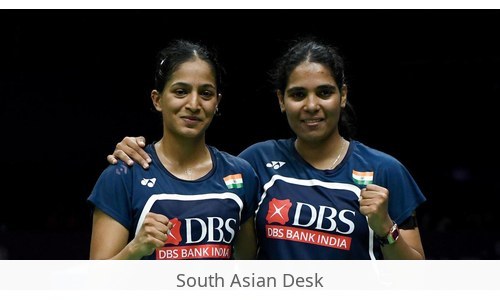
On August 21, 2026, the Indian pair of Treesa Jolly and Gayatri Gopichand reached the semifinals of the Badminton World Championships, securing a medal for India. This achievement marks a historic milestone for Indian badminton, with the unseeded duo overcoming formidable competition to advance to the final stages of the tournament. Their victory, achieved in a one-hour-and-nine-minute match, underscores their resilience and skill on the global stage.
Badminton World Championships: Impact of Treesa’s Recovery
Treesa Jolly’s return to form following a significant injury has been pivotal to the duo’s success. The athlete sustained a career-threatening injury during the 2025 Asian Games, which required extensive rehabilitation. Her recovery, documented in reports from The Hindu and The Indian Express, has not only restored her competitive edge but also strengthened her partnership with Gayatri Gopichand. The pair’s synchronized play and tactical adjustments reflect the rigorous training regimen they undertook post-injury, positioning them as one of the most formidable doubles teams in the tournament.
The injury sustained by Treesa during the 2025 Asian Games was a critical juncture in her career. Medical reports indicated that the injury involved a complex ligament tear, which initially raised concerns about her ability to compete at the highest level. However, her commitment to rehabilitation, supported by India’s national sports medicine program, allowed her to regain full mobility and refine her technique. This period also saw the duo re-evaluate their playing style, incorporating advanced strategies such as improved net play and enhanced defensive positioning. Their coach, Pullela Gopichand, emphasized the importance of mental resilience during this phase, noting that the duo’s ability to adapt to new challenges was instrumental in their current success.
Significance for Indian Badminton
This achievement elevates the profile of Indian badminton on the international circuit. The duo’s semifinal appearance ensures India will secure at least a bronze medal, a rare feat for the nation in the history of the Badminton World Championships. Analysts note that this success could catalyze increased investment in grassroots badminton programs and inspire a new generation of players. The Indian Badminton Association has already announced plans to expand training facilities and sponsorships for emerging talent, citing the duo’s performance as a turning point.
Historically, India has struggled to secure podium finishes in the Badminton World Championships, with its best results often limited to quarterfinal appearances. The duo’s progression to the semifinals represents a generational leap in the country’s badminton capabilities. Experts suggest that this breakthrough may encourage government and private sector collaboration to fund infrastructure upgrades, such as state-of-the-art training academies and international exposure programs for young athletes. Additionally, the success of Treesa and Gayatri could inspire a surge in youth participation, particularly in regions where badminton has traditionally been overshadowed by cricket. This development has been widely covered in sports news India, highlighting the growing interest in badminton.
The Journey to the Championship
Treesa and Gayatri’s path to the semifinals has been marked by strategic victories and intense competition. They began the tournament as unseeded players but defeated higher-ranked teams in the quarterfinals, including a notable win against a top-10 seeded pair from Japan. Their preparation involved a combination of physical conditioning, technical refinement, and mental resilience training, guided by their coach, Pullela Gopichand. The duo’s focus on consistency and adaptability has been critical to their success, with their semifinal match showcasing a blend of aggressive net play and defensive endurance.
The quarterfinal victory over the Japanese team was particularly symbolic, as it highlighted the duo’s ability to compete with teams from traditionally dominant badminton nations. Their preparation included analyzing opponents’ playing styles, simulating high-pressure scenarios, and refining their doubles coordination. Pullela Gopichand’s emphasis on tactical flexibility allowed the pair to adjust their strategies mid-match, a factor that proved decisive in their progression. Their semifinal match against the eventual finalists further demonstrated their ability to maintain composure under pressure, with Treesa’s net play and Gayatri’s powerful smashes forming the backbone of their strategy.
Follow SouthAsianDesk on X, Instagram and Facebook for insights on business and current affairs from across South Asia.
Sources
- Badminton World Championships: Treesa-Gayatri in semifinals, assured of medal – thehindu.com
- Today News Headlines for School Assembly, August 22, 2026: Treesa Jolly-Gayatri Gopichand secure historic world championships medal for India – indianexpress.com
Image: th-i.thgim.com