Bangladesh-Pakistan jute trade is gaining fresh momentum as Pakistan looks to increase imports of Bangladeshi jute and jute products, while both countries move to rebuild commercial ties after years of limited economic engagement.
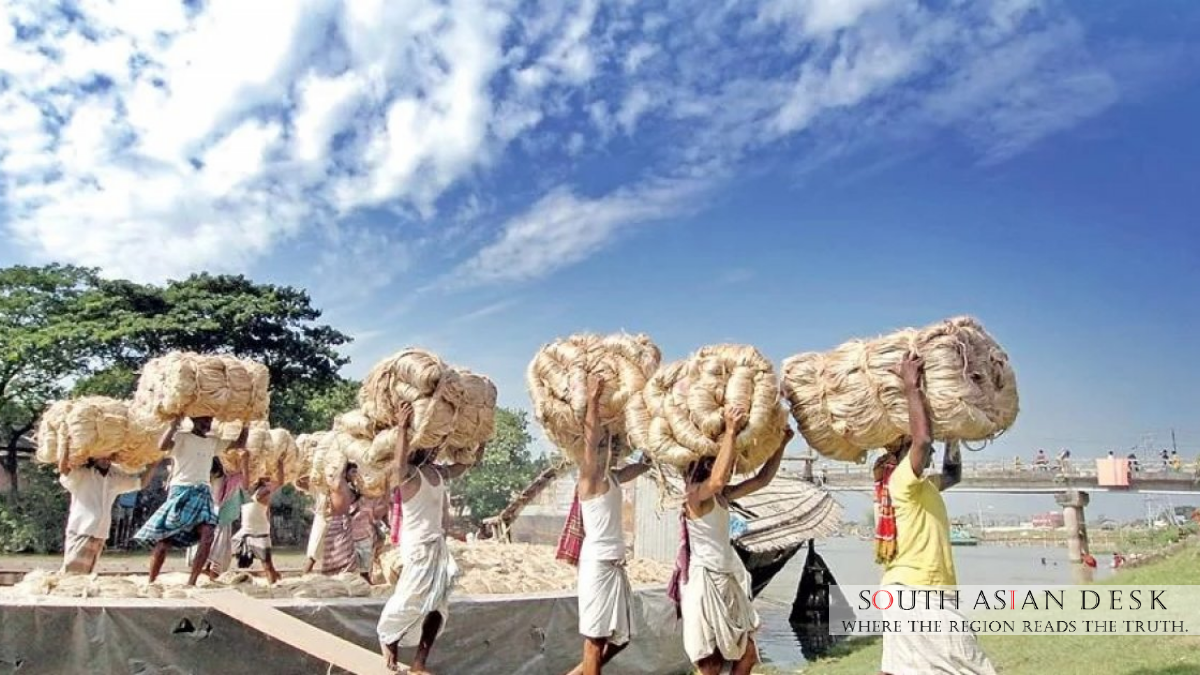
The renewed interest is significant for both sides. Bangladesh is one of the world’s most important suppliers of raw jute, jute yarn and jute-based goods, while Pakistan’s jute mills depend heavily on imported raw material to produce sacks, hessian cloth, twine and other packaging products. Textile Today reported that Pakistan plans to increase imports of Bangladeshi jute and jute products as part of a wider push for stronger bilateral engagement.
The development comes at a time when Dhaka and Islamabad are trying to turn recent diplomatic warmth into practical trade outcomes. For Bangladesh, Pakistan offers a nearby market for a traditional export sector that has struggled with declining shipments in recent years. For Pakistan, reliable access to Bangladeshi jute can support domestic mills, food-grain packaging and export-oriented jute goods.
Bangladesh-Pakistan Jute Trade Returns to the Policy Agenda
The revival of Bangladesh-Pakistan jute trade is not happening in isolation. In August 2025, Pakistan’s commerce minister and Bangladesh’s commerce adviser agreed to reactivate the Joint Economic Commission and work toward a broader strategy for trade, investment and economic cooperation. Their discussions covered tariff reduction, preferential access for Bangladeshi products, agriculture, renewable energy, halal trade, rice, leather and agro-processing.
That process moved further in October 2025 when the ninth session of the Pakistan-Bangladesh Joint Economic Commission was held in Dhaka after a 20-year gap. The meeting was co-chaired by Pakistan’s Federal Minister for Petroleum Ali Pervaiz Malik and Bangladesh’s Finance Adviser Dr Salehuddin Ahmed, signalling that both governments were trying to give economic engagement a more formal structure.
Jute quickly became one of the most practical sectors for cooperation. Bangladesh has the supply base and export experience, while Pakistan has industrial demand and a domestic jute manufacturing sector that relies on imported fibre.
Why Jute Matters to Pakistan
Pakistan’s jute industry may not be as large as its cotton textile sector, but it remains important for packaging, agriculture and industrial supply chains. The Pakistan Jute Mills Association says its member mills provide direct employment to more than 25,000 workers and indirect support to around 100,000 people. It also notes that jute products are widely used for packaging food grains such as wheat and rice.
This makes raw jute supply a practical economic issue. Pakistan’s mills need consistent access to fibre to keep production stable and prices manageable. PACRA research says Pakistan is almost entirely dependent on Bangladesh for imports of raw jute and jute yarn, with around 99 percent of both items imported from Bangladesh in FY25.
That dependence creates both opportunity and vulnerability. If trade flows smoothly, Bangladesh becomes a natural supplier and Pakistan’s mills gain predictable raw material access. If prices rise, shipments are delayed or export restrictions are imposed, Pakistani manufacturers face immediate pressure.
Bangladesh Seeks to Recover Lost Jute Exports
For Bangladesh, Pakistan is a market worth rebuilding. Bangladesh earlier requested Pakistan to waive tariffs on jute and jute products after exports to Pakistan fell sharply. The Business Standard reported that Bangladesh’s export of jute and jute-based goods to Pakistan dropped from $63 million in FY2021-22 to $23 million in FY2023-24, even though jute and jute products accounted for 38 percent of Bangladesh’s exports to Pakistan.
That decline explains why Dhaka has pushed for easier market access. Bangladesh sought duty-free access for jute and agricultural products during the Joint Economic Commission discussions, while both sides acknowledged that overall trade remained below potential.
Pakistan has already taken some steps. The Financial Express reported that Islamabad removed a 2 percent customs duty on jute imports from Bangladesh as a gesture to improve trade cooperation. The same report said both sides agreed to address tax-related complexities and explore wider trade and investment opportunities.
Jute Products Fit the Sustainable Packaging Trend
The renewed focus on jute also fits global demand for more sustainable packaging. Jute is biodegradable, reusable and widely seen as an environmentally friendlier alternative to plastic-based packaging. Bangladesh’s jute sector produces raw jute, yarn, hessian, sacks and diversified jute goods, with products exported to around 135 countries.
Bangladesh’s jute exports have also shown signs of recovery. EPB data cited by bdnews24.com showed that jute and jute goods exports rose 43.58 percent year-on-year in April 2026, part of a broader rebound in Bangladesh’s export earnings that month.
That recovery gives Dhaka an opening to diversify export destinations. Pakistan, because of its dependence on Bangladeshi fibre and its own jute manufacturing needs, could become a more consistent market if tariff, logistics and payment issues are addressed.
Connectivity Could Be the Real Game-Changer
The jute trade story is also linked to logistics. Pakistan has offered Bangladesh the use of Karachi Port for trade with China, Gulf countries and Central Asian states. Dhaka has expressed interest in exploring the proposal through a sectoral working group.
This matters because trade between Bangladesh and Pakistan has historically been held back by weak connectivity, limited direct shipping, political mistrust and high transaction costs. If direct maritime links become more reliable, jute shipments could move more efficiently, reducing delays and improving price competitiveness.
Better connectivity would also support trade beyond jute. Officials have discussed cooperation in food, agriculture, pharmaceuticals, energy, IT, halal products and industrial goods. Jute may be the most immediate sector, but it could become part of a wider commercial reset.
Trade Imbalance Remains a Challenge
Despite recent progress, the trade relationship remains uneven. The Financial Express reported that in FY2024-25 Bangladesh imported goods worth $787 million from Pakistan, while exporting only $80 million to Pakistan.
That imbalance is one reason Bangladesh wants better access for jute, tea, pharmaceuticals, leather, fruits and other exportable goods. Pakistan, meanwhile, sees opportunities to sell rice, textiles, minerals, sugar, agricultural products and industrial inputs to Bangladesh.
A healthier trade relationship would require both sides to move beyond symbolic gestures. Tariff cuts, standards recognition, banking channels, shipping routes, trade fairs and private-sector matchmaking will all matter. Without those practical steps, the renewed enthusiasm around jute could remain limited.
A Practical Opening for Bilateral Trade
The biggest strength of the Bangladesh-Pakistan jute trade is that it is commercially logical. Bangladesh has a globally recognised jute sector. Pakistan has mills that need Bangladeshi raw material. Both governments are looking for trade areas where progress can be made quickly.
That makes jute a useful test case for the wider relationship. If the two countries can improve market access, reduce duties, simplify documentation and strengthen shipping links, the sector could deliver visible gains for exporters, millers and workers.
But the opportunity should not be overstated. Pakistan’s jute industry is small compared with its broader textile sector, and Bangladesh’s export ambitions depend on quality, price stability and reliable supply. The real value lies in whether jute cooperation can help rebuild confidence between the two economies.
For now, Bangladesh-Pakistan jute trade is moving in the right direction. The challenge is to turn renewed interest into regular shipments, predictable policy and a broader trade framework that benefits both sides.
Published in SouthAsianDesk, June 30, 2026
Follow SouthAsianDesk on X, Instagram and Facebook for insights on business and current affairs from across South Asia.