Across South Asia, millions of girls experience menstruation every month, yet many continue to experience it through silence, fear, misinformation, and social restrictions. A natural biological process becomes a source of anxiety when the surrounding society teaches girls to hide it, remain silent about it, or consider it something shameful.
From rural Bangladesh to communities across India, Nepal, and Pakistan, menstrual stigma remains deeply connected to questions of education, gender inequality, public health, and human dignity. Despite growing awareness initiatives, the lived experiences of many girls reveal a troubling reality: knowing about menstruation does not necessarily mean feeling safe enough to talk about it.
My research into menstrual health and social stigma has reinforced an important conclusion: the menstrual-health crisis cannot be understood through access to hygiene products alone. We must also examine the fear, discrimination, and social conditioning that shape how girls experience menstruation.
What the Research Reveals: The Numbers Behind the Silence
As part of my research, I examined feedback from more than 600 participants to understand menstrual-health experiences, fear, and the influence of social stigma. The findings were particularly concerning:
- 88% of participants reported fear surrounding menstrual health.
- 59% reported that social stigma kept them from attending school.
These figures represent more than statistics. They point towards a social environment in which menstruation can influence a girl’s confidence, educational participation, and ability to engage freely in everyday life.
The findings also raise a critical question: if menstruation is a natural biological process, why are so many girls afraid of experiencing it openly?
The answer cannot be reduced to a lack of sanitary products or medical information. It requires examining the social attitudes that surround menstruation, the restrictions imposed on girls, and the absence of supportive environments in families, schools, and communities.
When fear becomes normalised, silence becomes a learned behaviour. When stigma determines whether a girl can attend school, a health issue becomes an educational equality issue.
My research and subsequent published writing have sought to bring these overlooked dimensions of menstrual health into wider discussions, connecting individual experiences with broader questions of social development and gender justice.
The Cultural Cost of Treating Menstruation as Shameful
Across South Asia, menstrual taboos take different forms depending on cultural and community contexts. In some households, menstruating girls are discouraged from entering places of worship, participating in religious activities, cooking, touching certain household objects, or attending social gatherings. In other settings, girls are simply expected not to discuss their periods.
Although traditions vary, the underlying concern emerges when menstruation becomes associated with impurity, embarrassment, or exclusion.
The consequences can be particularly significant for adolescents experiencing menstruation for the first time. Without accurate information and emotional support, they may interpret a normal biological experience as something frightening.
These attitudes are not simply individual misunderstandings. They can be reinforced across generations when families, schools, and communities avoid discussing menstrual health.
Challenging these practices requires sensitivity towards cultural diversity, but cultural sensitivity should never become an excuse for denying girls education, safety, healthcare, or dignity.
When Stigma Takes Girls Away From Classrooms
One of the most significant findings from my research was the relationship between menstrual stigma and school participation.
The finding that 59% of participants identified stigma as a factor keeping them away from school highlights a problem that deserves greater attention from educational institutions and policymakers.
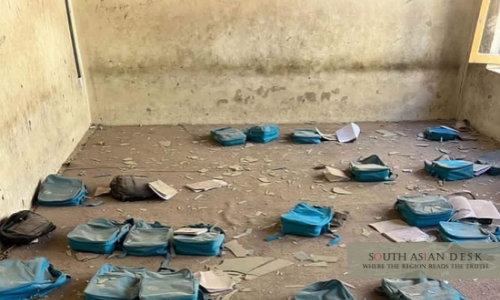
Consider a schoolgirl who has no access to a clean toilet, fears being embarrassed in front of classmates, and has never received adequate information about menstrual health. Her absence from school cannot simply be understood as an individual problem.
It reflects the failure of the environment around her to provide the support she needs.
Schools should be places where girls can learn without having to worry about being humiliated because of a natural biological process. This requires functional sanitation facilities, access to menstrual products, accurate health education, and teachers who are equipped to discuss menstruation without reinforcing shame.
Educational equality cannot be achieved while a biological process continues to become a barrier to classroom participation.
Why South Asia Needs More Than Awareness Campaigns
Across the region, governments, development organisations, civil society groups, and youth advocates have increasingly recognised menstrual health as an important development issue.
However, awareness campaigns alone cannot dismantle deeply established social taboos.
Distributing menstrual products is essential, but it does not automatically change discriminatory attitudes. Conducting workshops is valuable, but their impact remains limited if girls return to environments where menstruation is still treated as shameful.
South Asia needs a comprehensive approach built around five priorities:
- Evidence-based education: Introduce age-appropriate menstrual-health education in schools, supported by scientific information and trained educators.
- Accessible sanitation: Ensure schools and public institutions have clean toilets, water, privacy, and appropriate disposal facilities.
- Community engagement: Involve parents, teachers, community leaders, and boys in conversations that challenge misinformation and normalise menstrual health.
- Research-driven policymaking: Use evidence from girls and communities, particularly those in rural and underserved areas, to develop effective interventions.
- Accountability and inclusion: Recognise menstrual health as part of broader commitments to education, public health, gender equality, and human rights.
These priorities must extend beyond major cities. Girls living in remote villages and economically disadvantaged communities deserve the same access to information, healthcare, and dignity as those living in urban centres.
From Research to Action: Why Grassroots Voices Matter
Research becomes meaningful when it contributes to understanding real problems and informing possible solutions.
My engagement with disadvantaged communities and young people in Bangladesh has shaped my understanding of the distance between policy discussions and everyday experiences. Working on menstrual-health awareness and social taboos has shown me why conversations must reach the communities where misinformation and restrictions are most difficult to challenge.
Through my writing, research, and advocacy, I have sought to connect these grassroots experiences with wider international conversations.
Publishing articles on menstrual health and social taboos is part of that responsibility. It allows experiences that are frequently overlooked to enter discussions beyond the communities in which they occur.
South Asia needs more research that listens to girls rather than speaking on their behalf. It needs stronger documentation of community experiences, better access to reliable information, and policies informed by evidence rather than assumptions.
Young researchers and advocates can contribute significantly to this process, particularly when they bring local experiences into regional and international conversations.
A Regional Issue That Demands Collective Responsibility
Menstrual health is not exclusively a women’s issue. It concerns the quality of education systems, the accessibility of healthcare, the responsibilities of public institutions, and the values societies choose to uphold.
Governments must ensure that menstrual-health needs are reflected in public health and education policies. Schools must create supportive learning environments. Families must replace fear with informed conversations. Media organisations must challenge misinformation rather than reproduce stereotypes.
Most importantly, girls must be included in decisions that affect their health and everyday lives.
The findings from my research, particularly the fear reported by 88% of participants and the educational barriers identified by 59%, reinforce why this issue cannot be dismissed as a private inconvenience.
These findings should encourage further investigation, stronger interventions, and more serious conversations about the social conditions shaping menstrual health.
The Future Must Be Different
A girl should not have to miss school because society has made her natural biological experience something to fear. She should not have to hide her health needs to avoid humiliation. She should not grow up believing that menstruation makes her less capable, less worthy, or less entitled to participate in public life.
South Asia cannot achieve meaningful gender equality while menstrual stigma continues to restrict the opportunities of millions of girls.
We must move beyond simply teaching girls how to manage menstruation. We must also teach societies how to respond to it with understanding, scientific awareness, and respect.
The real measure of progress will not be how frequently we talk about menstrual health, but whether a girl can experience it without fear, discrimination, or interruption to her education. Breaking the silence is necessary. Making that silence unnecessary is the responsibility of us all.
Shreya Ghosh is a researcher and Global Youth Leader
Follow SouthAsianDesk on X, Instagram, and Facebook for insights on business and current affairs from across South Asia.
More by the Author: