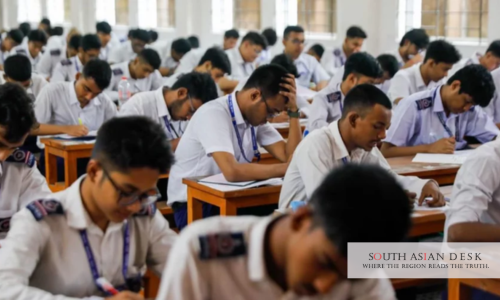
Class 11 seats vacant across Bangladesh are expected to reach around 1.36 million this year, out of nearly 2.5 million seats available nationwide, after the pass rate in the SSC and equivalent examinations declined. Education experts say the drop in student numbers could put pressure on higher education over the next two to three years, with private universities likely to face the greatest strain.
Why So Many Class 11 Seats Are Vacant This Year
A total of 1.14 million students passed the 2026 SSC and equivalent examinations, against approximately 2.5 million Class 11 seats available in colleges and madrasas nationwide. Even if every successful student were to enrol, around 1.36 million seats would still remain unfilled. Education officials note, however, that vacant seats do not necessarily mean an equal number of students will disappear from the education pipeline altogether, since some may pursue technical training, study abroad or discontinue formal education after the secondary level.
Higher Education Impact May Emerge Within Two Years
A large share of students entering Class 11 in 2026 will sit for their HSC examinations in 2028 before seeking admission to universities and other higher education institutions. As a result, the effects of this year’s lower SSC pass numbers could become most visible during the 2028-29 academic year, particularly at less-demanded private universities, less popular subjects and institutions located outside major cities. Leading public universities, medical colleges and engineering institutions are unlikely to face similar pressure, as demand for their limited seats remains consistently high.
Student Shortage Concerns Beyond This Year’s Figures
Education stakeholders say the more pressing question is whether Bangladesh will have enough students in the coming years to fill existing higher education capacity. The scale of Class 11 seats vacant this year could leave a significant portion of institutional capacity unused, prompting calls to reassess existing institutions, education quality and subject-wise demand rather than approving new institutions, departments or seats. Experts caution against declaring a long-term student shortage based on a single year’s SSC results, noting that trends over the next few years will be crucial in determining whether the decline continues.
Experts Point to Planning Failures Behind the Numbers
University Grants Commission member Professor Dr Abdullah-Al-Mamun said the 2026 results reflected a genuine and proper evaluation process, which could contribute to broader qualitative changes across the education system. He said previous systems had encouraged schools, colleges and teachers to inflate results, including pressure to push pass rates as high as 96 percent, and alleged that many institutions had been established without proper planning under a system that facilitated corruption. “Schools and colleges were approved without any proper calculation or assessment,” he said, linking this lack of planning to the emerging shortage of students. He questioned whether Bangladesh genuinely needed 116 private universities, though he said public universities would not be significantly affected.
Educationist Rasheda K. Chowdhury said the large number of Class 11 seats vacant this year reflected a mismatch between educational capacity and actual demand. “Clothes have to be cut according to the size of the body. We are cutting more than the size,” she said, recommending that students who fail their exams be encouraged toward technical education instead. She noted that only around 3 percent of GPA-5 holders were admitted to Dhaka University based on recent trends, meaning strong public institutions were unlikely to see vacant seats even as weaker private universities struggled.
Officials Call for Policy Review and Possible Mergers
Dhaka Education Board Secretary Professor S. M. Kamal Uddin Haider said there was no need to have approved so many schools and colleges, noting that roughly half of all seats had also gone unfilled the previous year. “A policy decision is certainly needed on this issue,” he said, adding that weak colleges would face a growing student crisis while some HSC graduates who fail to secure public university places may also lack the financial means to attend private institutions. He called for a survey to determine where genuine demand for higher education exists and suggested that, if the shortage becomes severe, multiple private institutions could be merged while protecting staff jobs. “Banks can be merged in the country, so what is the problem with educational institutions?” he said.
A Warning Sign for Bangladesh’s Education Planning
The scale of Class 11 seats vacant this year has renewed calls among educationists and officials for a more demand-driven approach to approving new institutions, rather than continuing the expansion that many experts say occurred without adequate assessment. With the fuller impact expected to reach universities only after 2028, policymakers have a narrow window to reassess capacity across the secondary and higher education systems before the shortage becomes more pronounced.
Published in SouthAsianDesk, August 16th, 2026
Follow SouthAsianDesk on X, Instagram and Facebook for insights on business and current affairs from across South Asia.