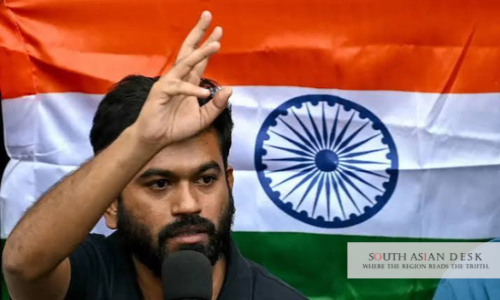
Cockroach movement founder Abhijeet Dipke was detained by Indian police ahead of a protest in New Delhi on October 16, 2026, before being released by a court the following day. The incident has drawn renewed attention to a youth-led campaign challenging India’s voter-list revision and demanding the resignation of Chief Election Commissioner Gyanesh Kumar.
Dipke leads the Cockroach Janta Party (CJP), a youth-driven political movement that has joined student organisations and opposition groups in demonstrations over changes to electoral rolls. The protests have intensified in recent weeks, with critics alleging that the revision could disproportionately affect voters who are unlikely to support Prime Minister Narendra Modi’s Bharatiya Janata Party (BJP).
According to Reuters, Dipke was detained as he left a house in central Delhi ahead of a planned rally. Broadcasters NDTV and India Today reported that he was placed under preventive arrest to prevent a breach of the peace. He was released on October 17 after agreeing to conditions that CJP’s legal affairs head, Ratna Singh, did not publicly detail.
The episode highlights growing tensions between demonstrators and authorities over protest restrictions, electoral administration and the right to political expression in the world’s most populous democracy.
Cockroach Movement Founder Abhijeet Dipke Released After Detention
Dipke’s detention came after he called for a demonstration in support of two CJP leaders who had been detained earlier in the week and remanded to five days in custody. The two activists had reportedly demonstrated at a protest location in violation of restrictions.
Police had warned Dipke against proceeding with the planned rally, according to Reuters. He was subsequently taken into custody in central Delhi, where officers placed him in a police vehicle following a brief exchange.
The detention formed part of a wider security operation in the capital as protesters gathered to demand the election chief’s resignation. Police and paramilitary personnel were deployed in central areas, while restrictions affected access to locations associated with demonstrations.
Dipke’s release the next day did not resolve the wider dispute. CJP representatives continued to criticise the authorities’ response to the protests, while student groups called for further action.
The precise conditions attached to Dipke’s release were not disclosed by the party’s legal affairs head. His release should therefore be distinguished from a judicial ruling on the wider allegations surrounding the voter-list revision or the legality of the protests.
India Voter List Revision Sparks Political Controversy
The central issue driving the demonstrations is India’s special intensive revision of electoral rolls, a process that has prompted concern among opposition parties and student activists.
According to Reuters reporting, more than 130 million voter names were removed during the revision. Protesters argue that the changes could disenfranchise eligible citizens and disproportionately affect marginalised communities and voters less likely to support the ruling BJP.
The Election Commission of India has denied favouring any political party. It has said that people whose names were wrongly removed can re-enrol, while the BJP has accused its opponents of attempting to undermine confidence in legitimate electoral processes.
The scale of the revision has nevertheless made voter registration a major political issue. Electoral rolls determine who can participate in elections, and concerns over omissions or inaccurate records can have significant consequences for public confidence in democratic institutions.
The dispute also raises questions about transparency, verification procedures and the mechanisms available to citizens seeking to correct their registration details.
However, the number of names removed does not, by itself, establish that the revision was politically motivated. Assessing that claim requires evidence concerning the reasons for individual deletions, the accuracy of the records and the effectiveness of the procedures for restoring eligible voters to the rolls.
Protesters Demand Gyanesh Kumar’s Resignation
The demonstrations have focused on Chief Election Commissioner Gyanesh Kumar, with the CJP, student groups and opposition parties calling for his resignation over the electoral-roll changes.
Protesters contend that the Election Commission must provide clearer explanations of the revision and address concerns about the potential exclusion of eligible voters. They argue that electoral administration requires public confidence, particularly when changes affect large numbers of people.
Student activist Neha Bora, who was also detained while attempting to reach central Delhi on October 16, was released the following day. After her release, she called for Kumar’s impeachment and demanded that the special intensive revision be halted to protect citizens’ voting rights, according to Reuters.
The demands reflect a broader concern among demonstrators that administrative decisions could affect access to the ballot. Their campaign has attracted participation from opposition parties and student organisations, giving the movement a wider political reach.
The Election Commission and the BJP reject allegations of partisan conduct. The competing positions have made independent scrutiny of the revision process and accessible remedies for affected voters important elements of the ongoing debate.
Delhi Protests Draw Heavy Police Presence
Security was heightened in central Delhi before the October 16 rally, with police warning organisers against proceeding and authorities restricting access to some protest locations.
Despite those measures, hundreds of demonstrators gathered in different parts of Connaught Place, waving Indian national flags and chanting slogans. Reuters reported that nearly 500 protesters managed to assemble in groups around the area, while some participants were detained.
The gatherings were part of a wider campaign involving youth activists, student unions and opposition politicians. Smaller demonstrations were also reported in cities including Mumbai and Bengaluru, while student organisations held a protest in Patna.
The dispute has also involved restrictions on established protest locations. Jantar Mantar, a prominent site for demonstrations in New Delhi, was no longer on the list of designated protest locations under the revised arrangements reported by Indian media.
Restrictions on public gatherings are often justified by authorities on grounds of public order and safety. However, their application can become contentious when protesters believe they are being prevented from raising legitimate political concerns.
The events surrounding Dipke’s detention have therefore added to the debate over how authorities balance public-order responsibilities with citizens’ rights to peaceful assembly and political expression.
Cockroach Janta Party Emerges as a Youth Political Force
The Cockroach Janta Party has gained prominence through protests led by young activists, drawing attention to issues of public accountability and government decision-making.
The movement first attracted wider national attention earlier in 2026, when a weeks-long sit-in over alleged examination-paper leaks contributed to the resignation of Education Minister Dharmendra Pradhan. That campaign helped establish the group as a visible force in youth-led political mobilisation.
Its current campaign has shifted attention towards electoral administration and the rights of voters. By joining forces with student organisations and opposition parties, the CJP has expanded the reach of its protests beyond its own membership.
The movement’s prominence also reflects the role of young citizens in political campaigns organised around public services, institutional accountability and democratic participation.
Government representatives have disputed the movement’s political character. Defence Minister Rajnath Singh described the protests as an opposition effort to use young people for political purposes, according to Reuters. The BJP has also rejected allegations that the voter-list revision is intended to benefit the ruling party.
These competing interpretations underscore the political sensitivity of the campaign. Its longer-term influence will depend on whether it can sustain public participation and secure responses to the questions it has raised.
Electoral Transparency and the Right to Protest Remain Central Issues
The detention and subsequent release of the Cockroach movement founder have brought two important questions into focus: how India manages large-scale electoral revisions and how authorities respond to public demonstrations challenging those decisions.
Accurate electoral rolls are essential to ensuring that eligible citizens can participate in elections. Equally important are transparent procedures for identifying inaccurate records, notifying affected individuals and allowing timely appeals or corrections.
The Election Commission’s position is that wrongly removed voters can re-enrol. For that assurance to maintain public confidence, affected citizens must be able to understand the process and access an effective remedy.
At the same time, the handling of protests remains a matter of public interest. Authorities have a responsibility to maintain order, but restrictions and preventive detention can generate further controversy when they affect organisers seeking to challenge public policy.
Dipke’s release did not settle the wider argument over the electoral revision. Instead, the episode highlighted the continuing confrontation between activists, opposition groups and authorities over accountability and democratic participation.
As protests continue, scrutiny is likely to remain focused on the transparency of electoral procedures, the treatment of demonstrators and the government’s response to concerns about voter registration.
The central question is whether the authorities can address those concerns in a way that strengthens public confidence in the electoral process while maintaining public order and protecting lawful political expression.
Follow SouthAsianDesk on X, Instagram and Facebook for insights on business and current affairs from across South Asia.