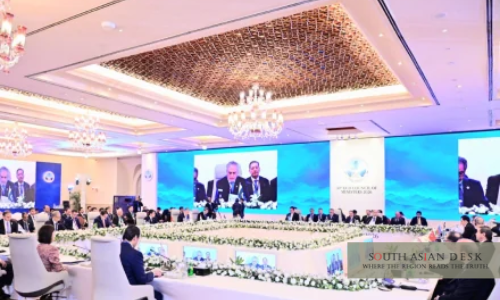
The ECO meeting in Islamabad concluded on Monday without any representative of Afghanistan’s Islamic Emirate in attendance, drawing attention to the absence of a member state from a gathering devoted to regional trade and connectivity. The 30th Council of Ministers of the Economic Cooperation Organization was held over two days, with foreign ministers of member countries discussing the expansion of trade, economic cooperation and cross-border links.
Pakistan Hosts and Chairs the Ministerial Gathering
The two-day session was held on 15 and 16 November and was chaired by Deputy Prime Minister and Foreign Minister Ishaq Dar. Delegates and senior officials from regional countries and international organisations arrived in the capital for the meeting, which coincided with Pakistan assuming the chairmanship of the Economic Cooperation Organization for 2026-27. Mr Dar also announced that Pakistan will host the organisation’s summit in 2027, according to Pakistani media reports.
The agenda centred on strengthening economic partnerships among member states, improving regional connectivity and promoting integration. Such themes have long defined the bloc, which brings together countries of Central Asia, West Asia and South Asia in an effort to expand commerce and transport links across the region.
Dar Links Afghan Security to Regional Economic Cooperation
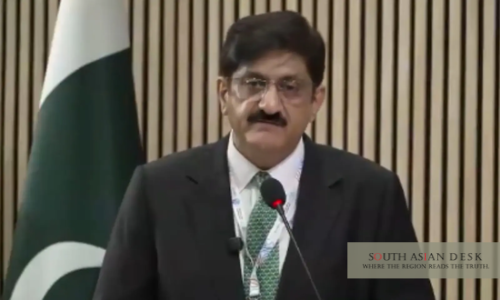
Addressing the ministers, Ishaq Dar emphasised the importance of security in Afghanistan for strengthening economic cooperation in the region. He said Pakistan wants a peaceful, stable and prosperous Afghanistan that is fully integrated into the Economic Cooperation Organization framework. He added, however, that progress toward that goal requires Afghan authorities to address the security concerns of neighbouring countries, particularly the threat of terrorism.
On the sidelines of the meeting, Tajikistan’s Foreign Minister, Sirajuddin Muhriddin, also highlighted the importance of peace and stability in Afghanistan for its neighbours. He noted that Afghanistan is a neighbouring country to both Tajikistan and Pakistan, and that stability there is in the interest of the wider region.
Why the ECO Meeting in Islamabad Drew Criticism from Kabul
Despite the central role Afghanistan can play in regional connectivity, Pakistan did not invite the country to the Islamabad gathering, according to TOLOnews. The omission prompted criticism from Afghan commentators and officials, who argued that meaningful cooperation is difficult to achieve while a member state is left out of the room.
Aziz Maarij, an international relations analyst, said Pakistan had created the problem because it was the host, and that other member countries should have prevented Afghanistan’s exclusion for what he described as Pakistan’s own objectives. In his view, genuine regional cooperation cannot take place without Afghanistan. Sayed Masoud, an economic analyst, made a related point, saying that Afghanistan’s strategic geopolitical position plays a complementary role in achieving the organisation’s fundamental objectives.
Zakir Jalaly, Second Political Director at the Islamic Emirate’s Ministry of Foreign Affairs, described regional integration without Afghanistan as an unrealistic prospect. He said economic cooperation should not be undermined by political differences, and that trade, transit and economic cooperation are increasingly recognised as instruments for overcoming such differences and building mutual trust.
Tehran Summit Offers Another Opportunity for Kabul
Mr Jalaly also announced that the Islamic Emirate would take part in the upcoming ECO summit, which is scheduled to be held in Tehran on 3 and 4 December. With the Islamabad session now concluded, the Tehran summit will give Afghanistan another opportunity to join regional discussions. Kabul has not yet announced the level of its representation or the specific agenda it intends to pursue at the gathering.
The coming weeks will therefore show whether Afghanistan’s participation in Tehran can ease the sense of exclusion that followed the Islamabad session. The question is also relevant for Pakistan, which now holds the chairmanship and has said that a stable Afghanistan integrated into the bloc serves regional interests. Reconciling that position with Pakistan’s security concerns, and with Kabul’s insistence on a seat at the table, is likely to shape the organisation’s debates on regional connectivity well into 2027.
Follow SouthAsianDesk on X, Instagram and Facebook for insights on business and current affairs from across South Asia.