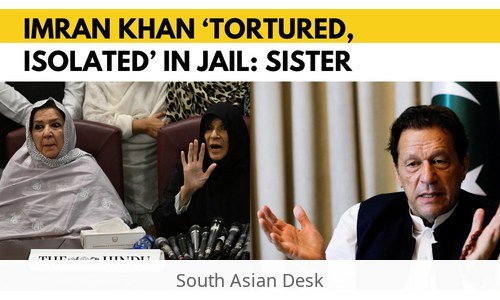
Imran Khan torture allegations have sparked international concern after his sister claimed he is being subjected to torture and isolation in Adiala Jail. On August 21, 2026, the former prime minister’s sister detailed ongoing treatment for a retinal haemorrhage and alleged mistreatment during a recent hospital visit, raising questions about Adiala Jail conditions and the broader issue of political repression in Pakistan.
Imran Khan torture allegations: Political Implications
The allegations have intensified scrutiny of Pakistan’s political landscape, with reactions from various political parties and public figures. Imran Khan’s Pakistan Tehreek-e-Insaf (PTI) party has condemned the claims, calling for an independent investigation into the conditions of his detention. Opposition parties have seized on the allegations to criticize the government’s handling of high-profile detainees, while some analysts note the potential for increased polarization ahead of upcoming elections.
The PTI has accused the judiciary and law enforcement of targeting political opponents through excessive punitive measures. Meanwhile, the government has reiterated its stance that Khan’s imprisonment is a legal process, with authorities emphasizing that all detainees receive due process. However, the sister’s claims have sparked renewed debates about the treatment of Pakistan political prisoners, with some human rights groups urging international attention to the issue.
The context of Khan’s incarceration is deeply intertwined with Pakistan’s political dynamics. His imprisonment, which began in August 2023, followed a series of legal battles over corruption charges, which he and his party have consistently denied. The PTI’s opposition to the government has been a defining feature of Pakistan’s political scene, with Khan’s arrest seen by his supporters as part of a broader campaign to suppress dissent. The allegations of mistreatment now add a new layer to this conflict, raising questions about the independence of Pakistan’s judicial and law enforcement systems.
The sister’s claims also highlight the broader issue of human rights in Pakistan. While Pakistan has not ratified key international human rights treaties, such as the UN Convention Against Torture, its legal framework includes provisions against inhumane treatment. However, the enforcement of these provisions has been inconsistent, particularly in cases involving high-profile detainees. This has led to recurring concerns from international bodies and NGOs about the treatment of political prisoners in the country.
International Reactions
Human rights organizations have expressed concern over the allegations, with Amnesty International and Human Rights Watch calling for transparency in Khan’s treatment. Both organizations have urged the Pakistani government to allow independent monitoring of his conditions and to ensure compliance with international human rights standards.
The United Nations has not issued a direct statement on the matter, but a senior UN official noted the importance of upholding due process for all detainees. Comparative analyses with other regional cases highlight the lack of standardized protocols for monitoring political prisoners in South Asia, raising questions about the adequacy of existing safeguards.
The international community’s response to Khan’s case is significant given Pakistan’s strategic importance in regional security and counterterrorism efforts. While Western governments have historically prioritized security cooperation with Islamabad, human rights concerns have occasionally influenced diplomatic engagement. The current allegations could prompt renewed scrutiny of Pakistan’s adherence to international norms, particularly in light of its ongoing challenges with judicial independence and political freedoms.
The sister’s claims also intersect with broader regional trends. In South Asia, the treatment of political prisoners has been a recurring issue, with countries like India and Bangladesh facing similar criticisms. However, Pakistan’s unique political climate, characterized by frequent transitions of power and tensions between civilian and military authorities, has made the issue particularly contentious. The lack of a unified regional framework for addressing human rights violations further complicates efforts to establish accountability.
Follow SouthAsianDesk on X, Instagram and Facebook for insights on business and current affairs from across South Asia.
This report focuses on Imran Khan torture allegations and the verified developments surrounding it.
Sources
- Imran Khan ‘tortured, isolated’ in jail: sister – thehindu.com
- Imran Khan’s hospital visit takes twist; sister claims he was ‘tortured repeatedly’ – indianexpress.com
- Imran Khan returns to jail after being declared ‘medically fit’ – cricinfo.com
Image: th-i.thgim.com