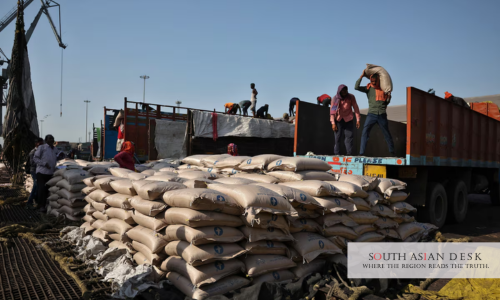
India duty-free sugar imports are among a set of measures now under active consideration by the government as authorities look for ways to bring down domestic prices that have climbed to record levels. Government and industry sources say officials are examining a combination of tools, including permitting limited overseas purchases without the usual import tax, tightening stockholding limits for bulk traders, and revising the monthly quota that allows mills to release sugar for domestic sale.
If approved, the move would mark the first time in nearly a decade that India, the world’s largest sugar consumer, has opened its doors to significant import volumes. Such a step could lift benchmark prices on international exchanges in London and New York, even as it helps New Delhi manage the domestic price rally at home.
Record Sugar Prices Prompt Policy Review
The push toward India duty-free sugar imports follows a sustained rise in ex-mill prices that has pushed sugar in Maharashtra, one of the country’s largest producing states, to around 46 rupees a kilogram, its highest level on record, according to industry estimates. A government source, speaking on condition of anonymity due to the sensitivity of the discussions, described the recent price rise as unwarranted and said authorities were considering a wide range of tools to address it. Those options include lowering stockholding limits for traders, permitting limited imports, cutting the existing import duty, and adjusting the monthly release quota that governs how much sugar mills can sell domestically each month.
Industry representatives have echoed the need for imports to ease the squeeze. Ashok Jain, president of the Bombay Sugar Merchants Association, said local supplies remained tight and that bringing in sugar from abroad was the only realistic way to increase availability and moderate prices before demand peaks.
Festival Season Sugar Demand Adds Urgency
Festival season sugar demand typically rises sharply between August and November, when major celebrations such as Ganesh Chaturthi, Dussehra and Diwali drive up consumption of traditional sweets and confectionery. This seasonal surge is adding pressure on policymakers to act quickly, since any decision on India duty-free sugar imports would need to take effect before the festival period reaches its peak.
According to a Mumbai-based trader familiar with the discussions, the government could ask mills to import as much as one million metric tons of sugar duty-free before the end of October, bridging the gap until new-season supplies begin arriving in November as cane crushing picks up pace.
Import Duty Cut Also Under Discussion
Separate reporting has indicated that officials are weighing a reduction or complete removal of the existing 100 percent import duty on sugar, a step that would sit alongside, or in place of, a limited duty-free allowance. No final decision has been made, and officials continue to weigh competing proposals.
This is not the only lever being pulled. Earlier in the month, authorities were reported to be considering restrictions on the volume of sugarcane diverted toward ethanol production for the season beginning in October, a move intended to boost overall sugar output and help calm the ongoing price rally. Regulators have also directed mills to ensure that buyers lift purchased stock within seven days of sale, warning of legal action against any mill found engaging in speculative hoarding.
Weather and Supply Concerns Complicate the Picture
The debate over India duty-free sugar imports is unfolding against a backdrop of weather-related uncertainty. Monsoon rainfall, on which sugarcane cultivation heavily depends, has been running around 13 percent below normal this season, according to the India Meteorological Department, after a deficit of more than 40 percent in the early weeks of the rainy season delayed sowing in several regions. As of mid-August, sugarcane had been planted across 5.83 million hectares, marginally below the level recorded at the same point last year.
In response to tightening supply expectations, sugar mills in Uttar Pradesh and Maharashtra, the country’s two largest cane-producing states, are reportedly planning to begin crushing operations 10 to 15 days earlier than usual. Crushing normally starts in early November, so an earlier start would bring fresh domestic supply to market sooner.
Global Market Implications
Global sugar markets are already contending with their own supply pressures. Concerns over the effect of the El Nino weather pattern on upcoming harvests have pushed New York sugar futures to their highest level in roughly a year. Should India proceed with duty-free sugar imports, even on a limited scale, the resulting demand could add further support to benchmark prices in both London and New York, reflecting India’s outsized influence on the global sugar trade as its top consumer.
Outlook
No formal announcement has been made, and officials caution that the proposals remain under review. Still, the combination of record domestic prices, an approaching festival season, and uncertain weather conditions suggests that some form of intervention, whether through India duty-free sugar imports, a reduced import duty, or tighter stockholding rules, is likely in the coming weeks. Market participants and mill associations are expected to watch closely for a formal decision as the government balances consumer price relief against the interests of domestic producers.
Published in SouthAsianDesk, August 19th, 2026
Follow SouthAsianDesk on X, Instagram and Facebook for insights on business and current affairs from across South Asia.