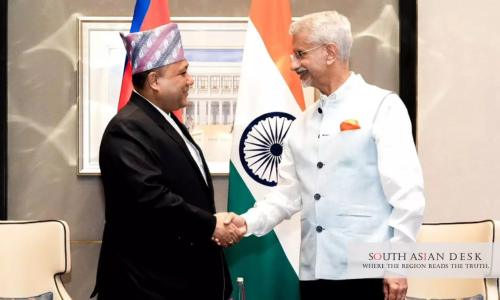
India Nepal ties have received renewed diplomatic focus after Nepal’s Foreign Minister Shisir Khanal said the new government in Kathmandu carries no “old baggage” and gives the “highest priority” to relations with India.
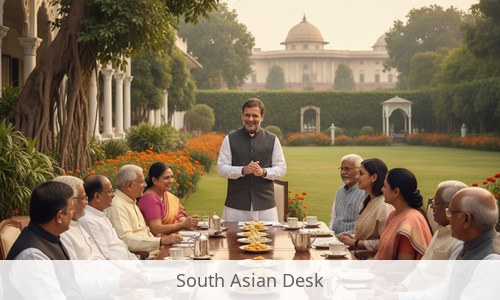
Khanal made the remarks during talks with Indian External Affairs Minister S Jaishankar in New Delhi, where both sides discussed ways to deepen bilateral cooperation across trade, investment, energy, connectivity and people-to-people links.
The visit, held from 5 to 7 June, marked Khanal’s official engagement with India at a time when both neighbours are trying to stabilise ties after recent sensitivities over boundary-related issues. Nepal’s Foreign Ministry said the visit was part of regular high-level exchanges and was aimed at consolidating the “enduring and multifaceted” relationship between the two countries.
India Nepal ties given highest priority, says Khanal
Khanal said Nepal was ready for “substantive and purposeful” engagement with India at the highest levels. He described India as Nepal’s close neighbour and most important partner, adding that the new government wanted to build a “genuinely transformative” relationship.
The Nepal FM also said Kathmandu wanted to convert the civilisational bond between the two countries into a modern, development-oriented partnership. His comments appeared to signal a reset in India Nepal relations, especially after a period of diplomatic unease linked to border claims and regional sensitivities.
Jaishankar, in his opening remarks, said India and Nepal share a “very special relationship” based on people-to-people ties, cross-border contact and shared cultural and religious traditions. He said the two countries had an opportunity to “decisively shift the trajectory” of the relationship and realise its full potential.
India Nepal ties focus on connectivity, energy and digital cooperation
The talks covered development cooperation, cross-border connectivity, energy partnership, hydropower, water resources management, education, health, capacity building, culture and sports.
Both sides also discussed newer areas of cooperation, including startups, artificial intelligence, information technology and renewable energy. India has been seeking to expand its Neighbourhood First policy through infrastructure, digital and energy links with Nepal, while Kathmandu has been looking for stronger economic and development partnerships.
Digital connectivity was also part of the discussions. India and Nepal have been working on linking India’s UPI system with Nepal’s National Payments Interface to support smoother cross-border payments and remittances.
The two sides also noted progress on post-earthquake reconstruction support. India virtually handed over 72 health facilities and 12 cultural heritage projects built under its support programme after the 2015 earthquake.
Border sensitivities remain in background
The meeting came after recent tensions over Nepal’s boundary-related remarks and the Lipulekh issue. India has maintained that border matters should be addressed through established bilateral mechanisms and has rejected third-party involvement.
Despite these sensitivities, both governments used the New Delhi talks to underline continuity and cooperation. The discussions suggested that Kathmandu and New Delhi are seeking to manage political differences while keeping economic, energy and connectivity projects moving.
Khanal also thanked India for its assistance in fuel and fertiliser supplies during recent crises, including disruptions linked to the West Asia situation. Jaishankar said India remained committed to working with Nepal for the mutual progress, prosperity and well-being of people in both countries.
The latest engagement is expected to set the tone for further high-level visits between the two sides as Nepal’s new government looks to shape its foreign policy and India seeks to deepen regional partnerships.
Published in SouthAsianDesk, June 7, 2026
Follow SouthAsianDesk on X, Instagram and Facebook for insights on business and current affairs from across South Asia.