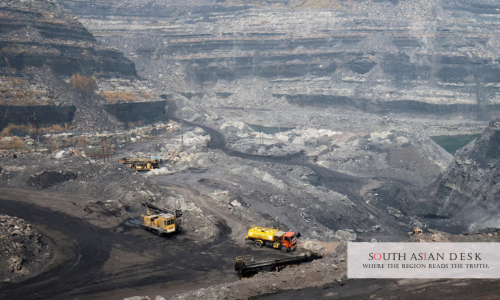
India’s mining tax curbs on states have cleared parliament this week, with the federal government arguing that uniform national rules are essential to prevent market fragmentation across the country’s mineral-rich regions. The legislation restricts state governments from imposing new taxes, cesses or other levies on mineral rights and mineral-bearing lands unless such charges are permitted under conditions set by New Delhi, marking one of the most significant assertions of central authority over India’s mining sector in recent years.
Why India’s Mining Tax Curbs on States Were Introduced
The bill, which amends the Mines and Minerals (Development and Regulation) Act of 1957, was introduced by Prime Minister Narendra Modi’s government with the explicit aim of making mining rules uniform across India rather than leaving them to vary state by state. In the amendment proposal, the government said the cumulative impact of levies imposed on a mine should not become disproportionate to that mine’s economic value and profitability, a concern that sits at the heart of the case for India’s mining tax curbs on states. Officials also warned that without such curbs, India risks an increase in mineral imports despite holding sufficient domestic reserves, since inconsistent state-level taxation could make locally sourced minerals more expensive than those bought abroad.
Parliament passed the legislation on Thursday, giving New Delhi the power to set conditions and limits on taxes and other levies that regional authorities can impose on minerals. Supporters of India’s mining tax curbs on states argue that a single, predictable tax regime will lower costs for mining companies, reduce fiscal uncertainty and support greater domestic mineral production over time.
The Market Fragmentation Argument Behind the Legislation
Central to the government’s justification for India’s mining tax curbs on states is the concern over market fragmentation. Officials have argued that when individual states impose their own mineral taxes, cesses and land levies without a common ceiling, the result is a patchwork of differing costs across state lines that distorts the national market for minerals and discourages long-term investment. By capping what states can charge, the government contends that India’s mining tax curbs on states will restore a level playing field for miners operating across multiple jurisdictions, reducing the market fragmentation that has emerged in recent years as individual states set their own rates.
That fragmentation became more pronounced following a 2024 Supreme Court ruling that affirmed states’ authority to impose additional taxes on mining activities within their own jurisdictions, separate from the royalties already collected under federal law. In the aftermath of that ruling, several mineral-rich states moved to introduce their own levies. Tamil Nadu, for instance, introduced an additional tax of 160 rupees per tonne on limestone mining, while Karnataka considered a similarly structured mineral rights tax. Industry analysts have said such state-level charges pushed up costs for downstream industries, including cement manufacturers, reinforcing the government’s argument that India’s mining tax curbs on states were necessary to contain the wider economic fallout of uncoordinated taxation.
Constitutional Basis and State Pushback
India’s constitution allows parliament to place limits on state mineral taxation through laws governing mineral development, a power the Supreme Court itself confirmed in its 2024 ruling even as it upheld states’ underlying right to tax mineral-bearing land. The new legislation relies directly on that parliamentary authority, and it is this constitutional foundation that gives India’s mining tax curbs on states their legal grounding despite objections from regional governments.
The move is expected to heighten tensions between New Delhi and mineral-rich states, many of which view mining levies as an important and growing source of revenue. States including Jharkhand, Odisha, Chhattisgarh, Madhya Pradesh, West Bengal and Telangana have collectively drawn substantial income from mining royalties and related charges in recent years, and officials in several of these states have previously argued that taxation of mineral-bearing land is a matter that falls within their own constitutional domain. India’s mining tax curbs on states are likely to be contested by these governments, which may push back through political channels or further litigation over where the line between federal and state taxing power should sit.
What Comes Next for India’s Mining Sector
With parliament having passed the legislation, attention now turns to how the federal government will define the specific conditions and ceilings that states must operate within. Industry groups have broadly welcomed India’s mining tax curbs on states as a step toward greater investment certainty, though how the law is implemented in practice, and how mineral-rich states respond, will determine whether the goal of preventing market fragmentation is actually achieved. For now, the passage of the bill signals that New Delhi intends to keep a firmer hand on mineral taxation nationwide, even as it navigates the political friction that comes with limiting the fiscal autonomy of India’s states.
Published in SouthAsianDesk, August 15th, 2026
Follow SouthAsianDesk on X, Instagram and Facebook for insights on business and current affairs from across South Asia.