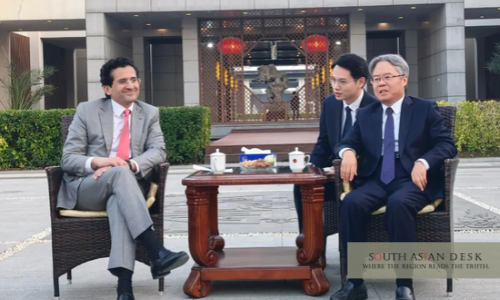
LPG and MoGas projects have been identified as early priorities for cooperation between Pakistan and China, the petroleum ministry said on Wednesday, after a meeting between Federal Minister for Petroleum Ali Pervaiz Malik and China’s Ambassador to Pakistan, Jiang Zaidong. The two sides agreed to fast-track a liquefied petroleum gas (LPG) plant with associated storage and terminal facilities, and the import of motor gasoline (MoGas), as part of efforts to strengthen fuel security and expand Chinese investment in Pakistan’s energy sector.
What Pakistan and China Agreed on LPG and MoGas Projects
The ministry described both items as government-to-government priorities for early action. The LPG plant is intended to expand domestic supply, widen access to cleaner fuel and ease peak-season shortages. The MoGas arrangement covers the sourcing, storage and logistics of imported motor gasoline, with the aim of securing reliable and competitively priced supply. The ministry said both projects are expected to deliver early, visible benefits for consumers and the wider economy.
Zafar Abbas, Additional Secretary (Policy), and Pakistan State Oil (PSO) Chief Executive Officer Jawwad Ahmed Cheema accompanied the minister. The ambassador attended with his commercial team. The statement came from the Pakistani side, and no separate statement from China was included in the report.
Why Fuel Security Is in Focus
The meeting took place against a backdrop of strain in Pakistan’s gas markets. The managing director of Sui Southern Gas Company said earlier this month that national gas output has fallen by about 50 percent over the past decade and that imported LNG has been hard to secure since April because of the Iran war. Household supply on its network is now limited to three meal times.
The LPG market has also faced pricing difficulties. Business Recorder reported on 23 November that a record 20,000-tonne LPG cargo from Abu Dhabi, the first major shipment under the cabinet’s revised 3 November import and pricing policy, berthed at Port Qasim on 18 November. Its landed cost of about Rs465,000 per tonne was higher than prevailing local market rates, which had fallen below Rs400,000 per tonne, and buyers were reluctant to purchase at the higher price. The two state-owned importers, SSGC LPG Limited and PSO, could lose an estimated Rs1 billion on the shipment, according to the report. Open-market prices of Rs500 to Rs550 per kilogram were attributed to supply constraints, low Sui gas pressure and seasonal demand.
A new LPG plant could in principle address supply, but whether it would lower prices depends on factors that the ministry’s statement does not describe.
The Joint Commercial Team and Wider Energy Cooperation
To turn the discussion into results, both sides agreed to set up a Joint Commercial Team with representatives from Pakistan and China. According to the ministry, the team will evaluate the identified opportunities, engage prospective companies, assess investment and partnership models, and prepare a structured roadmap for projects across upstream, offshore and downstream operations. That roadmap is meant to cover the LPG plant and MoGas imports, as well as minerals and mining.
The wider discussion covered upstream oil and gas exploration, offshore development, mineral exploration, mining and strategic energy infrastructure. The ministry said particular emphasis was placed on unlocking investment in Balochistan and on offshore opportunities, including integrated offshore hubs. The talks also covered the entry of Chinese downstream companies through partnerships with PSO, which the ministry described as the key commercial partner for Chinese investment in downstream energy. Oil and Gas Development Company Limited (OGDCL) is expected to be brought together with Chinese upstream and downstream firms.
The two sides also discussed more efficient import and export policies and streamlined procedures to facilitate trade, technology transfer and cross-border business. The meeting came days after China hosted the 33rd APEC Economic Leaders’ Meeting in Shenzhen on 18 and 19 November.
Questions the Statement Leaves Open
The ministry’s statement gave no cost estimates, location for the plant, ownership structure, financing arrangement or timeline for either project. It did not say which Chinese companies might be involved, how the government-to-government arrangement would work, or how the MoGas imports would be priced. The claim that the projects would deliver early benefits is the ministry’s own, and no independent assessment was provided.
Minister Ali Pervaiz Malik highlighted the government’s resolve to continue deregulating the petroleum sector and pledged to facilitate and protect investors. He said the priority is to move from discussions to implementation. Ambassador Jiang Zaidong reaffirmed China’s support for Pakistan, welcomed the proposed engagement framework and said China was keen to explore investment opportunities and business-to-business links.
What Comes Next
The first step is the formation and work of the Joint Commercial Team, whose assessment of investment models will determine whether the LPG and MoGas projects move beyond an agreement in principle. Details such as site selection, financing and pricing will be the real test of how quickly they can be delivered.
For now, the announcement sets out priorities and a mechanism, and not a funded project. Whether it helps consumers will depend on whether the plant and import arrangements can be delivered at competitive costs, at a time when LPG prices and supply remain under pressure.
Follow SouthAsianDesk on X, Instagram and Facebook for insights on business and current affairs from across South Asia.