Sri Lanka inflation accelerated to 8.5 percent in October, its highest reading this year, as higher petrol prices and bus fares pushed up transport costs and households paid more for vegetables and milk powder, according to official data from the Census and Statistics Department. Annual inflation had held at 8.1 percent in August and September, after climbing from 1.6 percent in February. The October rate was more than three times the 2.7 percent recorded a year earlier.
What Is Driving Sri Lanka Inflation
Non-food inflation rose to 9.5 percent from 9.1 percent in September and accounted for more than three-fifths of the annual increase in consumer prices. Transport was the largest single contributor, adding 2.45 percentage points to the headline rate. Petrol alone contributed 1.21 points, followed by bus fares at 0.36 points, diesel at 0.20 points and school and preschool transport at 0.19 points.
Housing and utilities were the next-largest non-food contributor at 1.17 percentage points, reflecting higher rents, maintenance costs, cooking gas prices and electricity bills. Restaurants and hotels added 0.52 points, and education added 0.39 points, mostly because of higher tuition fees. Fees at private medical practices accounted for the largest share of the health category’s contribution.
Food Prices and the Monthly Picture
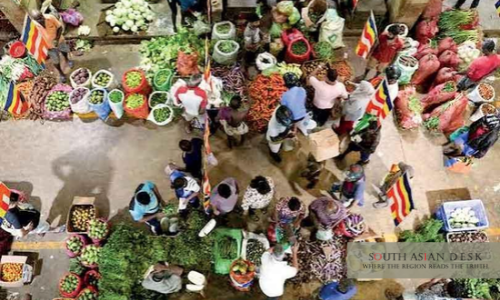
Food inflation rose to 7.2 percent from 6.9 percent in September, and was more than double the 3.3 percent recorded in June. Vegetables made the largest contribution to the annual rise in food prices, followed by fresh fish, dried fish and big onions. Milk powder, fruit, chicken and eggs were also more expensive than a year earlier, while lower coconut and rice prices offset part of the increase.
The monthly figures showed a reversal in transport costs. Consumer prices rose 0.41 percent from September, up from 0.11 percent the previous month. Transport added 0.19 percentage points to the October increase after subtracting 0.15 points in September, with petrol accounting for most of the turnaround and vehicle servicing charges and three-wheeler fares also rising. Airfares fell over the month. Non-food items contributed 0.33 percentage points to the monthly increase, and food contributed 0.08 points.
The National Consumer Price Index rose to 225.1 from 224.2 in September. The cost of the 485-item basket used to compile the index increased by Rs466 from September and by Rs8,951 from a year earlier. The 12-month average inflation rate climbed to 5.0 percent from 4.5 percent.
The Central Bank’s Response
The higher readings come after months of energy-driven pressure. Sri Lanka imports all of its oil, and reports from earlier this year said fuel was rationed and prices had risen by about 35 percent since March because of the war involving Iran. The Central Bank of Sri Lanka raised its Overnight Policy Rate by 100 basis points to 8.75 percent in May to steady the currency and protect foreign exchange reserves, and held it unchanged at its September meeting.
On 19 November the bank’s Monetary Policy Board raised the rate by a further 25 basis points to 9.00 percent in response to rising inflationary pressures, according to reports of its announcement. Governor Nandalal Weerasinghe said at a press conference on 20 November that inflation could reach or exceed 9 percent by December. The bank had earlier projected headline inflation to remain in the high single digits through the first quarter of 2027 before easing towards its 5 percent target. The government and the bank agreed to keep that target, with a margin of two percentage points either way, for the next three years.
Which Inflation Measure Is Which
The 8.5 percent figure reported in October is from the National Consumer Price Index, which covers the whole country. The central bank’s inflation target is set against the Colombo Consumer Price Index, also compiled by the Census and Statistics Department, which is published separately and can differ from the national figure. Readers comparing the two sets of numbers should therefore be careful to check which index a figure refers to.
What the Data Does Not Show
The report did not give a forecast for November or say how much of the increase is expected to be temporary. It also did not break down how households on different incomes are affected, although transport and food typically take a larger share of lower-income budgets. Those effects are not measured by the headline rate, and the data does not show them.
What Comes Next
The next readings will show whether the October increase is the start of a further climb or a peak. Fuel prices, the exchange rate and food supply will be the main factors to watch, and the central bank’s own warning suggests that it expects further increases in the near term. The effect of the latest rate rise on borrowing costs and demand will also take time to appear.
For now, Sri Lanka inflation is at its highest level this year, and the data points to transport costs as the main driver, with food and housing costs adding to the pressure. Whether it eases towards the 5 percent target in 2027, as the central bank projects, will depend largely on energy prices.
Follow SouthAsianDesk on X, Instagram and Facebook for insights on business and current affairs from across South Asia.
Read more: https://southasiandesk.com/rbi-interest-rate-hikes/