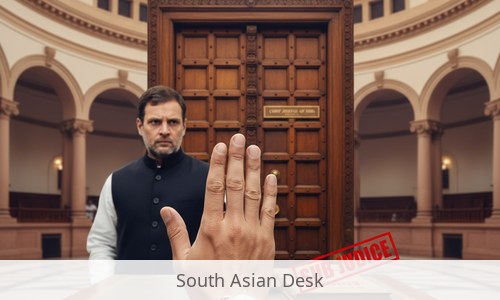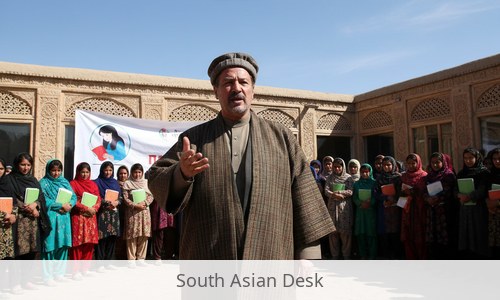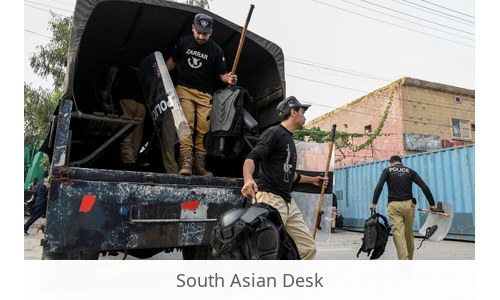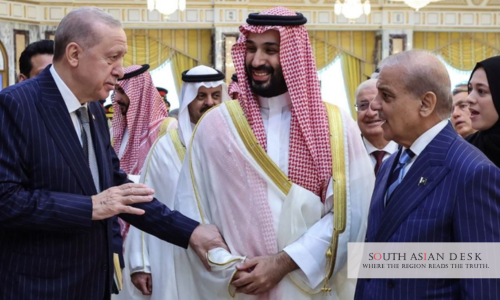
The Makkah Joint Defence Agreement, signed on Friday 7 August 2026, commits Pakistan, Saudi Arabia and Turkiye to treat an armed attack against any one of the three states as an attack against them all. The pact was concluded at Al-Safa Palace during the Makkah Al-Mukarramah Summit for Joint Defence, and was signed by Prime Minister Shehbaz Sharif, Saudi Crown Prince and Prime Minister Mohammed bin Salman, and Turkish President Recep Tayyip Erdogan.
The three governments announced the signing in a joint statement released through the Pakistani Foreign Office and Saudi Arabia’s official press agency.
What the Makkah Joint Defence Agreement commits the signatories to do
According to the joint statement, the agreement is intended to strengthen collective deterrence against any act of aggression, and stipulates that an armed attack against any one of the three states shall be regarded as an attack against all of them. It further provides for the enhancement of all aspects of defence cooperation among the signatories.
The statement described the pact as guided by the longstanding historical ties among the three states, resting on bonds of brotherhood and Islamic solidarity, and building upon shared strategic interests and established defence cooperation. During the summit, the three delegations reviewed bilateral relations and discussed a number of issues of mutual interest.
Chief of Defence Forces and Chief of the Army Staff Field Marshal Asim Munir, Deputy Prime Minister and Foreign Minister Ishaq Dar, and Defence Minister Khawaja Asif attended the signing ceremony for Pakistan. The defence and foreign ministers of Saudi Arabia and Turkiye were also present.
The choice of venue carries considerable symbolic weight. Concluding the arrangement in Makkah, the holiest site in Islam, frames a security instrument within the language of religious solidarity, while the substance of the pact rests on decades of bilateral military cooperation among the three capitals.
Leaders frame the pact as a shield of peace
Prime Minister Shehbaz Sharif described the agreement as a historic pact, stating that the three countries were united by faith, friendship and a shared commitment to peace and security. Writing on X, he said he was honoured to sign the document alongside the Saudi crown prince and the Turkish president, and expressed the hope that it would serve as a shield of peace for generations and bring prosperity to the wider Muslim world. He also acknowledged the role of Field Marshal Asim Munir in bringing the agreement to conclusion.
Information Minister Attaullah Tarar, speaking to a private television channel, called the signing a historic day for Pakistan and said the framework reflected growing recognition of the country’s defence capabilities. He characterised the arrangement as a form of deterrence rather than aggression, and said Pakistan’s capabilities had been demonstrated during last year’s conflict with India, asserting that the country had since contributed to regional peace.
Saudi Foreign Minister Faisal bin Farhan said the signing underscored the depth of fraternal and strategic relations between the three states, and marked an important milestone in their defence cooperation. He said the pact reflected a shared political will to safeguard security and to address challenges affecting regional stability.
Riyadh stresses the limits of the agreement
Saudi Arabia’s Deputy Minister for Public Diplomacy Rayed Krimly sought to define the boundaries of the arrangement, writing on X that it does not represent an effort to establish a military axis or a sectarian bloc, and that it is not linked to nuclear ambitions or to an arms race. He said the focus is on building sustainable capabilities.
He added that the pact does not constitute a threat to the security of any country in the region, does not represent an escalation of tensions between any two states, and does not supersede or replace existing bilateral or multilateral agreements.
The strategic weight each signatory brings
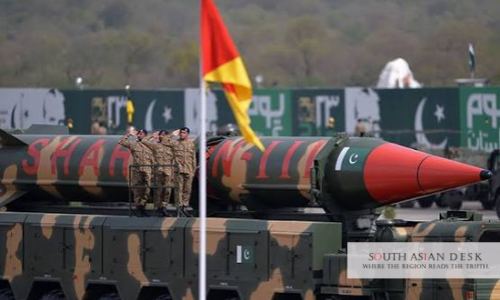
The Makkah Joint Defence Agreement links three states with markedly different strengths. Pakistan is the only nuclear-armed Muslim-majority country. Saudi Arabia is home to Islam’s holiest sites and ranks among the world’s leading oil exporters. Turkiye maintains the second-largest military within NATO.
Mansoor Ahmed of the Australian National University’s Strategic and Defence Studies Centre observed that Islamabad and Ankara bring strong defence industries to the arrangement, while Riyadh is positioned to contribute through technological spending.
The pact in a wartime regional context
The agreement was concluded against the backdrop of the conflict involving the United States, Israel and Iran, which has drawn Gulf energy exporters into the line of fire, with Iran targeting Gulf states in retaliation for attacks launched from American military facilities in the region.
It also follows the collapse of the 2022 truce between Riyadh and the Houthi movement in Yemen. After the two sides exchanged fire for the first time in years last month, the Houthis declared a maritime blockade against the kingdom, threatening access to its ports, and claimed attacks on Saudi tankers in the Red Sea. Pakistan condemned those threats and warned that it retained the right to self-defence should its maritime interests be targeted.
Saudi Arabia last week announced plans for a multinational maritime defence coalition to protect shipping and energy supply routes in the Red Sea. Fourteen countries, including Pakistan, have voiced support for the initiative. Pakistan has sought to mediate an end to the conflict with Iran, while Turkiye has played a diplomatic role in negotiations over Gaza.
Building on existing bilateral defence ties
The trilateral arrangement formalises cooperation that has developed over decades. Pakistan has provided training and technical assistance to Saudi forces for many years, while Pakistan and Turkiye have exchanged warships and training aircraft. In 2023, Riyadh agreed to purchase Turkish drones in what Ankara described as its largest defence export contract, and in April this year Saudi Arabia confirmed the arrival of a Pakistani military force and fighter jets to reinforce the kingdom’s security.
Pakistan and Saudi Arabia had already signed the Strategic Mutual Defence Agreement in Riyadh in September 2025, under which an attack on either state would be treated as aggression against both. Reports in January this year indicated that Ankara was seeking to join that bilateral framework, and that a draft text had been prepared after ten months of negotiation. Turkish Foreign Minister Hakan Fidan said at the time that Ankara favoured an inclusive platform capable of generating broader cooperation and stability.
Published in SouthAsianDesk, August 10th, 2026
Follow SouthAsianDesk on X, Instagram and Facebook for insights on business and current affairs from across South Asia.