Nepal Money Laundering Probe Widens Under Balendra Shah Government
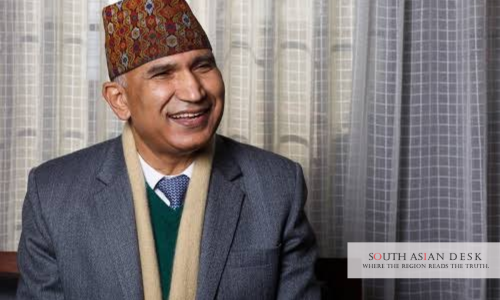
Nepal money laundering probe has widened with the arrest of former finance minister Bishnu Prasad Paudel, a senior figure in the Communist Party of Nepal-Unified Marxist Leninist, in a case that adds fresh pressure on the country’s old political establishment.
Police said Paudel, 66, was arrested late on Monday in western Nepal and was being brought to Kathmandu to be handed over to the Department of Money Laundering Investigation. He is one of the most prominent political figures detained since Prime Minister Balendra Shah’s government began pursuing cases linked to alleged corruption and abuse of public office under previous administrations.
Paudel served as finance minister multiple times and was a key figure in the government of former prime minister K.P. Sharma Oli. His arrest comes months after Oli’s administration was brought down following the Gen Z-led anti-corruption protests that shook Nepal last year. At least 76 people were killed and more than 2,500 injured during the unrest, which also saw several public buildings, including parliament, set ablaze.
Shah, a rapper-turned-politician who rose to national prominence as Kathmandu mayor, took office in March after his Rastriya Swatantra Party secured a sweeping electoral mandate. His campaign centred heavily on political accountability, public-sector reform and action against entrenched corruption.
The latest arrest therefore carries political weight beyond the immediate allegations. It signals that the government’s anti-corruption drive is now reaching senior leaders of parties that have dominated Nepal’s politics for decades.
Bishnu Prasad Paudel Arrested Amid Wider Anti-Corruption Crackdown
According to Nepali media reports, Paudel was detained in Surkhet after the Department of Money Laundering Investigation issued an arrest warrant. Local reporting has linked the investigation to a wider case involving businessman Deepak Bhatta and disputed share transactions, although the department has not publicly disclosed the full details of the allegations against Paudel.
The Kathmandu Post reported that an official involved in the investigation said Paudel was taken into custody for further questioning after his name emerged in connection with the Bhatta case. The report said investigators were examining allegations that a businessman was pressured to sell company shares at a discounted price.
Paudel has not publicly commented on the case. Reuters reported that he could not be reached for comment, while a CPN-UML official said senior party leaders would meet to discuss the development.
The CPN-UML has objected to the arrest, describing it as unlawful and politically motivated. Former prime minister Oli’s party has previously accused the Shah government of using investigations to target opposition leaders, particularly after Oli and his former home minister were arrested earlier this year over their alleged failure to prevent the deadly protest crackdown. Both were later released on bail.
The government, however, has framed the cases as part of a broader effort to restore public trust after last year’s unrest. In April, Shah’s administration also set up a panel to investigate the assets of current and former politicians and officials who have held public office since the abolition of Nepal’s monarchy in 2008.
Why the Arrest Matters for Nepal’s Politics
Paudel is not a minor figure in Nepali politics. He has held several ministerial portfolios across different governments and has repeatedly returned to the finance ministry, making him one of the country’s most experienced economic policymakers. His arrest is therefore likely to deepen confrontation between the ruling RSP and the UML-led opposition.
The case also comes at a sensitive time for Nepal’s financial governance. Money laundering investigations have become politically significant as the country faces pressure to strengthen oversight of illicit finance, corporate transactions and public-sector corruption. A high-profile arrest involving a former finance minister will inevitably test whether the Shah government can pursue accountability without allowing the process to appear selective or politically retaliatory.
For Shah, the stakes are equally high. His rise was powered by public anger against corruption and frustration with Nepal’s established parties. But turning that public mandate into credible prosecutions will require transparent investigations, due process and clear evidence capable of standing up in court.
For the opposition, Paudel’s arrest is likely to become a rallying point against what it sees as the criminalisation of politics. For the public, however, the central question will be whether the investigation produces facts, charges and judicial findings, or becomes another episode in Nepal’s long cycle of accusation and political backlash.
As the Department of Money Laundering Investigation takes custody of Paudel, the case is expected to become a major test of Nepal’s post-protest political order: whether anti-corruption promises can be converted into lawful accountability, and whether senior leaders can be investigated without turning the courts and enforcement agencies into another battleground between rival parties.
Published in SouthAsianDesk, June 24, 2026
Follow SouthAsianDesk on X, Instagram and Facebook for insights on business and current affairs from across South Asia.