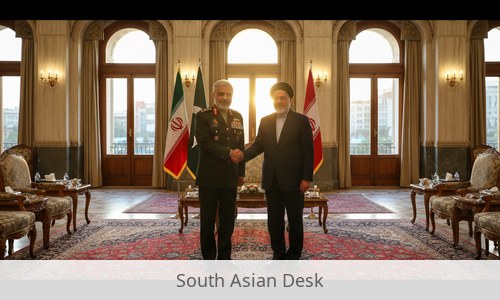
Pakistan Iran peace talks are set to take center stage as Pakistan’s Army Chief Asim Munir is scheduled to visit Tehran on August 24, 2026, to facilitate peace negotiations between Iran and the United States, according to Iran’s foreign ministry spokesperson Esmaeil Baghaei. This visit underscores Pakistan’s potential role as a mediator in U.S.-Iran relations, a critical juncture in regional security dynamics.
Pakistan Iran peace talks: Pakistan’s Mediation Role
Pakistan has long asserted its position as a communication channel between Iran and the United States, a claim that analysts have debated. While some argue that Pakistan’s strategic location and historical ties to both nations position it as a viable intermediary, others question the extent of its influence in high-stakes negotiations. The visit underscores Pakistan’s efforts to leverage its regional relationships to de-escalate tensions.
Pakistan’s role as a mediator is not new. Historically, the country has served as a bridge between South Asia and the Middle East, with its geographic proximity to both Iran and the U.S.-aligned Gulf states. During the 1970s, Pakistan played a key role in facilitating dialogue between Iran and the United States during the early years of the Iranian Revolution. More recently, Pakistan has maintained a delicate balance between its strategic partnerships with China and its regional neighbors, including Iran. This balancing act has positioned Pakistan as a potential mediator in disputes involving both the U.S. and Iran.
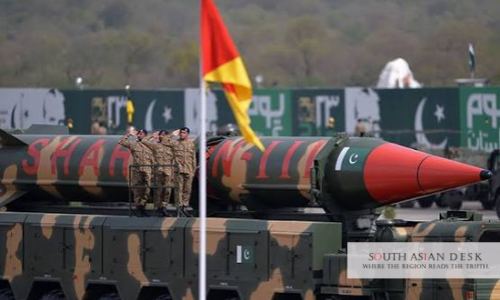
The current visit by General Munir is particularly significant given the complex geopolitical dynamics of the region. Pakistan’s nuclear arsenal and its role as a key player in the South Asian security architecture add weight to its potential mediation efforts. However, analysts caution that Pakistan’s influence may be limited by its own domestic challenges, including economic instability and internal security concerns. The success of such mediation would depend on the willingness of both the U.S. and Iran to engage in meaningful dialogue, as well as Pakistan’s ability to maintain its credibility as a neutral party.
Implications for Regional Security
The success of Munir’s mediation could have significant implications for regional security. A resolution in U.S.-Iran relations might ease broader geopolitical dynamics in South Asia, affecting trade routes, energy corridors, and security alliances. Conversely, unresolved tensions could exacerbate regional instability, with potential ripple effects on neighboring countries.
One of the most immediate impacts of improved U.S.-Iran relations would be on trade and energy corridors in the region. The Chabahar Port project, a joint initiative between Iran, India, and Pakistan, could benefit from reduced tensions, as it serves as a critical link for trade and connectivity between South Asia and the Persian Gulf. Similarly, the Iran-Pakistan gas pipeline, which has long been a point of contention due to geopolitical and economic factors, could see renewed interest if the U.S. and Iran reach a mutual understanding.
Security alliances in the region could also be reshaped by the outcome of these talks. Pakistan’s strategic partnership with China, particularly through the China-Pakistan Economic Corridor (CPEC), has already positioned it as a key player in regional infrastructure and trade. A de-escalation of U.S.-Iran tensions might reduce the need for Pakistan to maintain a strong military posture against both powers, potentially allowing it to focus more on economic development and regional integration.
However, the risks of unresolved tensions remain high. Continued hostilities between the U.S. and Iran could lead to increased militarization in the region, with potential spillover effects on Pakistan’s security. The presence of U.S. military assets in the Gulf and Iran’s regional influence through proxy groups could create a volatile environment, complicating Pakistan’s ability to maintain its neutrality.
Asim Munir visit Iran: A Strategic Move
Asim Munir’s visit to Iran is a strategic move that highlights Pakistan’s mediation role in U.S.-Iran relations. The visit comes at a time when regional security is under pressure due to ongoing conflicts and shifting alliances. Pakistan’s ability to navigate these dynamics will be crucial in determining the success of the peace talks.
The visit also reflects the broader geopolitical dynamics at play. With the U.S. and Iran locked in a protracted standoff, Pakistan’s role as a mediator is both a challenge and an opportunity. The success of these talks could set a precedent for future negotiations, reinforcing Pakistan’s position as a key player in regional diplomacy.
Follow SouthAsianDesk on X, Instagram and Facebook for insights on business and current affairs from across South Asia.
Sources
- Pakistan’s army chief back in Iran: Can he break peace talks deadlock? – aljazeera.com
- Iran says Pakistan’s army chief to visit Tehran on Monday – ariananews.af