Pakistan Turkiye energy MoUs signed in Istanbul mark a new step in Islamabad’s effort to reform its power sector, strengthen electricity institutions and learn from Turkiye’s experience in distribution privatisation.
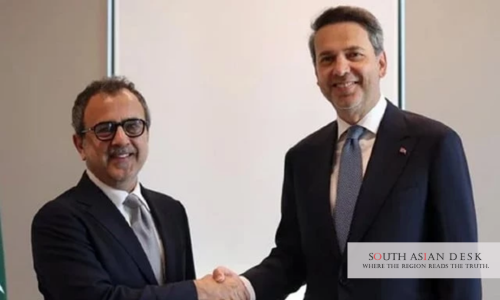
The three memorandums of understanding were signed during high-level consultations between Pakistani and Turkish officials, led on the Pakistani side by Federal Minister for Power Sardar Awais Ahmad Khan Leghari and Adviser to the Prime Minister on Privatisation Muhammad Ali. Turkiye’s side was led by Energy and Natural Resources Minister Alparslan Bayraktar.
The agreements focus on institutional cooperation, technical assistance, electricity market development, transmission planning and the management of distribution companies. For Pakistan, the timing is significant. The country is trying to reduce losses, improve recoveries, attract private investment and make its electricity system more financially sustainable.
Pakistan Turkiye Energy MoUs Cover Key Power Institutions
The three MoUs were signed between major energy-sector institutions from both countries.
The first MoU was signed between Pakistan’s Independent System and Market Operator and Turkiye’s Energy Exchange Istanbul. This agreement focuses on electricity market development, market operations, digital systems and the wider technical framework needed for a more competitive power market.
The second MoU was signed between Pakistan’s ISMO and the Turkish Electricity Transmission Corporation. This agreement covers cooperation in transmission system operations, power system planning, grid management and capacity development.
The third MoU was signed between Pakistan’s Power Planning and Monitoring Company and the Turkish Electricity Distribution Corporation. This agreement is linked to distribution-sector governance, post-privatisation frameworks, digitalisation and operational improvement.
Together, the agreements create a formal channel for training programmes, study visits, knowledge sharing and joint institutional projects.
Why the Agreements Matter for Pakistan’s Power Sector
Pakistan’s power sector has long struggled with circular debt, weak recoveries, high transmission and distribution losses, governance gaps and politically sensitive tariff decisions. Distribution companies, commonly known as DISCOs, remain at the centre of many of these problems because they are responsible for billing, recovery and last-mile delivery of electricity.
The government is currently pursuing reforms aimed at improving DISCO performance and preparing selected companies for private-sector participation. Faisalabad Electric Supply Company, Gujranwala Electric Power Company and Islamabad Electric Supply Company have been among the more commercially viable distribution companies identified in recent privatisation discussions.
This is where Turkiye’s experience becomes relevant. Turkiye has already gone through major electricity distribution reforms and privatisation. Pakistan is looking to study that model, particularly how distribution companies were restructured, regulated and monitored after private-sector involvement.
Turkiye Offers Technical Support and Investor Links
During the consultations, Turkiye expressed readiness to share technical expertise with Pakistan in electricity distribution, regulatory design and power-sector governance. Turkish officials also indicated support for stronger links between Pakistani authorities and Turkish companies.
The discussions included ways to encourage Turkish investors and energy companies to explore opportunities in Pakistan’s power sector. For Islamabad, this is not just about technical reform. It is also about investor confidence.
Pakistan wants to present its privatisation process as transparent, competitive and investor-friendly. Officials have stressed policy consistency, regulatory certainty, improved corporate governance and commercially viable market structures as key conditions for attracting serious investors.
Focus on DISCO Privatisation and Market Reform
A central part of the Istanbul talks was the restructuring and possible privatisation of electricity distribution companies. Pakistan’s government has argued that private-sector participation can help improve operational performance, reduce losses and lower the burden on public finances.
However, privatisation alone will not solve the sector’s problems unless supported by stronger regulation, better governance, realistic tariffs, improved recoveries and protection for consumers. The MoUs appear designed to address some of those institutional gaps by bringing Pakistani entities into closer contact with Turkish counterparts that have experience in market operations, transmission management and distribution oversight.
The cooperation on ancillary services is also important. Ancillary services help maintain grid stability by managing frequency, reserves and system reliability. As Pakistan’s electricity market evolves, such technical arrangements will become increasingly important for a more modern and responsive power system.
A Step Toward Long-Term Energy Cooperation
The signing of the MoUs also reflects the broader strategic relationship between Pakistan and Turkiye. Both countries have long maintained close political and defence ties, but energy cooperation is becoming a more practical area of engagement.
For Pakistan, the agreements offer access to technical knowledge at a time when its power sector is under pressure to reform. For Turkiye, they open space for institutional influence, technical exports and potential investment opportunities in a large emerging energy market.
The real test, however, will come after the signing ceremony. Pakistan has signed many cooperation agreements in the past, but implementation has often been slow. The value of these MoUs will depend on whether they lead to concrete training, regulatory improvements, better planning, credible privatisation structures and measurable improvements in DISCO performance.
If followed through properly, the Pakistan Turkiye energy MoUs could support a more disciplined reform process. If they remain limited to consultations and study visits, their impact will be modest.
For now, the agreements give Pakistan another route to learn from an international reform model as it tries to fix one of the most difficult parts of its economy: the power sector.
Published in SouthAsianDesk, June 28, 2026
Follow SouthAsianDesk on X, Instagram and Facebook for insights on business and current affairs from across South Asia.