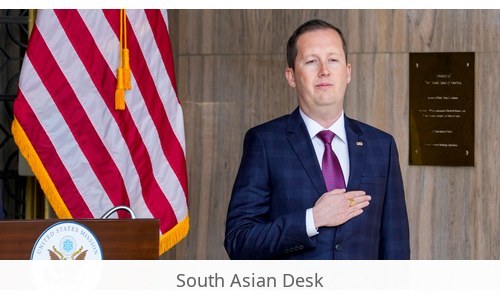
Pakistan US diplomat summon on August 21, 2026, as the country summoned US Ambassador Sergio Gor following his remarks on Jammu and Kashmir, reflecting ongoing diplomatic tensions. The move underscores the sensitivity of the region in South Asian geopolitics and highlights the delicate balance of international relations in the area, particularly in the context of geopolitical tensions South Asia.
Pakistan US diplomat summon: Historical Context of Jammu and Kashmir
Jammu and Kashmir has been a contentious issue between India and Pakistan since the partition in 1947. The region’s status remains integral to both countries’ national identities and foreign policies. The dispute has historically shaped South Asian geopolitics, with periodic flare-ups influencing regional stability and international diplomatic engagements.
The 1947-48 war over the region, followed by the 1965 and 1971 conflicts, established the Line of Control (LoC) as the de facto border. Despite multiple rounds of bilateral talks, including the 2003 ceasefire agreement, the core issue of sovereignty remains unresolved. The 2019 abrogation of Article 370 by India, which stripped Jammu and Kashmir of its special autonomous status, further complicated the situation, prompting renewed tensions and cross-border skirmishes.
Reactions from Indian Officials
Randhir Jaiswal, spokesperson for the Ministry of External Affairs, reiterated that Jammu and Kashmir and Ladakh are integral parts of India. The Indian government views foreign comments on the region as sensitive and potentially destabilizing, emphasizing its sovereignty over the territory. This stance aligns with longstanding Indian policy, which rejects any external mediation on the issue. India’s position is rooted in its constitutional framework and historical claims, with the government consistently asserting that the region is an inseparable part of its territory. The Ministry of External Affairs has previously warned against foreign interference in what it describes as an internal matter, a position reinforced by the 2019 decision to revoke the region’s special status.
Implications for US-Pakistan Relations
The Pakistan US diplomat summon incident could strain relations, especially in the context of ongoing geopolitical challenges. Pakistan’s response may influence future US diplomatic engagements in the region, particularly as both nations navigate complex security and economic dynamics. The incident also raises questions about the role of external actors in South Asian disputes, where regional actors often resist foreign intervention.
The US has historically maintained a delicate balancing act in South Asia, engaging with both India and Pakistan while managing its strategic interests in Afghanistan and the broader Indo-Pacific region. Pakistan’s frustration with US comments on Jammu and Kashmir may complicate ongoing security cooperation, including counterterrorism efforts and military-to-military ties. The incident could also impact US Pakistan relations, which have been affected by sanctions and counterterrorism designations.
Regional Geopolitical Dynamics
The sensitivity of Jammu and Kashmir extends beyond bilateral relations, affecting broader South Asian geopolitics. The region’s strategic location, bordering China, makes it a focal point for regional power dynamics. China’s growing influence in the region, including infrastructure projects under the China-Pakistan Economic Corridor (CPEC), adds another layer of complexity. Pakistan’s alignment with China on issues related to Jammu and Kashmir has often put it at odds with the US, which has historically supported India’s position on the dispute.
The US’s recent comments may have been perceived as tilting the balance in favor of India, prompting Pakistan to assert its diplomatic grievances. This incident highlights the challenges of multilateral diplomacy in a region where historical grievances and strategic interests intersect. The India Pakistan diplomacy landscape remains fraught with challenges, as both nations seek to assert their positions without escalating hostilities.
Broader Implications for South Asian Stability
The Pakistan US diplomat summon underscores the fragility of regional stability in South Asia, where unresolved disputes and external interventions often lead to volatility. The US’s role as a global power with strategic interests in the region means its statements on sensitive issues can have ripple effects. Pakistan’s diplomatic response signals its determination to protect its interests and challenge what it perceives as external overreach.
However, the incident also risks escalating tensions at a time when regional cooperation on issues like climate change, trade, and counterterrorism is critical. The South Asian Association for Regional Cooperation (SAARC) has long struggled to address such disputes, with member states often prioritizing bilateral concerns over collective action.
Follow SouthAsianDesk on X, Instagram and Facebook for insights on business and current affairs from across South Asia.
Sources
- Pakistan’s move to summon US diplomat a sign of its frustration over Gor’s J&K comment: MEA – indianexpress.com
- ‘Pakistan’s Frustration’: India On Reaction To Sergio Gor’s J&K Comment – ndtv.com
Image: images.indianexpress.com