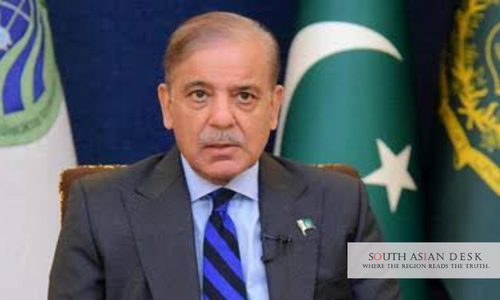
Pakistan’s Middle East peace efforts are continuing without interruption, Prime Minister Shehbaz Sharif told the federal cabinet in Islamabad on Wednesday, as instability in the region pushed global oil prices sharply higher. Addressing the meeting, the prime minister said Islamabad was playing its role in restoring peace “as before,” a reference to the diplomatic engagement it has maintained since the conflict began earlier this year.
Pakistan’s Middle East Peace Efforts and the Fuel Price Pressure
According to Dawn, Prime Minister Shehbaz Sharif said global oil prices had “skyrocketed” because of the instability in the region. The remark linked the diplomatic work abroad to the economic strain at home, a connection that Pakistani officials have drawn repeatedly in recent months. Earlier in the year, the prime minister said the war had erased two years of the country’s economic gains, and he has since urged collective effort to overcome the resulting challenges.
During the cabinet session, the premier recalled Pakistan’s recent engagements with Tehran and other regional actors. He also pointed to consultations held under the Makkah Joint Defence Agreement, which forms part of Islamabad’s wider security cooperation with its partners in the Gulf and beyond.
How the Diplomatic Role Took Shape
Pakistan’s position as an intermediary developed after the United States and Israel launched attacks on Iran on February 28, an escalation that plunged the region into turmoil. In the weeks that followed, Islamabad offered itself as a venue for dialogue, and Prime Minister Shehbaz Sharif publicly said Pakistan was ready and honoured to host talks between Washington and Tehran.
That offer led to the first direct round of Iran-US dialogue, mediated by Pakistan, which concluded in Islamabad after nearly 21 hours without a breakthrough. The talks nonetheless helped secure a two-week US-Iran ceasefire, which was later extended. Speaking after the meetings, the prime minister cautioned that lasting settlements take time, noting that agreements such as the Good Friday Agreement required months or even years to end hostilities.
Pakistan’s mediation has not been the work of the prime minister alone. Shehbaz Sharif has repeatedly credited Deputy Prime Minister and Foreign Minister Ishaq Dar and Field Marshal Asim Munir, the Chief of Defence Forces, for their roles in sustaining contact with the parties. Foreign partners have also acknowledged the effort. The Qatari prime minister, for instance, expressed full support for Pakistan-led diplomatic initiatives during a telephone call with Sharif in May, while Malaysia’s leadership endorsed Pakistan’s mediation role in separate exchanges.
Regional Stability and the Economic Stakes
For Islamabad, the pursuit of regional stability is both a diplomatic priority and an economic necessity. Pakistan imports a large share of its energy, which leaves its budget and household costs exposed whenever oil markets react to tensions in the Gulf. The prime minister has previously noted that austerity measures would continue while the conflict weighed on public finances, and he has expressed hope that a permanent end to the war would allow development to resume.
The latest cabinet remarks suggest the government intends to keep both tracks moving at once. On the diplomatic side, officials continue to engage Iran, Gulf states and other partners. On the domestic side, ministers are managing the impact of elevated fuel costs on consumers and on the national exchequer.
What Comes Next
Although the ceasefire reached earlier this year has been extended, a comprehensive settlement between Washington and Tehran has not yet materialised, and the broader security situation remains fragile. Pakistan has said it will keep working with regional and international partners to encourage dialogue and the peaceful resolution of disputes, in line with respect for international law.
Whether that diplomacy can bring a durable agreement will depend largely on the willingness of the principal parties to return to the negotiating table. For now, the message from Islamabad is one of continuity. As Prime Minister Shehbaz Sharif made clear to his cabinet, Pakistan’s Middle East peace efforts will carry on as before, even as the economic costs of the conflict continue to mount.
Follow SouthAsianDesk on X, Instagram and Facebook for insights on business and current affairs from across South Asia.