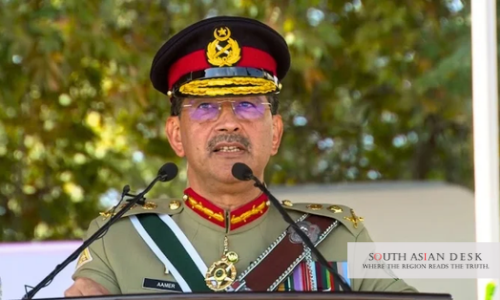
Pakistan’s strategic significance has gained renewed international attention amid the escalating Middle East conflict and shifting global geopolitical dynamics, according to Commander National Strategic Command General Syed Aamer Raza. Addressing a passing-out ceremony at the Pakistan Military Academy (PMA) in Kakul on October 17, 2026, he highlighted Pakistan’s role in promoting regional stability, emphasising its commitment to diplomatic engagement while warning against any violation of its sovereign borders.
General Raza said that recent developments had reinforced Pakistan’s pivotal position on the international stage. He pointed to the country’s role in restoring regional stability, citing the Islamabad Accord as an example of its commitment to peace and diplomatic de-escalation. His remarks come at a time when intensifying regional tensions have increased the importance of diplomacy, credible security arrangements and cooperation among neighbouring states.
Pakistan’s Strategic Significance in a Changing Geopolitical Landscape
The ongoing Middle East conflict has underscored the interconnected nature of regional security and international relations. Pakistan’s geographical position, military capabilities and diplomatic relationships give it an important role in discussions concerning peace and stability across South Asia and the Middle East.
Pakistan shares a border with Iran and maintains longstanding political, economic and security ties with several Gulf countries. Its relationships with major international powers, including China and the United States, further influence its position in an increasingly complex geopolitical environment.
These connections offer Islamabad opportunities to facilitate dialogue, encourage de-escalation and support diplomatic initiatives. However, maintaining constructive relations with countries that have competing strategic interests requires a careful and balanced foreign policy.
General Raza’s remarks reflect the military leadership’s assessment that Pakistan’s international relevance extends beyond its immediate security concerns. The country’s ability to contribute to regional stability will depend on how effectively it manages external relationships while addressing its domestic economic and security challenges.
General Aamer Raza Emphasises National Security and Territorial Integrity
Alongside his comments on Pakistan’s international standing, General Raza reiterated that safeguarding the country’s territorial integrity remained an absolute priority. He warned that Pakistan would not tolerate cross-border aggression or violations of its sovereign territory.
He also cautioned that miscalculations in a nuclearised environment could have consequences far beyond what an adversary might anticipate. His statement highlighted the dangers of military escalation between states possessing significant conventional and strategic capabilities.
The warning reflects the continuing importance of deterrence in Pakistan’s national security policy. At the same time, General Raza maintained that the country remained committed to peace, dialogue and regional stability.
His remarks conveyed a distinction between diplomatic restraint and military preparedness. Pakistan, he indicated, would continue to favour peaceful engagement without compromising its ability to defend its borders.
The emphasis on deterrence also comes amid the changing character of modern warfare. General Raza observed that the rapid spread of disruptive technologies had transformed military operations and challenged traditional doctrines. He said the Pakistan Armed Forces had undertaken a multidomain transformation to strengthen their operational posture in response to these developments.
Middle East Conflict Raises the Stakes for Pakistan’s Strategic Significance and Foreign Policy
The Middle East conflict presents Pakistan with both diplomatic opportunities and substantial strategic risks. Instability in the region can affect energy markets, international trade, maritime transport and the economic interests of countries that depend on Gulf energy supplies.
For Pakistan, these concerns are particularly significant because of its economic links with Gulf states and its proximity to Iran. Prolonged instability could increase pressure on energy prices, complicate trade flows and create additional challenges for an economy already facing structural constraints.
The crisis also requires Islamabad to maintain workable relations with regional countries whose interests do not always align. Preserving diplomatic channels with different parties can help Pakistan encourage negotiations and reduce the risk of further escalation.
Pakistan’s foreign policy therefore faces the challenge of balancing security partnerships with the need for regional cooperation. A sustained commitment to dialogue could strengthen its diplomatic standing, provided that its initiatives produce practical progress towards de-escalation.
However, international recognition alone cannot guarantee lasting influence. Pakistan’s ability to shape regional outcomes will depend on the credibility of its diplomatic efforts, the consistency of its policy decisions and its capacity to sustain constructive engagement with relevant stakeholders.
Islamabad Accord Highlights the Importance of Diplomatic Engagement
General Raza cited the Islamabad Accord as an example of Pakistan’s contribution to regional stability and diplomatic de-escalation. His remarks placed renewed emphasis on dialogue as an instrument for addressing tensions in a volatile international environment.
Diplomatic initiatives can provide a framework for communication, help parties identify areas of common interest and reduce the likelihood of misunderstandings. Their effectiveness, however, depends on the willingness of the parties involved to negotiate and implement agreed commitments.
For Pakistan, supporting peaceful solutions can serve both regional and national interests. Reduced tensions in the Middle East would help limit economic uncertainty, protect important trade and energy connections, and lower the risk of wider confrontation.
The broader challenge is to translate diplomatic engagement into sustainable outcomes. This requires continued communication, confidence-building measures and respect for sovereignty and international law.
Pakistan’s geographical position and established relationships provide potential advantages in these efforts, but their value ultimately depends on the results that diplomatic initiatives deliver.
Modern Warfare and Pakistan’s Evolving Security Priorities
General Raza also highlighted the growing threat posed by disinformation, narrative warfare and proxy activities. He argued that hostile elements sought to exploit internal vulnerabilities to undermine national unity and state institutions.
These concerns illustrate how contemporary security challenges increasingly extend beyond conventional military confrontation. Digital communication, information manipulation, technological innovation and irregular warfare can influence public confidence and complicate national security planning.
The Pakistan Armed Forces’ emphasis on multidomain transformation reflects the need to adapt to these changing conditions. Effective responses require technological preparedness, institutional coordination and the ability to identify emerging threats across different operational environments.
General Raza urged the graduating cadets to remain vigilant against malicious propaganda and committed to their responsibilities. The ceremony marked the completion of training for cadets from the 154th Pakistan Military Academy Long Course, 39th Technical Graduate Course, 73rd Integrated Course and 28th Lady Cadet Course.
His address linked professional military preparedness with the broader objective of protecting Pakistan’s sovereignty and maintaining national cohesion.
Regional Stability Remains Central to Pakistan’s Strategic Interests
Pakistan’s strategic significance is closely connected to the stability of the regions surrounding it. Developments in the Middle East have implications for its economic security, diplomatic relationships and wider regional environment.
The country’s ability to contribute constructively will depend on maintaining a balance between deterrence and diplomacy. While credible defence capabilities remain important, sustained engagement and peaceful dispute resolution are equally relevant to reducing regional tensions.
General Raza’s October 17 address highlighted these priorities, presenting Pakistan as a country determined to protect its sovereignty while continuing to support peace and diplomatic de-escalation.
As global geopolitics evolves, Islamabad faces the task of converting its geographical position, international relationships and security capabilities into durable diplomatic and economic advantages. Progress will require consistent policymaking, regional cooperation and a clear focus on national interests.
Ultimately, the Middle East conflict has renewed attention on Pakistan’s place in international affairs. Whether this increased attention translates into a more influential and stable regional role will depend on the country’s ability to sustain credible diplomacy, manage security risks and contribute to practical solutions for regional peace.
Follow SouthAsianDesk on X, Instagram and Facebook for insights on business and current affairs from across South Asia.