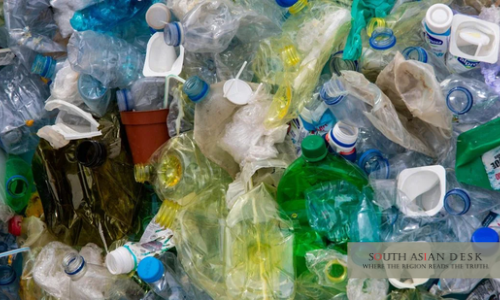
Plastic waste management in Bangladesh is entering a new phase after the government adopted a framework modelled on the polluter-pays principle that has shaped European packaging policy for more than three decades. The Extended Producer Responsibility Guideline for Plastic Waste Management, 2026, requires manufacturers, importers and brand owners to take responsibility for collecting, recycling and safely disposing of the plastic their products leave behind. The Ministry of Environment, Forest and Climate Change issued the guideline through a gazette notification on 13 August, and it took effect immediately.
Why Plastic Waste Management in Bangladesh Needed a Rethink
The need for a binding system has grown as plastic consumption has risen faster than the country’s capacity to handle waste. According to data cited in the guideline, urban per capita plastic consumption increased from 3 kilograms in 2005 to 9 kilograms in 2020, while consumption in Dhaka reached 22.5 kilograms per person. Of an estimated 977,000 tonnes of plastic consumed nationally, only 31 per cent was recycled, and about 12 per cent of plastic waste in Dhaka ended up in canals and rivers.
Bangladesh has long been regarded as a pioneer in plastic policy. In 2002 it became the first country in the world to ban polythene shopping bags, according to the World Bank. However, plastic pollution later rose again, which suggests that bans alone were not enough. The new guideline, issued under Section 13 of the Environment Conservation Act, 1995, is described as the country’s first regulatory framework to impose binding obligations on producers to finance waste management.
How Extended Producer Responsibility Works
Under the principle of extended producer responsibility, the businesses that place plastic on the market must finance and organise what happens to it after use. In Bangladesh, obligated companies will have to arrange collection, sorting, recycling, recovery and environmentally sound disposal. They are also expected to reduce plastic use and promote reusable alternatives.
The guideline applies to large, medium and small enterprises, as well as importers, manufacturers, brand owners, online platforms, supermarkets and retail chains. It sorts plastics into five categories: rigid plastics, flexible plastics such as films and multilayer packaging, styrofoam, single-use plastics that are not banned, and other products including sanitary items, cigarette filters and fishing nets. Export-oriented industrial establishments producing against export orders fall outside its scope, and annual reporting applies to products and packaging distributed in the domestic market.
Companies may build their own collection and recycling systems or meet their obligations jointly through Producer Responsibility Organisations. Obligated businesses must set up an EPR project fund with such an organisation and arrange collection and recycling separately for each class of plastic they sell domestically.
Recycling Targets and Phased Compliance
The guideline sets recycling targets that rise over time. During the first two years, businesses must collect at least 15 per cent of the plastic they place on the market and recycle at least 7.5 per cent. From the third to the fifth year, those figures rise to 30 per cent for collection and 15 per cent for recycling. Each target must be met separately for every plastic category.
The recycling rate is calculated against the amount collected rather than the total volume sold, and waste gathered by local government authorities does not count toward a company’s obligations. Companies that exceed their targets may sell surplus plastic credits to other obligated entities or on the international market within two financial years.
The Department of Environment will identify and list obligated entities, which must register within six months and submit a work plan. The department must decide on each application within 30 working days, and registration remains valid for three years. Large enterprises come under the system in the first two years, medium enterprises in the third and fourth years, and small enterprises in the fifth year. The department will have powers to inspect, audit and verify compliance, including through barcode-based checks, and false reporting can lead to suspension or cancellation of registration.
Comparison With Europe and Other Markets
Analysts note that the initial targets are modest when set beside mature systems. Eurostat data show that European Union countries recycled 67.5 per cent of all packaging waste in 2023, although the figure for plastic packaging alone was lower, at 42.1 per cent. Germany recorded an overall packaging recycling rate of 69.4 per cent that year. India has set higher category-specific obligations, with the minimum for rigid plastic packaging rising from 50 per cent in 2024-25 to 80 per cent from 2027-28.
Questions Over Enforcement
The central question is whether the rules can be enforced. Some implementation issues remain unclear, including how informal waste collectors will be paid and what precise financing duties fall on retailers and online platforms. Informal collectors currently focus mainly on plastics that carry resale value, leaving low-value material uncollected. By requiring companies to take responsibility for a wider range of products, the new framework could help close that gap, but only if oversight is consistent.
For plastic waste management in Bangladesh, the guideline represents a significant change in who pays and who is accountable. Whether it delivers cleaner waterways and higher recycling rates will depend on how firmly the Department of Environment applies its powers, and on how well businesses, collectors and regulators cooperate in the coming years.
Follow SouthAsianDesk on X, Instagram and Facebook for insights on business and current affairs from across South Asia.
Read More: