Reko Diq bridge loan financing worth $390 million is set to support Pakistan Railways’ long-delayed Main Line-3 upgrade, a project designed to connect the country’s mining ambitions in Balochistan with export routes, regional trade corridors and future access to Gwadar Port.
The 996-kilometre ML-3 project covers the Rohri-Sibi-Quetta-Koh-i-Taftan rail section, a strategically important but badly deteriorated route that links Pakistan with Iran and, through onward connections, Turkiye and wider regional markets. The line is expected to play a central role in transporting output from the multibillion-dollar Reko Diq copper and gold project in Chagai district.
According to reported project details, the railway upgrade is estimated to cost about Rs280 billion, while the broader dollar-denominated estimate stands at around $892 million. Because of Pakistan’s financial constraints, interim funding will come through a special $390 million bridge loan from Reko Diq Mining Company, repayable by the federal government in a lump-sum bullet payment within two years.
Reko Diq Bridge Loan Raises Repayment and Fiscal Questions
The Reko Diq bridge loan is unusual because it places a private project-linked financing arrangement at the centre of a public infrastructure scheme. Bridge financing is typically used as temporary funding until longer-term financing becomes available. In this case, Pakistan Railways says the project will ultimately be financed through the Public Sector Development Programme, with RDMC and the federal government providing interim support.
The arrangement has already drawn scrutiny from the Planning Commission because the federal government is expected to repay the loan by June 2028. That creates a clear fiscal risk: if budgetary allocations are not made on time, or if the project faces delays and cost escalation, the repayment burden could become more difficult to manage.
The concern is sharpened by the fact that only Rs250 million has reportedly been allocated for the project in the FY2026-27 PSDP, a very small amount compared with the overall project cost. The Planning Commission has also questioned whether the first-year allocation of around Rs25.87 billion, about 9pc of the total project cost, is realistic for a project expected to run over seven years.
Why ML-3 Matters for Reko Diq
The ML-3 railway project is not just a transport upgrade. It is tied directly to the economics of Reko Diq, one of the world’s major undeveloped copper-gold deposits.
Reko Diq Mining Company is a joint venture in which Barrick Gold holds 50pc, while the remaining 50pc is split between the Balochistan government and three federal state-owned enterprises: OGDCL, PPL and GHPL. The project is expected to generate large-scale mineral output over several decades, but moving that output from remote western Balochistan to export points requires reliable logistics.
The existing road network is considered insufficient for the scale of transportation expected once mining activity increases. A rehabilitated railway corridor would allow bulk movement of mineral concentrate more efficiently than road transport, reducing pressure on highways and potentially cutting logistics costs.
Officials expect the upgraded railway to support mineral exports, increase freight movement and improve Pakistan’s ability to connect Balochistan’s resource base with Karachi and, eventually, Gwadar.
Balochistan Railway Upgrade Could Improve Regional Connectivity
The Rohri-Sibi-Quetta-Taftan line is strategically important beyond Reko Diq. It is one of Pakistan’s key western railway corridors and provides a connection toward Iran. If rehabilitated properly, it could strengthen Pakistan’s trade links with Iran, Turkiye, Central Asia and potentially European markets through regional rail networks.
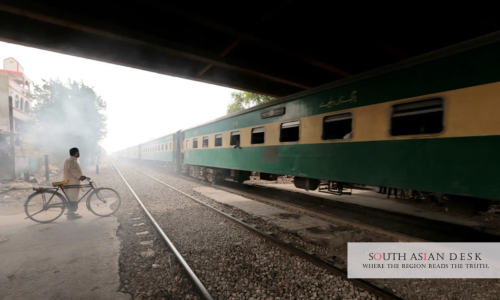
At present, the line is in poor condition. Trains on parts of the route reportedly operate at restricted speeds of only 10 to 15 kilometres per hour, while passenger traffic on the Quetta-Taftan section has almost disappeared because of track deterioration and safety concerns. Some journeys that should be commercially viable by rail have become impractical because of delays, weak infrastructure and limited frequency.
The project aims to raise operating speeds to up to 100 kilometres per hour and increase line capacity. Current capacity of only two train pairs between Quetta and Taftan is expected to rise significantly after rehabilitation, while freight traffic linked to Reko Diq could increase to multiple train sets per month.
If achieved, that would mark a major improvement for Balochistan’s rail infrastructure, which has long suffered from underinvestment despite the province’s strategic location.
Security Costs Create Major Concern
One of the most controversial elements of the ML-3 project is the security cost. The Planning Commission has reportedly questioned the inclusion of Rs46.38 billion in security spending within the development cost of the project. That figure is close to 17pc of the total project cost, an unusually high share for a railway development scheme.
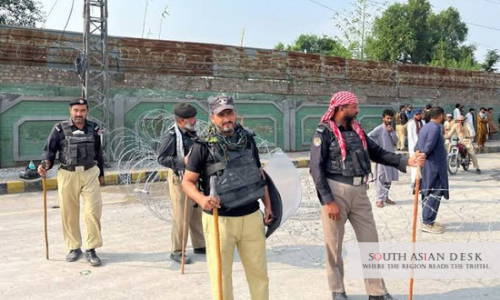
Security concerns in Balochistan are real. The province has faced militant attacks, separatist violence and repeated threats to infrastructure projects. Any railway corridor connected to a major mining project would require protection during construction and after completion.
However, the Planning Commission’s concern appears to be about whether security should be treated as a development expenditure, and whether long-term security planning has been properly addressed. It also reportedly asked whether the provincial government had been consulted on the possibility of using local police or other regular law-enforcement arrangements.
The issue matters because excessive security costs can weaken project viability. If nearly a fifth of the project cost goes to security, less fiscal space remains for track renewal, bridges, stations, signalling, rolling stock and long-term maintenance.
Project Phasing and Implementation
The ML-3 upgrade is planned in two phases. Phase I, expected to run from 2026 to 2030, is estimated at around $585 million and will focus on critical infrastructure works. Phase II, from 2031 to 2033, is expected to cost around $145 million and cover remaining priority works.
The project includes track renewal, rehabilitation of embankments and bridges, replacement of turnouts, procurement of critical machinery and construction of 11 new railway stations between Spezand and Taftan.
Implementation has reportedly begun, with a joint venture led by Zeeruk International appointed as consultant. RDMC is also expected to assist Pakistan Railways in procuring long-lead machinery and equipment.
That early movement is important because Reko Diq’s mining timetable depends heavily on supporting infrastructure. Delays in rail upgrades could raise logistics costs, complicate export planning and reduce the efficiency of the wider project.
The Gwadar Port Angle
Officials have also linked ML-3 rehabilitation with future access to Gwadar Port. Connecting Nokundi with Gwadar could create a shorter route for mineral exports and strengthen the commercial case for Pakistan’s deep-sea port.
Gwadar has often been presented as a future regional trade hub, but it has struggled to generate the level of cargo activity originally expected. If Reko Diq output can eventually be linked to Gwadar through reliable rail or road infrastructure, it could provide the port with a more concrete commercial role.
However, this remains dependent on future connectivity projects, security conditions and whether export logistics through Gwadar become commercially competitive compared with Karachi or other routes.
A Strategic Project With Financial Risks
The ML-3 upgrade is strategically important, but the financing structure exposes Pakistan to clear risks. The Reko Diq bridge loan may help start work quickly, but the government will need a credible repayment plan, stable PSDP allocations and strong project management to avoid delays and cost overruns.
Pakistan’s history of railway projects shows that underfunding, weak phasing and procurement delays can easily lead to escalation. The Planning Commission’s warnings should therefore be taken seriously. A project of this size cannot succeed if financing is treated as an afterthought.
At the same time, the opportunity is significant. If completed properly, the ML-3 railway project could support mineral exports, improve Balochistan’s connectivity, strengthen Pakistan’s regional trade position and make Reko Diq more commercially viable.
The real test will be whether Pakistan can convert the Reko Diq bridge loan into disciplined infrastructure execution, rather than another project trapped between ambition, fiscal pressure and security uncertainty.
Published in SouthAsianDesk, June 29, 2026
Follow SouthAsianDesk on X, Instagram and Facebook for insights on business and current affairs from across South Asia.