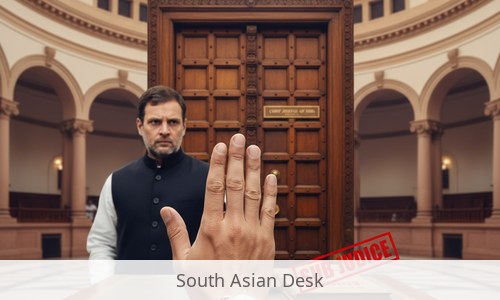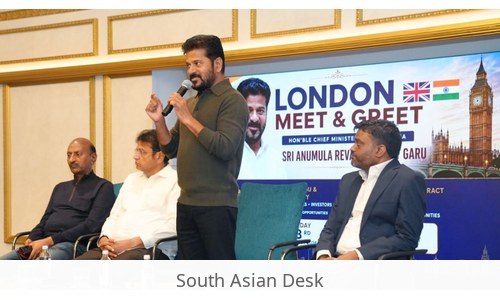
Revanth Reddy US visit clearance has become a focal point of political debate in India, as Telangana Chief Minister Revanth Reddy publicly criticized the Indian central government’s refusal to grant him political clearance for a visit to the United States. On August 24, 2026, the Ministry of External Affairs stated that the scheduled programs in the US were not appropriate for the office he held, despite clearing his trip to the UK. Reddy highlighted the perceived inconsistency, noting that Gujarat’s Chief Minister was permitted to visit the US under similar circumstances.
Revanth Reddy US visit clearance: Political Implications
The denial of Revanth Reddy US visit clearance underscores ongoing tensions between state and central governments in India, particularly regarding the autonomy of regional leaders in international diplomacy. The differing treatment of state leaders raises questions about federal relations India and the criteria used for approving international travel. The central government’s decision has been interpreted as a potential assertion of control over state-level diplomatic engagements, which could influence future interactions between state and central authorities.
India’s federal structure, while constitutionally granting states significant autonomy, often sees the central government exercising de facto control over foreign policy matters. The Ministry of External Affairs (MEA) traditionally oversees international travel for senior officials, with clearance decisions based on perceived diplomatic priorities and the nature of engagements. However, the MEA’s refusal to grant clearance to Revanth Reddy for a US visit, while allowing Gujarat’s Chief Minister to proceed, has sparked debates about whether such decisions are based on objective criteria or political considerations.
Historically, state leaders have been permitted to engage in international diplomacy, particularly when their visits align with national interests or bilateral agreements. For instance, in 2023, the Chief Minister of West Bengal was granted clearance to attend a climate summit in Norway, while the Chief Minister of Tamil Nadu was allowed to participate in a trade delegation to Singapore. These precedents suggest that the MEA’s decision to deny Revanth Reddy’s US visit may be seen as an anomaly, potentially undermining perceptions of fairness in the approval process.
The central government’s stance could also have broader implications for federal cooperation. If state leaders perceive their diplomatic engagements as being subject to arbitrary approval, it may lead to a reluctance to engage in international initiatives that require central government endorsement. This could hinder collaborative efforts on issues such as trade, climate change, or regional security, where inter-state coordination is crucial.
Impact on Telangana’s Political Landscape
The incident may affect Revanth Reddy’s leadership within Telangana, as the denial of clearance could be perceived as a challenge to his authority. Public perception of state autonomy in India may also be influenced, with some viewing the decision as an overreach by the central government. The situation could further complicate federal relations India, particularly in areas requiring inter-state coordination or international representation.
Revanth Reddy, who has been a vocal advocate for state autonomy in policy-making, has faced challenges in balancing regional interests with central directives. His party, the Telangana Pradesh Congress Committee, has historically emphasized the need for states to have greater control over their foreign engagements, particularly in sectors such as technology and agriculture, where Telangana has significant influence. The denial of his US visit may embolden critics within his party who argue that the central government is undermining state-level initiatives.
Public opinion in Telangana has been divided on the issue. While some residents support the central government’s decision, viewing it as a necessary safeguard against potential diplomatic missteps, others see it as an infringement on the state’s right to engage internationally. Social media platforms have seen a surge in discussions, with hashtags such as #TelanganaAutonomy and #RevanthReddyUSVisit trending in the region. This public discourse could pressure the central government to clarify its stance or risk further tensions with Telangana.
The situation may also have ripple effects on inter-state relations. Other states, particularly those with leaders who have previously engaged in international diplomacy, may scrutinize the central government’s criteria for approving such visits. For example, the Chief Minister of Maharashtra, who has been active in promoting India’s tech sector globally, may now seek greater clarity on the conditions under which state-level international engagements are permitted.
Follow SouthAsianDesk on X, Instagram and Facebook for insights on business and current affairs from across South Asia.
The wider context of this developing story also includes Indian government travel policy.
Sources
- ‘Gujarat CM could visit US, why couldn’t I?’ Revanth Reddy slams Centre – indianexpress.com
- “Against Federal Cooperatism”: Revanth Reddy After Centre’s No To US Visit – ndtv.com
Image: images.indianexpress.com