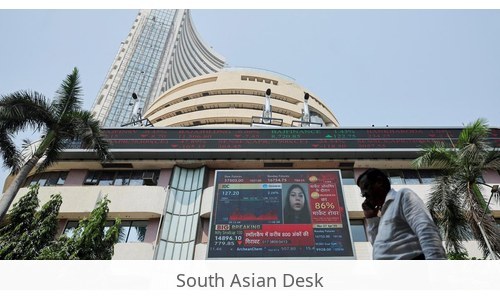
South Asia stock markets closed lower on 2026-08-24 amid simmering geopolitical tensions and rising oil prices, according to reports from The Hindu and NDTV. The 50-share NSE Nifty slipped 32.95 points, or 0.14%, to end at 24,219.05, while the Sensex dropped 170 points amid mixed global cues. Crude oil prices have fallen to $93 as investors await potential US sanctions on Iran, adding to market uncertainty.
South Asia stock markets: Geopolitical Tensions
Ongoing geopolitical tensions are creating uncertainty in the markets, with investors closely monitoring developments related to potential US sanctions on Iran. These sanctions could disrupt global oil trade routes and impact energy prices, which in turn affect economic stability across South Asia. The situation has led to cautious investor behavior, with many opting to hold cash rather than invest in equities.
The potential imposition of US sanctions on Iran has long been a flashpoint in global energy markets. Historically, such measures have triggered volatility in oil prices, as Iran is a significant player in the Middle East’s energy landscape. South Asia stock markets, which are sensitive to energy price fluctuations, face heightened risks from such disruptions. For instance, India imports nearly 80% of its crude oil needs, with a significant portion sourced from the Middle East. Any escalation in tensions could lead to supply chain interruptions, further inflating energy costs and compounding economic pressures.
The geopolitical landscape is further complicated by the region’s strategic interests. South Asia stock markets are influenced by the complex relationships between South Asian nations and Iran, balancing economic ties with regional security concerns. The potential for sanctions to exacerbate these dynamics adds another layer of uncertainty, influencing not only energy markets but also trade and diplomatic relations across the region.
Impact of Rising Oil Prices
Rising oil prices are leading to increased inflation and affecting consumer behavior across South Asia. Higher energy costs are squeezing household budgets and reducing disposable income, which could dampen consumer spending. The connection between oil prices and market volatility is evident, as energy costs directly influence corporate profits and economic growth projections.
The economic implications of elevated oil prices are particularly pronounced in South Asia, where energy imports constitute a significant portion of national budgets. For example, India’s oil import bill has consistently been one of the largest components of its trade deficit, and any increase in crude prices exacerbates this challenge. Similarly, Pakistan faces similar vulnerabilities, with energy costs impacting both public and private sectors. The ripple effects extend to manufacturing and transportation industries, which are heavily dependent on petroleum products.
Moreover, the rise in oil prices has prompted policymakers to reevaluate energy security strategies. Some South Asian nations have accelerated efforts to diversify their energy sources, including investments in renewable energy and regional pipeline projects. However, these initiatives often require substantial time and capital, leaving economies exposed to short-term fluctuations in global energy markets.
Market Reactions
Investor concerns remain high amid geopolitical uncertainties, with stock market fluctuations reflecting broader economic concerns in the region. Analysts note that the decline in equity markets underscores the interconnectedness of global and regional economies, where developments in one area can have ripple effects across South Asia. The situation highlights the need for robust policy measures to stabilize markets and protect investor confidence.
The interconnected nature of the result means that market movements in one country can influence others. For instance, India’s stock market performance often sets a benchmark for regional investors, given its size and economic significance. A decline in the Nifty or Sensex can trigger similar reactions in Pakistan’s KSE-100 or Sri Lanka’s Colombo Stock Exchange, as investors reassess risk across the region.
Furthermore, the current market dynamics underscore the importance of macroeconomic stability. Central banks in South Asia have been closely monitoring inflation trends, with some considering adjustments to interest rates to mitigate the impact of rising energy costs. However, such measures must be balanced against the need to maintain growth, particularly in economies already grappling with high debt levels and fiscal constraints.
Follow SouthAsianDesk on X, Instagram and Facebook for insights on business and current affairs from across South Asia.
Sources
- Stock markets end lower amid simmering geopolitical tensions, elevated crude oil prices – thehindu.com
- Stock Market Highlights, Sensex Today: Sensex Drops 170 Points Lower Amid Mixed Global Cues – ndtv.com
Image: th-i.thgim.com