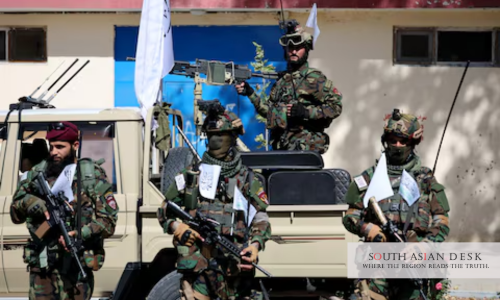
The Taliban mark five years in power on Saturday with parades and ceremonies across Kabul, seeking to present their government as firmly in control even as aid organisations and human rights groups warned that Afghanistan’s crises are escalating rather than easing. Outside the former United States embassy in Kabul, armoured Taliban vehicles took part in a parade displaying flags and banners as the government celebrated what it called “victory day” over Western influence.
Taliban Mark Five Years in Power: A Government Seeking Legitimacy
Sirajuddin Haqqani, the Taliban’s interior minister, said in a video address that the movement’s return to power was the result of “morale, courage” and “divine assistance.” He also made a rare acknowledgement of “issues and problems that may still exist” within the government, a notable departure from the triumphalist tone that dominated most of Saturday’s events.
Zia Ahmad Takal, deputy spokesman for the Taliban’s foreign ministry, said ceremonies marking the fifth anniversary were also expected to take place in the capitals of Pakistan, China, Uzbekistan, Iran, Turkey and Malaysia, reflecting the government’s efforts to build diplomatic and economic ties despite the absence of formal recognition from most of the international community. Among those attending the Kabul ceremonies was Najibullah Ghorzang, a 28-year-old shop owner, who said he hoped Afghanistan would move toward development, while also describing the Taliban’s return to power as a defeat of a “great empire.”
Afghanistan’s Humanitarian Crisis Reaches Record Levels
Despite the government’s efforts to project stability, the International Rescue Committee warned on Friday that Afghanistan’s humanitarian needs have reached a record level. The organisation said the number of people requiring assistance has climbed to 21.9 million, nearly half the country’s population, an increase of 3.5 million since the Taliban took power in 2021. The crisis has been driven by a sixth consecutive year of drought, with 4.7 million people now facing emergency levels of food insecurity, as well as the fallout from deadly earthquakes and the mass return of roughly 3.2 million Afghans deported from Iran and Pakistan in 2025.
Georgette Gagnon, a senior UN representative on Afghanistan, said in a statement that “sustainable peace and prosperity require more than just an absence of conflict,” adding that the country’s future depends on building a society in which the rights and potential of all Afghans are realised. Foreign aid budgets supporting the humanitarian response have shrunk considerably even as needs have grown, leaving agencies increasingly unable to meet demand.
Afghan Women Restrictions Continue to Deepen the Crisis
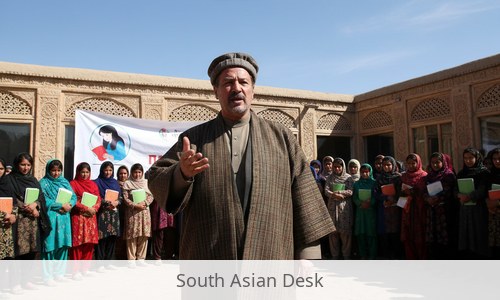
International organisations and the United Nations have said that the Taliban’s struggle to address Afghanistan’s humanitarian challenges is closely tied to the severe restrictions imposed on women over the past five years. These measures have barred women from large parts of public and economic life, including many forms of employment. The case of Fatima, a 28-year-old woman who fled to Iran after the Taliban’s return to power so she could continue working as a make-up artist, a profession barred for women in Afghanistan, illustrates the personal toll of these restrictions. Deported back to Afghanistan last year, she said she now wakes each morning uncertain how she will cover basic living expenses for herself and her child.
International Recognition Remains Limited
When the Taliban returned to power in 2021 amid the withdrawal of American and allied forces, the group promised to govern more moderately than during its previous rule in the late 1990s and early 2000s, a period marked by public executions and the destruction of the Bamiyan Buddhas. Five years on, however, most Western governments continue to withhold formal recognition of the Taliban administration, citing its treatment of women and girls as a central obstacle.
As the Taliban five years in power milestone passes, the gap between the government’s public messaging and the realities documented by humanitarian agencies remains stark. With funding shortfalls compounding the effects of drought, displacement and ongoing restrictions on women, Afghanistan’s humanitarian and human rights crises show few signs of easing in the near term.
Published in SouthAsianDesk, August 16th, 2026
Follow SouthAsianDesk on X, Instagram and Facebook for insights on business and current affairs from across South Asia.