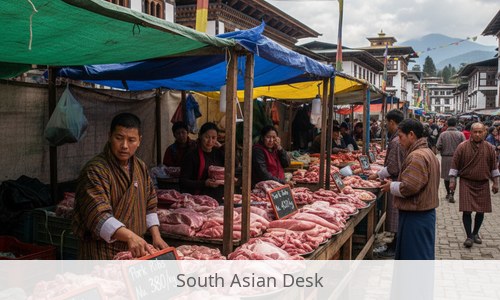
Thimphu meat market competition has intensified as Bhutan’s Competition and Consumer Affairs Authority (CCAA) confirmed that meat shops are increasingly setting their own prices following regulatory interventions. This shift marks a departure from long-standing uniform pricing practices in the sector, with BBS Bhutan reporting growing price diversity among retailers.
Thimphu meat market competition: Impact on Consumer Behavior
The CCAA’s findings indicate significant price variations for fresh meat products across Thimphu’s market. Business Bhutan notes that this development offers consumers greater choice and potentially lower prices through competitive pricing strategies. Early consumer feedback suggests buyers are capitalizing on price differences to secure better deals. This shift aligns with broader trends in Bhutanese consumer behavior, where increased market transparency has historically led to more informed purchasing decisions.
The CCAA’s intervention, which targeted collusive pricing practices among suppliers, has created a more dynamic environment where price sensitivity is now a key factor for shoppers. Retailers have responded by offering discounts, bundled deals, and loyalty programs to retain customers, reflecting a strategic pivot toward consumer-centric models. This development is also seen as a step forward in strengthening consumer rights Bhutan, ensuring that buyers have more leverage in the market.
Local Suppliers and Pricing Models
Local suppliers Thimphu are adapting to the new competitive landscape by adjusting pricing models. While some retailers have maintained traditional pricing structures, others have introduced discounts and promotional offers to attract customers. The CCAA’s regulatory actions aim to ensure fair competition while protecting small-scale suppliers from predatory practices. This dual focus on market efficiency and equity is critical in a sector where small businesses often operate on thin margins. For instance, some vendors have adopted tiered pricing based on product quality or origin, while others have leveraged digital platforms to reach a broader customer base.
These adaptations underscore the evolving role of technology in Bhutan’s retail sector, a trend that has gained momentum in recent years as part of the government’s digital transformation agenda. The changes are also influencing Bhutan meat prices, as suppliers adjust their strategies to remain competitive.
Long-term Market Dynamics
The regulatory intervention reflects broader efforts to modernize Bhutan’s market practices. Similar trends have been observed in other sectors, including retail and agriculture, where competition policies have encouraged innovation and efficiency.
Analysts suggest this shift could strengthen consumer rights Bhutan frameworks across the country. For example, the CCAA’s actions in the meat market may serve as a blueprint for addressing monopolistic tendencies in other industries, such as telecommunications or energy. This approach aligns with Bhutan’s commitment to balancing economic growth with social equity, a principle enshrined in its constitution. The long-term implications could include increased foreign investment, as a more competitive market environment may attract multinational corporations seeking stable regulatory frameworks. However, challenges remain, particularly in ensuring that smaller players are not marginalized by larger entities with greater resources.
Broader Context and Regional Implications
The changes in Thimphu’s meat market reflect broader trends in competition and consumer rights within Bhutan, potentially influencing market dynamics in other sectors. The CCAA’s actions are part of a larger initiative to align Bhutan’s economic policies with international standards, including those set by the World Trade Organization (WTO). This alignment is particularly significant given Bhutan’s strategic position in South Asia, where cross-border trade agreements and regional economic partnerships are increasingly shaping market conditions.
For instance, the South Asian Free Trade Area (SAFTA) has encouraged member states to adopt more transparent trade practices, a goal that the CCAA’s intervention supports. As Bhutan continues to integrate into regional and global markets, the lessons learned from the meat sector could inform future regulatory approaches in other industries, reinforcing the country’s reputation as a leader in ethical commerce.
Follow SouthAsianDesk on X, Instagram and Facebook for insights on business and current affairs from across South Asia.
This report focuses on Thimphu meat market competition and the verified developments surrounding it.