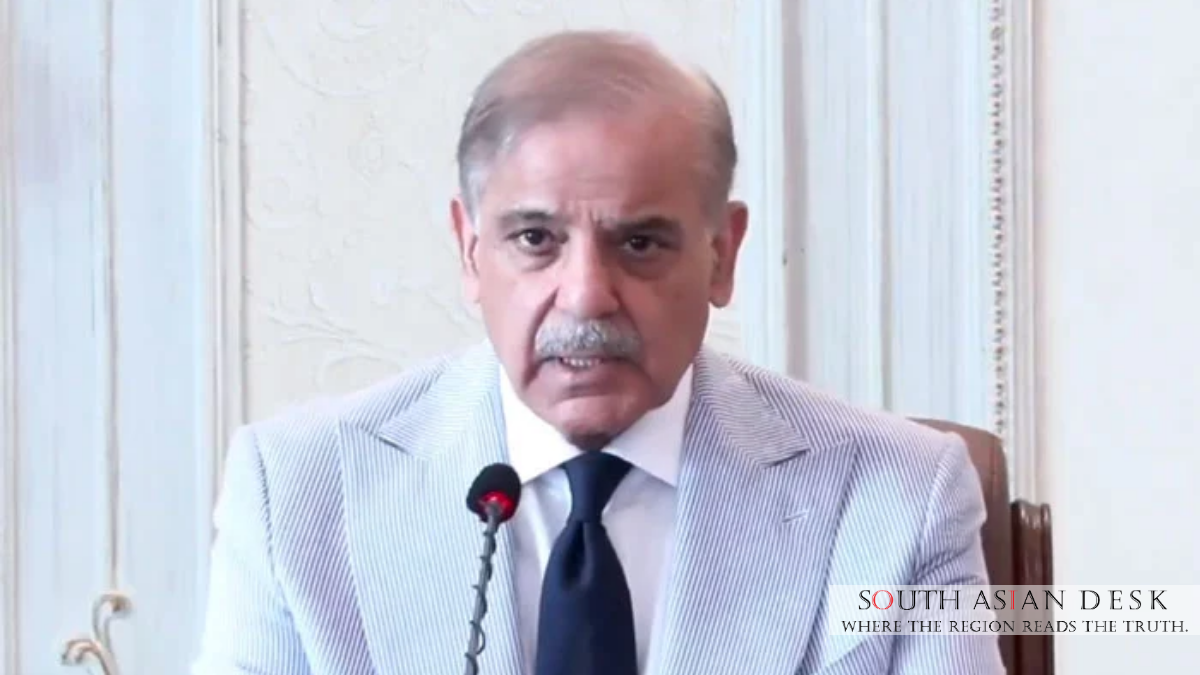
Prime Minister Shehbaz Sharif announced on May 14, 2026, that the temporary US-Iran ceasefire remains in effect, yet the ongoing conflict continues to strain regional economies, notably impacting Pakistan.
During a federal cabinet meeting in Islamabad, Sharif emphasized the severe economic disruptions caused by the conflict, particularly highlighting Iran’s partial closure of the Strait of Hormuz, which has significantly disrupted global energy supplies. The United States paused its bombing campaign last month but has maintained a blockade on Iranian ports.
Sharif praised the government’s economic team for their efforts over the past two years, which have ensured stability and avoided rationing. He called for national unity and resilience to transform Pakistan into an economic powerhouse, drawing parallels to the country’s journey to becoming a nuclear state.
Reflecting on historical milestones, Sharif mentioned the first anniversary of Marka-e-Haq and the upcoming Youm-e-Takbeer, celebrating Pakistan’s nuclear achievements. He reiterated that Pakistan’s nuclear assets are for deterrence, not aggression, and credited leaders and scientists for their roles in the nuclear program.
The Prime Minister also honored the sacrifices of those who fought against terrorism, including Liaquat from Attock, posthumously awarded the Sitara-e-Shujaat. The cabinet paid tribute to those who lost their lives in terror-related incidents.
Published in SouthAsianDesk, May 15, 2026
Follow SouthAsianDesk on X, Instagram and Facebook for insights on business and current affairs from across South Asia.