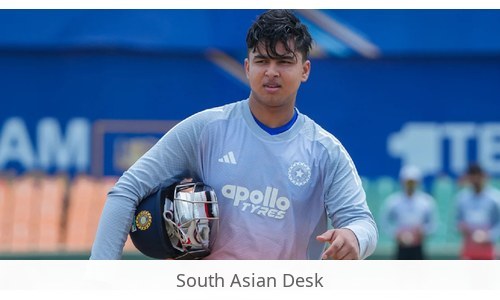
Indian coach Manish Ojha emphasized the need for Vaibhav Sooryavanshi to develop versatility in his batting approach for red-ball cricket, underscoring broader discussions about the future of Test cricket. This focus on Vaibhav Sooryavanshi batting style reflects the growing importance of red-ball cricket adaptation in nurturing young cricketers for the evolving game.
Vaibhav Sooryavanshi batting style: Coaching Insights
Manish Ojha, head coach of the Indian team, highlighted the importance of adaptability in modern cricket. This advice comes as part of a broader strategy to ensure young cricketers are prepared for the demands of Test cricket, which requires a distinct skill set compared to shorter formats. The emphasis on red-ball cricket is not new, but the urgency has grown as the global cricketing calendar increasingly prioritizes T20 and ODI formats. Ojha’s comments reflect a growing consensus among coaches and administrators that the survival of Test cricket hinges on players who can thrive in longer formats, where patience, technique, and mental resilience are paramount.
The Future of Test Cricket
The evolving nature of cricket formats has placed renewed emphasis on players who can thrive across conditions. Rahul Dravid, former India captain and current head coach of the Indian team, reiterated this point in an ESPNcricinfo article. The decline in Test match schedules, coupled with the commercial appeal of shorter formats, has raised concerns about the sport’s long-term viability in its traditional form. Coaches and administrators are increasingly focused on nurturing players who can adapt to both the physical and mental demands of Test cricket, which often involves playing over five days under varying conditions, as opposed to the high-pressure, shorter-duration matches of T20s.
Vaibhav Sooryavanshi batting style: Adapting to Red-Ball Cricket
The push for versatility in players like Sooryavanshi is part of a larger narrative about the transformation of cricket. Over the past decade, the sport has seen a significant shift in focus, with T20 leagues and ODIs dominating the global agenda. This has led to a decline in the number of Test matches played, with many nations prioritizing shorter formats for financial and scheduling reasons. However, Test cricket remains a cornerstone of the sport’s history and tradition, and its preservation is seen as essential for maintaining the game’s integrity.
The Indian cricketing establishment, in particular, has been vocal about the need to balance commercial interests with the preservation of Test cricket. Dravid’s emphasis on players like Sooryavanshi underscores this effort, as the development of young talent capable of excelling in all formats is viewed as a strategic imperative for the sport’s future. Vaibhav Sooryavanshi batting style is being scrutinized as a model for young cricketers development, with coaches like Ojha and Dravid guiding the next generation.
The Broader Context of Cricket’s Evolution
The push for versatility in players like Sooryavanshi is part of a larger narrative about the transformation of cricket. Over the past decade, the sport has seen a significant shift in focus, with T20 leagues and ODIs dominating the global agenda. This has led to a decline in the number of Test matches played, with many nations prioritizing shorter formats for financial and scheduling reasons. However, Test cricket remains a cornerstone of the sport’s history and tradition, and its preservation is seen as essential for maintaining the game’s integrity.
The Indian cricketing establishment, in particular, has been vocal about the need to balance commercial interests with the preservation of Test cricket. Dravid’s emphasis on players like Sooryavanshi underscores this effort, as the development of young talent capable of excelling in all formats is viewed as a strategic imperative for the sport’s future. Vaibhav Sooryavanshi batting style is being scrutinized as a model for young cricketers development, with coaches like Ojha and Dravid guiding the next generation.
Conclusion
As the cricketing landscape continues to shift, the development of young players like Vaibhav Sooryavanshi remains critical. Coaches and former players alike stress the importance of adaptability, not only for individual success but for the sustainability of Test cricket itself. Young cricketers are encouraged to embrace diverse batting styles and conditions to prepare for the challenges ahead.
The current focus on versatility in red-ball cricket reflects a broader commitment to ensuring that Test cricket remains a relevant and integral part of the global cricketing ecosystem. With the guidance of coaches like Ojha and Dravid, players like Sooryavanshi are being positioned as key figures in this ongoing evolution. India cricket news has increasingly highlighted the need for players to adapt their batting styles to red-ball conditions, reinforcing the importance of Manish Ojha coaching and Rahul Dravid Test cricket strategies in shaping the future of the game.
Follow SouthAsianDesk on X, Instagram and Facebook for insights on business and current affairs from across South Asia.
Sources
- Vaibhav Sooryavanshi must learn to bat in different gets in red-ball matches: Coach – indianexpress.com
- Dravid: Need players like Sooryavanshi to play all formats for Test cricket to grow – cricinfo.com
Image: images.indianexpress.com