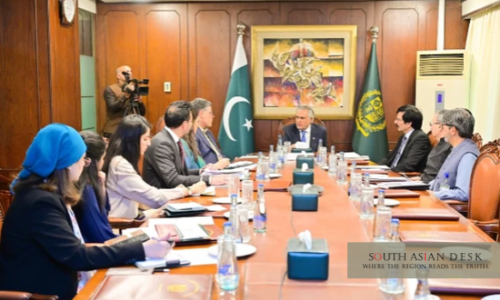
Water and sanitation services in Sindh are set for a significant expansion after the World Bank approved $300 million in financing to bring safe water, sanitation and hygiene facilities to 1.5 million people in selected rural areas of the province. The World Bank’s resident mission in Islamabad announced the approval on Saturday, describing the funding as a response to one of Pakistan’s most persistent human capital challenges.
Water and Sanitation Services in Sindh Under STAR WASH-1
The financing will support the Sindh Transformational Accelerated Rural Water Supply, Sanitation, and Hygiene Services Phase 1 Project, known as STAR WASH-1. The project aims to give 1.5 million residents access to safe drinking water and safely managed sanitation and hygiene services. By concentrating on selected rural areas, the initiative targets communities that have historically had limited access to such basic facilities.
The World Bank said the project is also expected to generate more than 14,000 jobs. In addition, it will support the formalisation of the Sindh People’s Housing for Flood Affectees as a rural water, sanitation and hygiene utility company. The move signals an effort to build an institutional framework capable of delivering and maintaining services over the long term, rather than relying solely on one-off infrastructure projects.
Tackling Child Stunting in Rural Sindh
The World Bank has framed the project as a public health intervention as much as an infrastructure programme. Bolormaa Amgaabazar, the World Bank’s country director for Pakistan, described stunting as among the most severe and persistent human capital challenges facing the country, with unsafe water, sanitation and hygiene identified as a major underlying driver. She said that expanding access to these services for 1.5 million people in rural Sindh would help address one of the root causes of child stunting.
The link between poor sanitation and stunted growth is well documented. Unsafe water and inadequate sanitation expose young children to repeated bouts of diarrhoea, which impairs the absorption of nutrients and limits both physical and cognitive development. The scale of the problem in the province is considerable, as more than half of children under the age of five in rural Sindh are stunted. Improving the quality of water and sanitation services in Sindh is therefore expected to complement nutrition-focused efforts, since children who are repeatedly ill cannot fully benefit from improved diets alone.
Climate-Resilient Infrastructure for Rural Communities
STAR WASH-1 will finance climate-resilient infrastructure, including solar-powered water supply systems and improved sanitation facilities. The emphasis on solar power is notable for rural settings, where unreliable grid electricity can leave pumping systems idle and communities without a dependable supply of clean water. Systems that run on solar energy can reduce operating costs and lessen dependence on the electricity network, which may help keep services running more consistently.
The focus on resilience also reflects the exposure of Sindh to climate-related shocks, particularly flooding, which can damage water points and contaminate drinking supplies. Infrastructure designed to withstand such conditions is intended to protect the gains made through the project and to ensure that investments are not quickly undone by extreme weather. The inclusion of a flood-affectees housing entity among the project’s institutional partners underscores the connection between climate vulnerability and access to basic services.
What the Financing Means for the Province
The approval adds to a series of recent engagements between the World Bank and the Sindh government on social and urban development. For rural households, the practical benefits of the new financing would include a safer source of drinking water, better sanitation facilities and improved hygiene conditions, all of which contribute to better health outcomes for children and families. The creation of more than 14,000 jobs would also provide an economic boost to the communities where the work takes place.
The ultimate impact of the project will depend on how effectively it is implemented and whether the new utility arrangements can sustain services after construction is complete. Even so, the financing represents a substantial commitment to improving water and sanitation services in Sindh at a time when child stunting remains a pressing concern. If the project reaches its target of 1.5 million people, it could mark a meaningful step towards reducing a burden that has long weighed on the health and development of the province’s youngest residents.
Follow SouthAsianDesk on X, Instagram, and Facebook for insights on business and current affairs from across South Asia.
Read More: