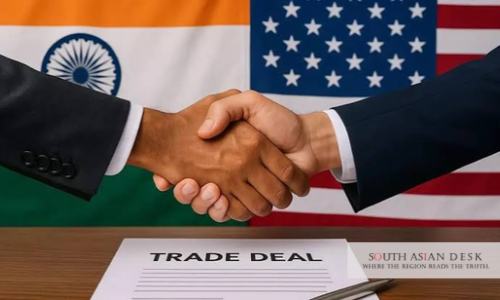
The India-US trade deal has moved closer to a first agreement, with the first phase now in the final stages of drafting, Indian officials said on Thursday. However, New Delhi has made clear that it will proceed only if the arrangement gives its exporters an advantage over competing economies. The comments, reported by Reuters, offer the clearest signal in months that negotiations are advancing, even as both sides acknowledge that progress has been slower than expected.
What Piyush Goyal Said About the First Phase
India’s trade minister, Piyush Goyal, said the “first tranche” of the agreement would be finalised soon. Speaking at an event in New Delhi, he said the text was going through its final contours and legal drafting, and that India hoped to operationalise it once it secures a competitive advantage over peer countries, according to a statement from his office. Indian media reports of his remarks used slightly different wording, with some describing the first tranche as already finalised and now under legal review.
Goyal’s reference to peer countries was understood to mean economies such as Bangladesh, Vietnam and Indonesia, which compete with India for a share of the American market. The underlying demand is straightforward. India wants its exporters to face US tariffs no higher than those imposed on rival suppliers.
Rajesh Agrawal Echoes the Government Position
Trade Secretary Rajesh Agrawal echoed the minister’s comments. He said India anticipated concluding and signing the agreement at the earliest possible time, adding that New Delhi was seeking preferential market access and greater tariff stability under the proposed deal. Tariff stability has become a recurring theme for Indian officials, who have had to adjust to repeated changes in American trade policy.
How the India-US Trade Deal Reached This Point
The two governments agreed to a framework in February that reduced the punitive tariff on most Indian goods to 18 percent from 50 percent. The higher rate had been imposed in August last year after an earlier round of talks collapsed. The framework was meant to pave the way for a fuller agreement, but Reuters reported that negotiations have since run into hurdles, with officials on both sides signalling that efforts to reach a final deal had slowed. Indian reporting has attributed the delay in part to shifting US tariff policies.
The talks have also unfolded against a backdrop of increasingly strained ties between the two countries, which has complicated efforts to steady their trade partnership.
Why Indian Exporters Are Watching Closely
The stakes for Indian exporters are considerable. India recorded a trade surplus of nearly $34 billion with the United States in the fiscal year 2025/26, according to Reuters, which underlines how important the American market is to sectors ranging from textiles to engineering goods. Figures cited in coverage of the talks show that India’s goods exports to the United States rose to $42.79 billion in the April to August period from $40.39 billion a year earlier, suggesting that shipments have continued despite the tariff uncertainty.
For exporters, the difference between a tariff that matches competitors and one that undercuts them can determine whether an order is won or lost. That explains why the government has framed a competitive advantage, rather than the signing itself, as the condition for moving ahead. Analysts say the approach reflects a focus on the commercial value of an agreement over reaching a symbolic milestone.
Looking Beyond Washington
Goyal also used the occasion to point to India’s wider trade diplomacy. He said the proposed free trade agreement between India and the European Union is expected to be signed in December and could come into effect in February or March next year, according to reports by the Business Standard and The Tribune. The timeline suggests New Delhi is pursuing several market access deals at once rather than relying on a single partner.
What Comes Next for the India-US Trade Deal
The next steps are legal vetting and a decision on when to operationalise the first phase. Because India has tied implementation to securing a tariff edge over its peers, the timing may depend as much on Washington’s treatment of other exporters as on the text negotiated with New Delhi. Officials on both sides have expressed a wish to conclude the agreement, but no signing date has been announced.
For now, the India-US trade deal stands at a delicate stage. The drafting is nearly complete, yet the central question of how India will fare against its competitors remains open, and the answer will determine whether the first phase delivers the benefits Indian exporters have been waiting for.
Follow SouthAsianDesk on X, Instagram and Facebook for insights on business and current affairs from across South Asia.