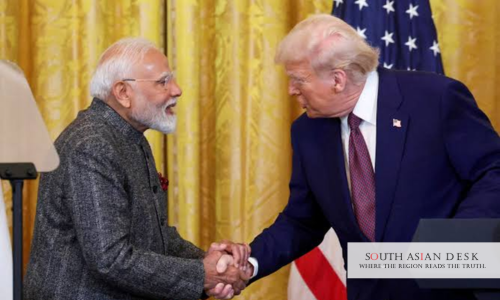
The India US trade deal remains on track, according to India’s commerce ministry, even after the United States rolled out a fresh round of tariffs targeting dozens of trading partners. On Saturday, India confirmed it would keep engaging with Washington to conclude a bilateral trade agreement, just a day after the Trump administration announced a new 10 percent tariff on a large share of Indian imports.
New US Tariff on India Explained
The Trump administration unveiled duties ranging from 10 percent to 12.5 percent on goods from 60 trading partners, including India. The stated reason behind the move was that these countries had failed to sufficiently curb imports made with forced labor. For India specifically, the new duty works out to 10 percent, which is notably lower than the 12.5 percent tariff that had been proposed back in June.
Importantly, the fresh measures do not apply across the board. India’s commerce ministry said in a statement that key sectors have been exempted, including generic pharmaceuticals, smartphones, steel, aluminium, and auto parts. According to the ministry, roughly 45 percent of India’s exports to the United States will fall outside the scope of the new tariff because of these product exemptions. The remaining 55 percent of exports will be subject to the new 10 percent duty, which applies on top of standard US import charges already in place.
Why the India US Trade Deal Still Matters
Despite the added tariff pressure, India has been clear that it intends to continue negotiations rather than step back from the table. The commerce ministry stated that the government remains committed to working with the United States toward the early conclusion of the India-US Bilateral Trade Agreement. Talks between the two countries have been ongoing since last year, as both sides look to deepen economic ties and resolve long-standing market access issues.
India also confirmed it would keep discussing sector-specific concerns with US negotiators, with textiles emerging as a particular point of focus. This is notable because textiles and apparel are among the industries most exposed to the new tariff regime. Earlier Reuters reporting indicated that Indian textile and apparel exporters could find themselves at a competitive disadvantage compared to several rival exporting nations in Asia once the new duties take hold.
What the New Tariffs Mean for Indian Exporters
For businesses that rely on the US market, the practical impact of these tariffs will vary widely depending on the sector. Exporters of pharmaceuticals, smartphones, steel, aluminium, and auto parts have been given some breathing room thanks to the exemptions carved out in the latest announcement. Exporters in other categories, however, particularly textiles, will need to absorb or pass on the additional 10 percent cost, which could weigh on competitiveness at a time when several Asian economies are vying for the same buyers.
This mixed picture is part of why the ongoing negotiations carry so much weight. A finalized bilateral trade agreement could offer Indian exporters more predictable terms and potentially address some of the sector-specific friction points that current tariff policy has exposed, including the pressure now facing the textile industry.
Looking Ahead
Neither side has indicated a timeline for when the broader agreement might be finalized, but the tone from India’s commerce ministry suggests there is no intention to disengage. Instead, both countries appear set to continue working through outstanding issues, sector by sector, even as new tariff measures reshape the terms of trade in the short term. Whether the current round of tariffs accelerates or complicates a final agreement will likely become clearer as talks progress in the coming months.
For now, the message from New Delhi is one of continuity: engagement with Washington continues, exemptions have softened the initial blow, and the goal of a completed bilateral trade agreement remains firmly on the table.
Follow SouthAsianDesk on X, Instagram and Facebook for insights on business and current affairs from across South Asia.