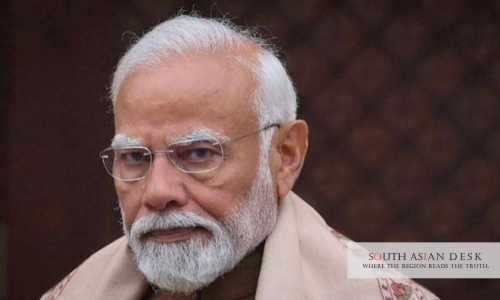
India protest surveillance has become the center of a fresh legal battle, as activists take the government of Prime Minister Narendra Modi to court over the use of AI-powered cameras and facial recognition on demonstrators. The dispute grew out of last week’s student-led protests in New Delhi over leaked exam papers, and it is now shaping up as a test case for how far the state can go in monitoring citizens who gather in public places.
What Sparked the India Protest Surveillance Controversy
The trouble began at Jantar Mantar, the designated protest site in the Indian capital, where thousands gathered under the banner of the Cockroach Janta Party to demand the resignation of Education Minister Dharmendra Pradhan. The protesters were angry over repeated paper leaks tied to the National Eligibility cum Entrance Test, the exam that decides admission into India’s medical colleges.
During the demonstrations, protesters photographed and shared images of a mobile police van fitted with a telescopic mast and cameras capable of a 360-degree view of the crowd. The van, branded “Ikshana,” the Hindi word for vision, was reportedly built with an Indian CCTV manufacturer and marketed as carrying advanced AI-enabled cameras. Reports from the protest also indicate that police collected Instagram handles from attendees, adding to concerns that the monitoring went well beyond routine crowd management.
Pradhan resigned days later, a rare political setback for Modi, and the government has since set up a panel to review the exam system. But the question of how the protest was monitored did not go away with him.
Inside the Delhi High Court Petition on Facial Recognition
Student activist Aishe Ghosh has filed a petition asking the Delhi High Court to declare the mass surveillance of protesters unconstitutional. Her petition seeks three things: a formal declaration that the surveillance was unlawful, an order directing the destruction of all personal data gathered during the protest, and clear guidelines on how surveillance technology can be deployed at future gatherings.
Ghosh’s lawyers argue that the monitoring was disproportionate to any genuine law-and-order concern and that it infringed on the right to privacy recognized by India’s Supreme Court in the landmark Puttaswamy judgment. India currently has no dedicated law governing how police may use facial recognition technology, which activists say leaves the practice largely unregulated and open to overreach. The case is being heard by a bench led by Chief Justice Devendra Kumar Upadhyaya and Justice Tejas Karia, with the matter listed for further hearing after arguments were heard on both a preliminary objection and the merits of the plea.
Government Defends Its Position Amid the India Protest Surveillance Debate
The Union government has pushed back firmly. Appearing for the Centre, Solicitor General Tushar Mehta argued that videography of protests is a routine, long-standing law-and-order measure carried out under standing orders that follow directions issued by the Supreme Court. He told the court that protests at Jantar Mantar are filmed as a matter of course, not singled out for this particular gathering, and that organizers themselves agree to abide by these standing orders as a condition of holding a demonstration there.
Mehta also pointed out that many protesters were filming and posting their own videos and reels during the demonstration, calling it somewhat contradictory for participants to raise privacy objections in a public setting where they were recording themselves. He maintained that while privacy is a fundamental right, it is not absolute and can reasonably be restricted where a legitimate state interest, such as preventing disorder or identifying troublemakers, is at stake. Officials have described the measures as necessary and lawful, and have rejected claims that they amount to surveillance or improper data collection.
This defense fits a broader pattern. Modi’s government has repeatedly faced accusations from opposition parties and digital rights groups of widening its surveillance powers and tightening control over digital communication, accusations it has consistently denied, insisting its actions serve the public interest rather than any effort to monitor citizens improperly.
Why the India Protest Surveillance Case Matters Beyond Jantar Mantar
Even though the exam protests have ended, the court case is not going away, and that is precisely what makes it significant. A ruling either way would set a precedent for how AI-powered monitoring tools can be used at future demonstrations across India, a country that sees frequent public protests on issues ranging from farm policy to citizenship law. Digital rights advocates view the case as an opportunity to push for the kind of dedicated facial recognition legislation that India has so far lacked, while the government sees it as an attempt to constrain ordinary policing tools that keep large public gatherings safe.
Whatever the Delhi High Court ultimately decides, the case underlines a tension that is likely to keep resurfacing as Indian police forces adopt more AI-driven tools: the balance between maintaining public order at mass gatherings and protecting the privacy rights of the citizens who attend them. For now, the case remains active, with further hearings expected as both sides press their arguments before the bench.
Published in SouthAsianDesk, July 28th, 2026
Follow SouthAsianDesk on X, Instagram and Facebook for insights on business and current affairs from across South Asia.