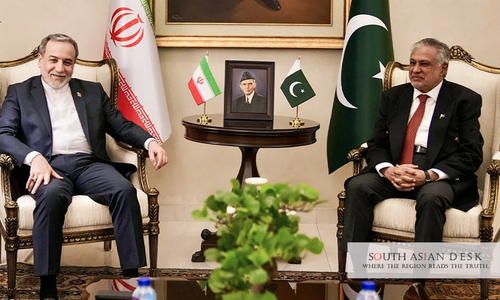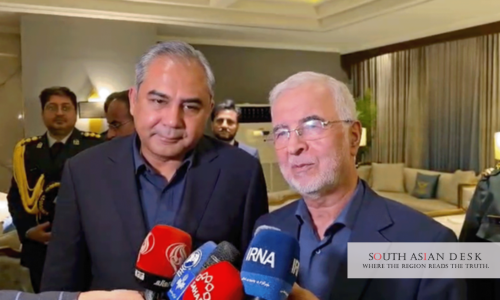
Iran and Pakistan reaffirmed their long-standing Iran-Pakistan trade goal of $10 billion in annual bilateral commerce on Monday, with Iranian Interior Minister Eskandar Momeni making the commitment following talks with Pakistani counterpart Mohsin Naqvi in Islamabad. The Eskandar Momeni Pakistan visit came at a delicate moment for the region, arriving as more than a week of hostilities between the United States and Iran have threatened to unsettle Pakistan-led peace efforts and raised fears the conflict could spread to other states.
The renewed push toward the Iran-Pakistan trade goal reflects growing engagement between Islamabad and Tehran, with both governments having signed several agreements and memorandums of understanding in recent months aimed at lifting bilateral trade from its current level of roughly $3 billion to the $10 billion target. Momeni was candid about the scale of the gap still to be closed. “To achieve this goal, in practice around 2,000 trucks or containers need to move between the two countries every day on average. At present, only about 20 percent of that target is being realized,” he said following the Mohsin Naqvi Iran talks in Islamabad.
Iran-Pakistan Trade Goal – Border Trade Hinges on Infrastructure
Momeni pointed squarely to infrastructure gaps as the central obstacle to unlocking further Pakistan-Iran border trade. “Therefore, the necessary infrastructure must be provided on both sides of the border. This is one of the topics under discussion,” he said, adding that regional developments would naturally also feature in the visit’s agenda. Improving Pakistan-Iran border trade capacity has been a recurring theme in recent bilateral engagements, as both sides look to translate political goodwill into higher freight volumes moving across their shared frontier.
The Iranian delegation accompanying Momeni was notably broad, according to Pakistan’s interior ministry, including the governor-general of Iran’s Sistan and Baluchestan province, a deputy interior minister, the deputy minister of urban development and transport, and the head of the National Iranian Oil Company. The composition of the delegation underscored that the Eskandar Momeni Pakistan visit extended well beyond internal security matters into energy, transport and provincial administration, all areas relevant to expanding Pakistan-Iran border trade in practice. Momeni was scheduled to meet Prime Minister Shehbaz Sharif and Defense Forces Chief Field Marshal Asim Munir during his time in Islamabad.
US-Iran Hostilities Pakistan Cast a Shadow Over Talks
The backdrop to the visit was shaped heavily by US-Iran hostilities Pakistan has been working to help contain. Pakistan, alongside Qatar and other regional states, led a months-long diplomatic effort that helped broker the Islamabad Memorandum of Understanding between Washington and Tehran in June, an agreement that committed both sides to halt hostilities and open negotiations on broader disputes. That process was followed by talks in Bürgenstock, Switzerland, where officials established a High-Level Committee and adopted a sixty-day roadmap covering Iran’s nuclear programme, sanctions relief and a dispute-resolution mechanism.
That diplomatic track has come under strain in recent weeks, with renewed fighting this month accompanied by competing accusations from Washington and Tehran that the other side violated the agreement. Pakistan has nonetheless maintained that diplomatic channels remain open and said it will continue efforts to facilitate dialogue between the two sides. Naqvi, welcoming Momeni to Islamabad, said he hoped the Iranian minister had brought good news and expressed hope for progress on the wider regional situation.
A Delicate Balancing Act for Islamabad
The visit also highlighted Pakistan’s increasingly delicate diplomatic position in the region. While Islamabad has positioned itself as a mediator between Tehran and Washington, it simultaneously maintains a longstanding strategic partnership with Saudi Arabia, including security cooperation under a mutual defence framework. Renewed attacks by Yemen’s Iran-aligned Houthi movement on Saudi Arabia have added a further layer of complexity, raising concerns about a broader regional conflict that could complicate Pakistan’s efforts to balance its relationships with both Tehran and Riyadh.
Islamabad has repeatedly called for restraint from all parties involved and has said dialogue remains the only viable path to preventing a wider regional conflict, a position it reiterated even as it pursued its own economic agenda through the Iran-Pakistan trade goal during Monday’s talks.
Published in SouthAsianDesk, July 21, 2026
Follow SouthAsianDesk on X, Instagram and Facebook for insights on business and current affairs from across South Asia.