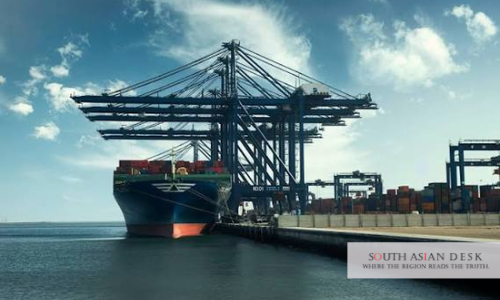
Karachi Port Trust (KPT) has simultaneously handled two foreign bulk carriers carrying a combined 101,000 tonnes of diammonium phosphate (DAP) fertiliser and wheat, Federal Minister for Maritime Affairs Muhammad Junaid Anwar Chaudhry announced on Sunday. The minister said the concurrent unloading showed the port’s improved ability to manage critical agricultural inputs and essential commodities efficiently, according to Dawn.
Two vessels, two essential commodities
The vessels involved were MV Zhong Chang 538 and MV Gokova M, which brought about 50,000 tonnes of DAP fertiliser and 51,000 tonnes of wheat respectively. Both ships were berthed at the Karachi Gateway Terminal Multipurpose, where discharge operations ran in parallel.
DAP is among the most widely used phosphate fertilisers and is a key input for Pakistan’s wheat and other staple crops. Wheat, in turn, is the country’s principal food grain. The arrival of both cargoes at the same time therefore touched two links in the same chain, from the inputs that farmers apply to the grain that reaches consumers.
Minister Chaudhry praised KPT engineers, port operators, pilots, the terminal operator, dockworkers and transporters for keeping cargo discharge moving. He said the timely handling of essential imports was important for supporting agricultural production and safeguarding food security.
Reforms aimed at faster turnaround
The minister said the simultaneous handling of the two vessels reflected KPT’s operational capacity and its efforts to improve berth utilisation, cargo handling efficiency and supply chain performance. He added that the Ministry of Maritime Affairs was pursuing reforms to shorten vessel turnaround times, improve port management and strengthen maritime infrastructure, so that international trade is facilitated and essential commodities arrive without interruption.
KPT Chairman Rear Admiral Shahid Ahmed (retd) described Karachi Port as a vital part of the country’s trade and supply chain network, particularly for imports of agricultural inputs and essential food commodities. He said the two vessels had been given priority berthing on the government’s directives, and that the port authority remained committed to modernising its infrastructure and raising operational efficiency.
A busy year for the port
The latest announcement follows a year of record activity at the port. Dawn reported in June that KPT had handled more than 2.65 million twenty-foot equivalent units (TEUs) of containerised cargo in the 2025-26 fiscal year, a record volume, at a time when the closure of the Strait of Hormuz following the US-Israeli war on Iran was disrupting regional shipping. Later that month, the maritime affairs minister said the port had also set a new annual cargo handling record, surpassing its previous benchmark of 54.685 million tonnes, the highest in its 138-year history.
Policy changes have accompanied this growth. According to ARY News, an incentive scheme in force since 18 March 2026 cut duties and charges on dry bulk export cargo by up to 60 per cent and lowered the minimum transshipment cargo requirement from 10 per cent to 7.5 per cent, as part of an effort to attract shipping lines. The port’s chairman has also noted that Karachi Port climbed 30 places in the World Bank’s Container Port Performance Index for 2025, moving from 99th to 69th globally, though that index measures container efficiency rather than the handling of dry bulk cargo of the kind discussed here.
Karachi Port Trust: Why bulk handling matters
Container volumes tend to draw the most attention, but dry bulk operations are central to Pakistan’s import bill and household supply. Wheat and fertiliser are imported in large single shipments, and delays at berth can add demurrage costs and disrupt sowing and distribution schedules. Handling two large bulk carriers at once suggests that berth allocation and cargo evacuation, including the transporters who move the goods inland, are working in step, at least on this occasion.
Still, a single day’s performance does not settle the broader question of efficiency. The government’s own reform agenda is aimed at reducing vessel turnaround times, and the true test will be whether similar performance can be sustained when the port is under heavier pressure from container traffic and diverted regional cargo. For farmers and consumers who depend on timely fertiliser and grain deliveries, steady and predictable port operations will matter far more than any single record.
Follow SouthAsianDesk on X, Instagram and Facebook for insights on business and current affairs from across South Asia.