Terrorist attacks in Pakistan declined by 37 per cent in October compared with September, according to statistics released on Sunday by the Islamabad-based Pakistan Institute for Conflict and Security Studies (PICSS). The country recorded 143 attacks during the month, against 226 in September, which reversed two consecutive months of rising violence, Dawn reported.
Sharp fall in casualties
The latest PICSS report shows that the human cost of violence fell even more steeply than the number of incidents. Terrorist attacks claimed 111 lives in October, down from 260 in September, a reduction of 57 per cent. The number of people injured dropped from 242 to 69, a decline of 71 per cent.
Suicide attacks also fell sharply. Only one was recorded in October, a vehicle-borne attack that caused no deaths or injuries, whereas the three suicide attacks in September, two of them vehicle-borne, killed 45 people and injured 138. On a rolling 12-month comparison, PICSS found that injuries from terrorist attacks reached their lowest monthly level of the past year, and that the number of suicide attacks was jointly the lowest in the same period.
The think tank also tallied the combined effect of attacks and security operations. In October, these claimed the lives of 53 security personnel, 45 civilians and five peace committee members, while 169 militants were killed, the lowest monthly figure in 12 months.
Counterterrorism operations continue
Continued counterterrorism operations across the country led to the killing of 156 militants and the arrest of seven suspects during the month, PICSS said. Two security personnel and three civilians died during these operations, and two security personnel were injured. Sindh recorded no terrorist attacks, although operations there led to the arrest of the seven suspects. Islamabad, Azad Jammu and Kashmir and Gilgit-Baltistan also stayed free of recorded attacks.
Regional picture: Balochistan and Khyber Pakhtunkhwa
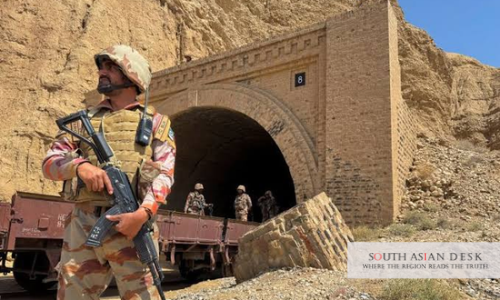
Balochistan registered one of the most notable improvements, with attacks falling 46 per cent from 132 in September to 71 in October. Deaths from these attacks dropped from 136 to 44, a fall of about 68 per cent, while security forces killed 79 militants in the province.
In mainland Khyber Pakhtunkhwa, which excludes the former tribal areas, attacks declined from 58 to 40, a drop of 31 per cent. Fatalities fell from 90 to 38, and injuries from 165 to 19. The former tribal districts saw a more modest decline, from 34 attacks to 30, with deaths easing from 33 to 25 and injuries edging up from 11 to 13. Punjab, by contrast, recorded two attacks that killed four people, after none in September.
Kidnappings in Balochistan raise concern
Despite the overall improvement, PICSS singled out abductions as a serious concern. It recorded 88 people kidnapped in terrorist incidents nationwide in October, compared with 72 in September, an increase of 22 per cent and the highest monthly figure in the preceding 12 months. Kidnappings in Balochistan accounted for 70 of the 88 cases, nearly 80 per cent of the national total. The report noted that, even as attacks and casualties decline, kidnapping remains a significant tactic for militant groups.
Terrorist Attacks in Pakistan: A difficult year overall
The monthly relief should be read against a much harsher backdrop. PICSS counted 1,376 terrorist attacks in the first ten months of 2026, which, together with counterterrorism operations, resulted in 3,902 deaths. Those included 645 security personnel, 65 peace committee members, 595 civilians and 2,597 militants. Compared with the same period of 2025, attacks rose by 53 per cent and the combined death toll by 36 per cent.
The October figures also follow an especially violent summer. PICSS had described July as the deadliest month of 2026, with 606 people killed in attacks and operations, and September’s attack count was widely reported as the highest monthly total in 12 years. Dawn additionally noted that a separate report from the Centre for Research and Security Studies found violence-linked fatalities rose by 83 per cent in the third quarter, reversing the declining trend of the first two quarters.
What the numbers do and do not show
A single month of improvement does not establish a trend, and the same data underlines how quickly conditions can shift. The sharp drop in suicide bombings and in casualties is a welcome development, particularly in Balochistan and mainland Khyber Pakhtunkhwa. Yet the rise in abductions, the persistence of violence in the former tribal districts and the heavy toll recorded since January suggest that the security challenge remains substantial. Whether October marks the start of a sustained decline will become clearer when PICSS publishes its next monthly assessment.
Follow SouthAsianDesk on X, Instagram and Facebook for insights on business and current affairs from across South Asia.