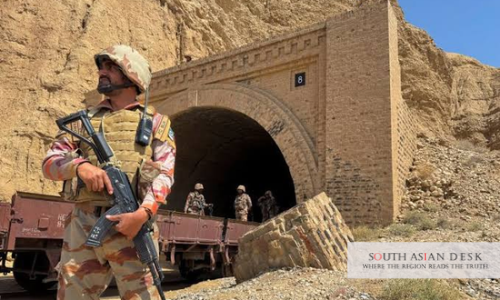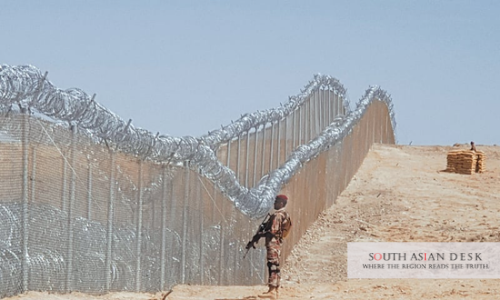
Pakistan-Afghanistan border clashes flared again on Sunday, as forces from both sides exchanged fire at several points along the frontier and the Pakistani military cautioned that the Afghan Taliban would be unable to withstand the punishment Islamabad could inflict. The fighting temporarily closed the Torkham border crossing, one of the busiest links between the two countries, and left one civilian dead in mortar shelling near the Angoor Adda crossing, according to Dawn.
Torkham shut for nearly five hours
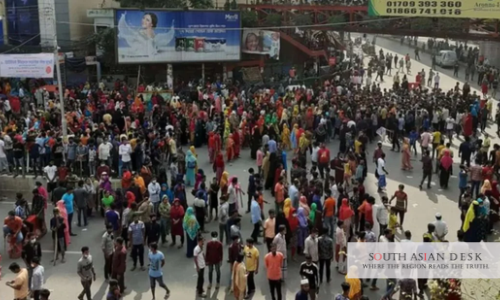
The trouble at Torkham began when Afghan authorities resumed construction on a disputed check post known as Zangali, which sits within 100 metres of the Afghan side of the border. Pakistani officials objected strongly, noting that the two countries had earlier agreed not to build security structures within that distance. Light weapons fire followed for roughly an hour, and the crossing was closed for nearly five hours. Panic spread among returning Afghans and local residents, and one resident told Dawn he watched about 20 vehicles carrying unregistered Afghan families retreat hurriedly from Zero Point. The repatriation of unregistered Afghans was suspended and government offices were shut during the standoff.
The situation eased only after border officials, working through intermediaries, agreed to halt all construction near the border. No casualties were reported on the Pakistani side at Torkham.
Tension in Lower South Waziristan
The situation was less settled at Angoor Adda in Lower South Waziristan, where two mortar shells were reportedly fired from the Afghan side. The district’s deputy commissioner said Taliban fighters kept targeting Pakistani checkpoints with unprovoked fire, and that Pakistani forces responded against several Afghan border posts, mortar positions and defensive checkpoints. The deputy commissioner reported no casualties among Pakistani personnel in the border areas, though a civilian was killed by the shelling.
A stark warning from the military
The flare-up came as the military leadership sharpened its rhetoric. In an interview with a news agency, portions of which state media broadcast on Sunday, Inter-Services Public Relations chief Lt Gen Ahmed Sharif Chaudhry said Pakistan had both the readiness and a clear strategy to impose heavy costs on the interim Afghan leadership if cross-border terrorism continued. He stressed that Islamabad had no wish to interfere in Afghanistan’s internal governance and asked only that Kabul stop sheltering the leaders of militant groups.
Lt Gen Chaudhry also described India as the principal sponsor of terrorism against Pakistan, with the Tehreek-e-Taliban Pakistan and the Balochistan Liberation Army acting as proxies. He argued that Afghanistan lacks its own drone industry and therefore depends on outside sponsors for such capabilities. These claims were made by the military spokesperson and were not independently verified in the reports reviewed for this article.
Washington signals openness to mediation
The warnings coincided with a notable diplomatic signal from the United States. Speaking to reporters at the G20 foreign ministers’ meeting in Atlanta, Secretary of State Marco Rubio said Washington shares Pakistan’s concerns about attacks sponsored from Afghan territory and believes the Taliban have not done enough to constrain them. He added that the United States does not have close relations with the Taliban authorities, opposes terrorism wherever it originates, and is open to playing a productive role in easing tensions.
Pakistan-Afghanistan Border Clashes: A conflict with deep roots
Sunday’s events belong to a much longer pattern. The two countries share a border of roughly 2,600 kilometres, known as the Durand Line, whose legitimacy successive Afghan governments have contested. Fighting intensified sharply in October 2025, and a temporary ceasefire agreed on 19 October that year did not end sporadic clashes and airstrikes. Pakistan’s defence minister later declared “open war” after fresh fighting in late February 2026, and analysts at the Foundation for Defense of Democracies noted this week that tensions have stayed high despite intermittent lulls. The United Nations Assistance Mission in Afghanistan said in September that it had documented more than 1,100 civilian deaths and injuries from cross-border violence in Afghanistan this year.
For now, the incident at Torkham shows how quickly a dispute over a single check post can disrupt trade, repatriation and daily life on both sides. Whether the recent diplomatic overtures can translate into a durable arrangement remains uncertain, particularly while Islamabad insists that Kabul must act against militants operating from its soil.
Follow SouthAsianDesk on X, Instagram and Facebook for insights on business and current affairs from across South Asia.