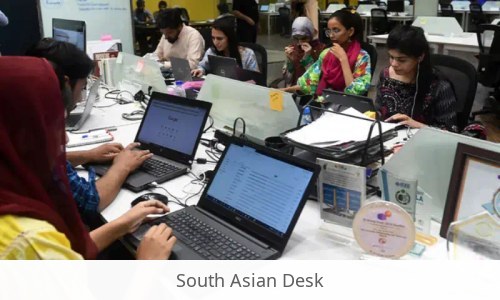
Pakistan IT exports hit a record $4.6 billion in FY26. This marks a significant increase compared to previous fiscal years, reflecting the growing role of the technology sector in the country’s economic strategy. The milestone underscores a broader trend of increasing contributions from the IT sector to Pakistan’s economy, as highlighted in the government’s economic reform agenda. The growth aligns with global shifts toward digital services and remote work, positioning Pakistan as a regional player in the global tech ecosystem.
Pakistan IT exports: Economic Implications
The surge in Pakistan IT exports signals potential for increased foreign investment in Pakistan’s tech sector. As the industry expands, it is expected to create thousands of jobs and drive skill development in software engineering, cybersecurity, and digital services. The government has highlighted this growth as a key pillar of its economic reform agenda, with plans to incentivize startups and expand digital infrastructure.
According to the fiscal year 2026 data, the IT sector’s contribution to Pakistan’s GDP has risen steadily over the past decade, with exports doubling since FY20. This growth has been supported by policies such as tax breaks for tech firms, streamlined visa processes for foreign talent, and investments in digital education programs.
The expansion of the IT sector has also had ripple effects across other industries. For instance, the demand for IT professionals has spurred growth in related fields such as data analytics and cloud computing. Additionally, the rise of tech hubs in cities like Lahore and Islamabad has attracted both domestic and international investors.
The government’s focus on improving internet connectivity and reducing power outages has further bolstered the sector’s capacity to compete globally. However, the pace of infrastructure development remains uneven, with rural areas lagging behind urban centers in terms of access to reliable electricity and high-speed internet.
Challenges and Opportunities
Despite the milestone, challenges persist. Infrastructure gaps, regulatory hurdles, and global competition remain barriers to sustaining this momentum. The IT sector’s reliance on stable power supply and high-speed internet is a critical vulnerability, as frequent power outages and limited broadband access in certain regions can hinder productivity.
Regulatory complexities, including inconsistent enforcement of intellectual property laws and bureaucratic delays in licensing, also pose challenges for tech firms seeking to scale operations.
However, opportunities for innovation in artificial intelligence, fintech, and cloud computing could position Pakistan as a regional tech hub. The global demand for AI-driven solutions and digital financial services has created new markets for Pakistani firms, particularly in South Asia and the Middle East. Industry leaders emphasize the need for public-private partnerships to scale capacity and improve global market access.
For example, collaborations between local tech firms and international cloud service providers could help Pakistani companies offer competitive solutions to global clients.
The government has also recognized the importance of addressing these challenges through targeted initiatives. A recent policy proposal outlines plans to establish a national digital infrastructure fund, which would prioritize investments in rural broadband expansion and renewable energy projects to support tech hubs. Additionally, efforts to streamline regulatory processes for startups are underway, with the aim of reducing the time required to register new businesses from several weeks to a matter of days.
Regional and Global Context
Pakistan IT exports growth is part of a broader regional trend of digital transformation across South Asia. Neighboring countries such as India and Bangladesh have also seen significant growth in their tech sectors, with India’s IT exports reaching over $100 billion in FY26. However, Pakistan’s focus on niche areas such as cybersecurity and software development has allowed it to carve out a distinct market position.
The country’s strategic location and growing English-speaking workforce have made it an attractive destination for outsourcing and nearshoring opportunities, particularly for firms in the Middle East and Europe.
The global shift toward remote work and digital services has further amplified Pakistan’s potential. With a young, tech-savvy population and a growing number of software developers, the country is well-positioned to meet the rising demand for IT services. However, sustained growth will depend on addressing systemic challenges such as brain drain, where skilled professionals leave for better opportunities abroad, and the need for continuous investment in research and development.
Follow SouthAsianDesk on X, Instagram and Facebook for insights on business and current affairs from across South Asia.
Sources
- IT exports hit record $4.6bn in FY26 – dawn.com
- Current account slips into $139m deficit in FY26 – dawn.com
Image: i.dawn.com